
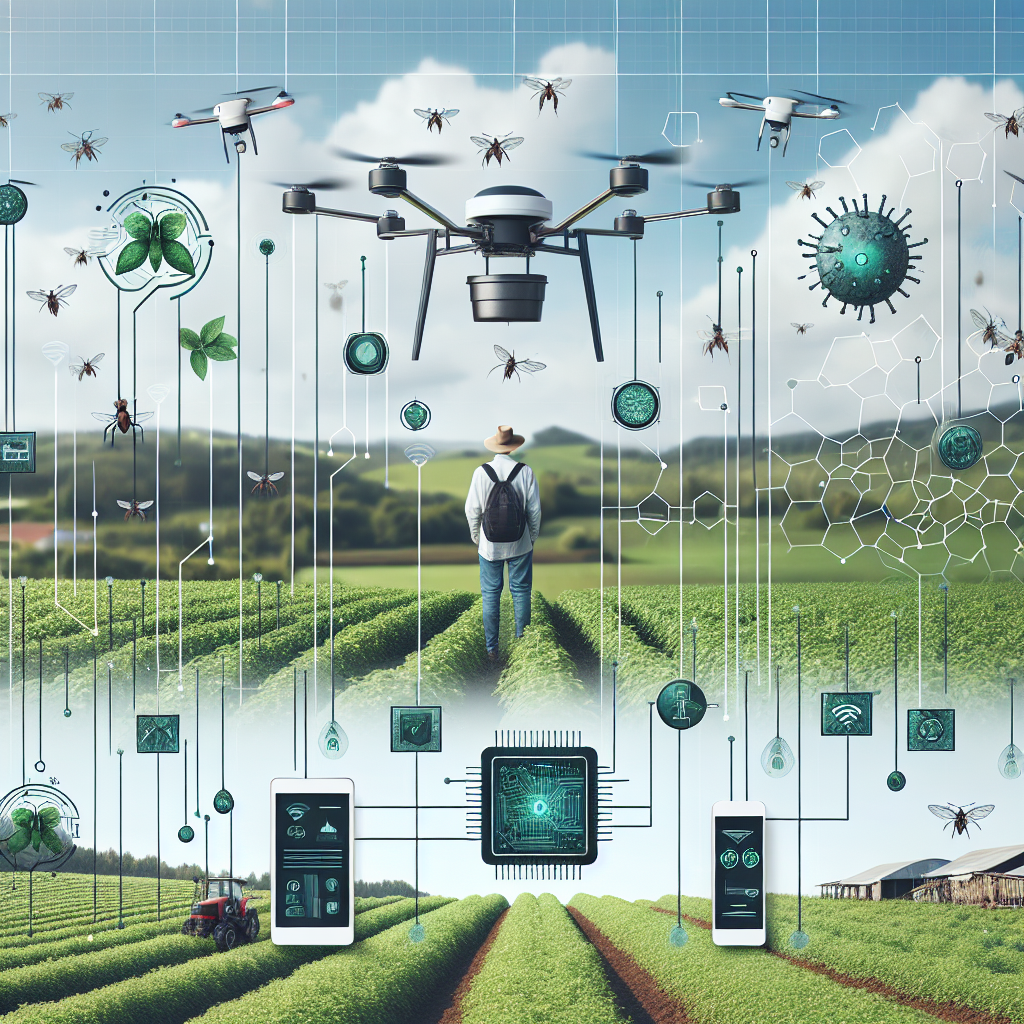
In recent years, there has been a growing interest in the use of artificial intelligence (AI) technologies for pest control in organic farming. As the demand for organic produce continues to rise, farmers are looking for innovative and sustainable solutions to manage pests without relying on chemical pesticides. AI technologies offer a promising alternative, providing farmers with a more precise and efficient way to monitor and control pests while reducing the environmental impact of conventional pest management methods.
One of the key advantages of using AI technologies for pest control in organic farming is the ability to collect and analyze vast amounts of data in real-time. This allows farmers to monitor pest populations, identify potential infestations, and take proactive measures to prevent damage to crops. By using sensors, drones, and other IoT devices, farmers can collect data on temperature, humidity, soil moisture, and other environmental factors that can affect pest populations. This data is then analyzed using AI algorithms to predict pest outbreaks and recommend the most effective control strategies.
Another benefit of using AI technologies for pest control in organic farming is the ability to target pests more accurately. Traditional pest control methods often involve blanket applications of pesticides, which can harm beneficial insects and disrupt the ecosystem. AI technologies, on the other hand, allow farmers to target specific pests with precision, using techniques such as pheromone traps, biopesticides, and biological control agents. This not only reduces the use of chemical pesticides but also minimizes the impact on non-target organisms and promotes a more sustainable farming system.
One of the most promising applications of AI technologies for pest control in organic farming is the use of autonomous robotic systems. These robots can be equipped with sensors, cameras, and AI algorithms to detect and remove pests from crops without the need for human intervention. For example, a robot equipped with computer vision technology can identify and target pests such as aphids or caterpillars, while a robotic arm can pick them off or apply a targeted treatment. This not only reduces the labor costs associated with pest control but also allows farmers to manage pests more efficiently and effectively.
In addition to autonomous robots, AI technologies can also be used to develop predictive models for pest outbreaks. By analyzing historical data on pest populations, weather patterns, and crop growth, AI algorithms can forecast when and where pests are most likely to occur. This allows farmers to take preemptive measures, such as releasing natural predators or implementing cultural practices to deter pests, before they become a problem. By using predictive models, farmers can reduce the need for reactive pest control measures and minimize the damage caused by pests.
Despite the numerous benefits of using AI technologies for pest control in organic farming, there are some challenges that need to be addressed. One of the main challenges is the cost of implementing AI technologies, which can be prohibitive for small-scale farmers. Additionally, there may be technical barriers, such as the lack of reliable internet connectivity in rural areas, that can hinder the adoption of AI technologies. Farmers may also need training and support to effectively use AI technologies for pest control, which can be a barrier for those who are not familiar with advanced technology.
To address these challenges, governments, research institutions, and private companies are working to develop affordable and user-friendly AI technologies for pest control in organic farming. By providing training and technical support to farmers, as well as financial incentives to adopt AI technologies, policymakers can help promote the widespread adoption of these innovative solutions. Additionally, collaborations between different stakeholders, such as farmers, researchers, and technology providers, can help accelerate the development and deployment of AI technologies for pest control in organic farming.
Overall, AI technologies offer a promising solution for pest control in organic farming, providing farmers with a more sustainable and effective way to manage pests without relying on chemical pesticides. By harnessing the power of data analytics, machine learning, and robotics, farmers can improve their pest management practices, reduce the environmental impact of conventional pest control methods, and ensure the long-term viability of organic farming systems.
FAQs:
1. Can AI technologies completely replace chemical pesticides in organic farming?
While AI technologies offer a promising alternative to chemical pesticides, they may not be able to completely replace them in all cases. Some pests may require more targeted or specialized control methods that AI technologies may not be able to provide. However, AI technologies can significantly reduce the reliance on chemical pesticides and promote a more sustainable approach to pest control in organic farming.
2. Will using AI technologies for pest control in organic farming be cost-effective for small-scale farmers?
The cost of implementing AI technologies for pest control in organic farming can vary depending on the scale of the operation and the specific technologies used. While there may be upfront costs associated with purchasing equipment and training personnel, the long-term benefits of using AI technologies, such as reduced labor costs and increased crop yields, can make it a cost-effective investment for small-scale farmers.
3. How can farmers access and learn to use AI technologies for pest control in organic farming?
Farmers can access AI technologies for pest control in organic farming through partnerships with research institutions, technology providers, and government agencies. These organizations can provide training, technical support, and financial incentives to help farmers adopt and integrate AI technologies into their pest management practices. Additionally, online resources, workshops, and demonstrations can help farmers learn how to use AI technologies effectively.
4. Are there any ethical concerns associated with using AI technologies for pest control in organic farming?
While AI technologies offer significant benefits for pest control in organic farming, there may be ethical concerns related to data privacy, environmental impact, and the use of autonomous robotic systems. Farmers and policymakers need to consider these ethical issues when implementing AI technologies and ensure that they are used in a responsible and sustainable manner. Collaborations between different stakeholders can help address these concerns and promote the ethical use of AI technologies in organic farming.