
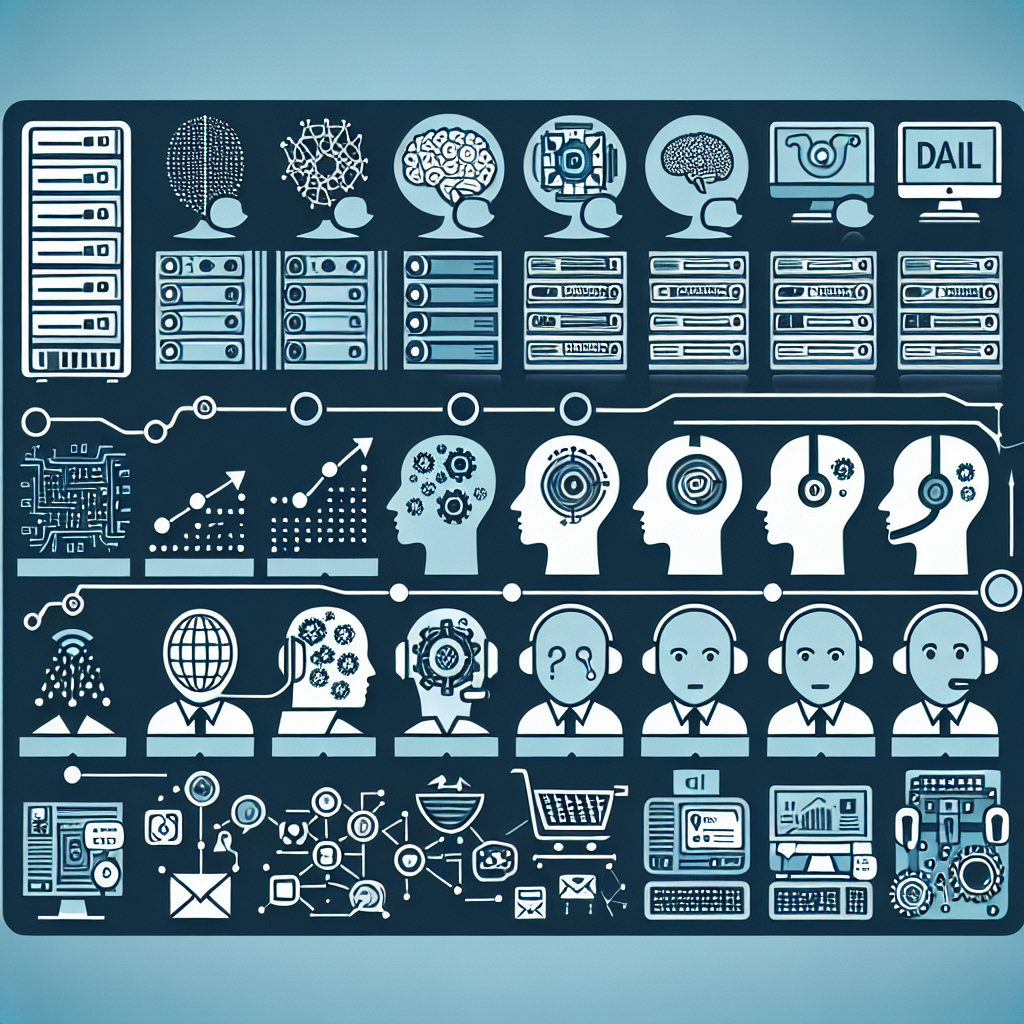
Artificial Intelligence (AI) has revolutionized the way businesses interact with their customers, particularly in the realm of customer service. With the advancements in AI software, companies are able to provide more efficient, personalized, and convenient customer service experiences. This evolution of AI software in customer service has not only improved customer satisfaction but also increased operational efficiency for businesses. In this article, we will explore the evolution of AI software in customer service and its impact on businesses and customers.
Early AI software in customer service primarily focused on automating simple tasks such as answering frequently asked questions, collecting customer information, and routing calls to the appropriate department. These basic chatbots were often limited in their capabilities and could only handle specific tasks within a predefined script. While they provided some level of efficiency, they lacked the ability to understand complex queries or provide personalized responses.
As technology advanced, AI software in customer service began to incorporate machine learning algorithms that enabled chatbots to learn from interactions with customers and improve their responses over time. These AI-powered chatbots were able to analyze patterns in customer queries, understand natural language, and provide more accurate and relevant answers. This evolution allowed businesses to offer more personalized and efficient customer service experiences without the need for human intervention.
One of the key advancements in AI software for customer service is the integration of natural language processing (NLP) technology. NLP enables AI systems to understand and interpret human language, allowing them to engage in more natural and meaningful conversations with customers. This technology has greatly improved the effectiveness of chatbots in addressing customer queries, resolving issues, and providing recommendations.
Another major development in AI software for customer service is the incorporation of sentiment analysis capabilities. Sentiment analysis allows AI systems to analyze the tone and emotion behind customer interactions, enabling businesses to identify and address customer dissatisfaction or frustration in real-time. This proactive approach to customer service has helped businesses improve customer satisfaction and loyalty.
In addition to chatbots, AI software in customer service has also expanded to include virtual assistants and voice-enabled devices. Virtual assistants like Amazon’s Alexa and Google Assistant are able to provide personalized customer support through voice interactions, making it easier for customers to access information and services. Voice-enabled devices have become increasingly popular in homes and businesses, further driving the adoption of AI technology in customer service.
The evolution of AI software in customer service has also led to the rise of omnichannel customer support. Businesses are now able to integrate AI-powered chatbots and virtual assistants across multiple communication channels, including websites, social media, messaging apps, and voice platforms. This seamless integration allows customers to engage with businesses through their preferred channels, providing a consistent and personalized experience.
Overall, the evolution of AI software in customer service has transformed the way businesses interact with their customers. By leveraging AI technology, businesses are able to provide more efficient, personalized, and convenient customer service experiences. This not only improves customer satisfaction but also drives operational efficiency and cost savings for businesses.
FAQs:
Q: What are the benefits of using AI software in customer service?
A: AI software in customer service offers several benefits, including improved efficiency, personalized interactions, 24/7 availability, and proactive issue resolution.
Q: How does AI software in customer service impact businesses?
A: AI software in customer service helps businesses improve customer satisfaction, reduce operational costs, increase productivity, and drive revenue growth.
Q: What are some examples of AI-powered customer service solutions?
A: Examples of AI-powered customer service solutions include chatbots, virtual assistants, sentiment analysis tools, and voice-enabled devices.
Q: How can businesses integrate AI software into their customer service operations?
A: Businesses can integrate AI software into their customer service operations by selecting the right technology, training employees, monitoring performance, and continuously optimizing the system.
Q: What are the future trends in AI software for customer service?
A: Future trends in AI software for customer service include the use of advanced analytics, predictive modeling, voice recognition, and augmented reality to enhance customer experiences.
In conclusion, the evolution of AI software in customer service has significantly transformed the way businesses interact with their customers. By leveraging AI technology, businesses are able to provide more personalized, efficient, and convenient customer service experiences. This evolution has not only improved customer satisfaction but also increased operational efficiency and cost savings for businesses. As AI technology continues to advance, businesses can expect even more innovative and impactful solutions to enhance their customer service operations.