
Artificial Intelligence (AI) has been rapidly advancing in recent years, transforming many aspects of our lives. From healthcare to finance to entertainment, AI is revolutionizing the way we work, play, and create. One area that has seen significant impact from AI is street performance. Street performers, also known as buskers, have long been a staple of cities around the world, entertaining passersby with their music, magic, juggling, and other forms of artistic expression. With the help of AI, these performers are now exploring new ways to engage audiences and push the boundaries of their art.
AI-powered instruments and tools have opened up a world of possibilities for street performers. One example is the use of AI-generated music, where algorithms create original compositions based on input from the performer. This allows musicians to collaborate with AI in real-time, creating unique and dynamic performances that blend human creativity with machine intelligence. AI can also be used to enhance traditional instruments, adding effects, loops, and other elements to create a richer and more immersive sound experience for audiences.
In addition to music, AI is also being used in other forms of street performance, such as magic and juggling. Magicians can use AI to create interactive tricks and illusions that respond to audience input, creating a more engaging and personalized experience for spectators. Jugglers can use AI to analyze their movements and improve their technique, pushing the boundaries of what is possible in their art form.
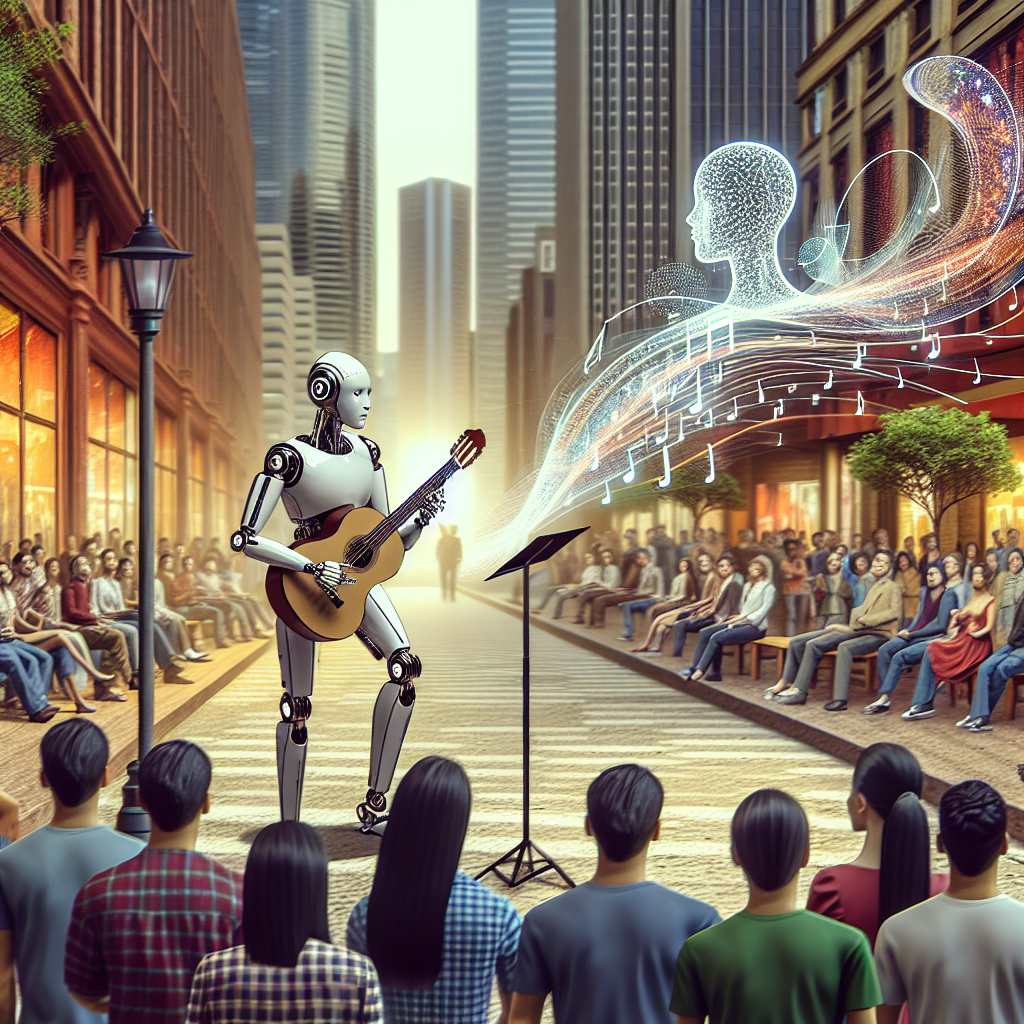
One of the most exciting developments in AI-powered street performance is the use of robots. Robots are being programmed to dance, play music, and interact with audiences in ways that were previously only possible for human performers. These robotic street performers can captivate crowds with their precision, agility, and otherworldly charm, creating a truly unique and unforgettable experience for everyone who encounters them.
AI is also changing the way street performers interact with their audiences. With the help of AI-powered chatbots and virtual assistants, performers can engage with spectators in new and innovative ways. Chatbots can answer questions, provide information, and even take song requests, making the performance more interactive and personalized for each individual in the crowd. Virtual assistants can also help performers manage their schedules, promote their shows, and connect with fans on social media, allowing them to focus more on their craft and less on the logistics of running a street performance.
Despite all the potential benefits of AI in street performance, there are also some challenges and concerns to consider. One of the main concerns is the impact of AI on the authenticity and creativity of the performance. Some traditionalists worry that AI could diminish the human element of street performance, replacing genuine emotion and expression with cold, calculated algorithms. Others fear that AI could lead to a homogenization of street performance, with all performers sounding and looking the same as they rely on the same AI tools and techniques.
Another concern is the ethical implications of using AI in street performance. As AI becomes more advanced, there are questions about data privacy, consent, and ownership of the content created by AI-powered tools. Performers must navigate these ethical considerations carefully to ensure that they are respecting the rights and wishes of their audiences and collaborators.
Despite these challenges, the use of AI in street performance opens up a world of possibilities for artists and audiences alike. By embracing AI as a tool for creativity and innovation, street performers can explore new forms of expression, connect with audiences in new ways, and push the boundaries of their art. As AI continues to evolve and expand, the future of street performance looks brighter and more exciting than ever before.
FAQs:
1. How is AI being used in street performance?
– AI is being used in street performance in a variety of ways, including generating music, enhancing traditional instruments, creating interactive magic tricks, analyzing juggling techniques, and even programming robots to perform on the street.
2. What are some benefits of using AI in street performance?
– Some benefits of using AI in street performance include creating unique and dynamic performances, engaging audiences in new and innovative ways, and pushing the boundaries of what is possible in various art forms.
3. What are some concerns about using AI in street performance?
– Some concerns about using AI in street performance include the potential impact on the authenticity and creativity of the performance, as well as ethical considerations related to data privacy, consent, and ownership of AI-generated content.
4. How can street performers navigate the challenges of using AI in their performances?
– Street performers can navigate the challenges of using AI in their performances by carefully considering the impact on their artistry, engaging in ethical practices, and staying informed about the latest developments in AI technology and regulations.
5. What does the future hold for AI and street performance?
– The future of AI and street performance is bright and exciting, with endless possibilities for artists to explore new forms of expression, connect with audiences in new ways, and push the boundaries of their art. As AI technology continues to evolve, street performers can expect to see even more innovative and creative uses of AI in their performances.