
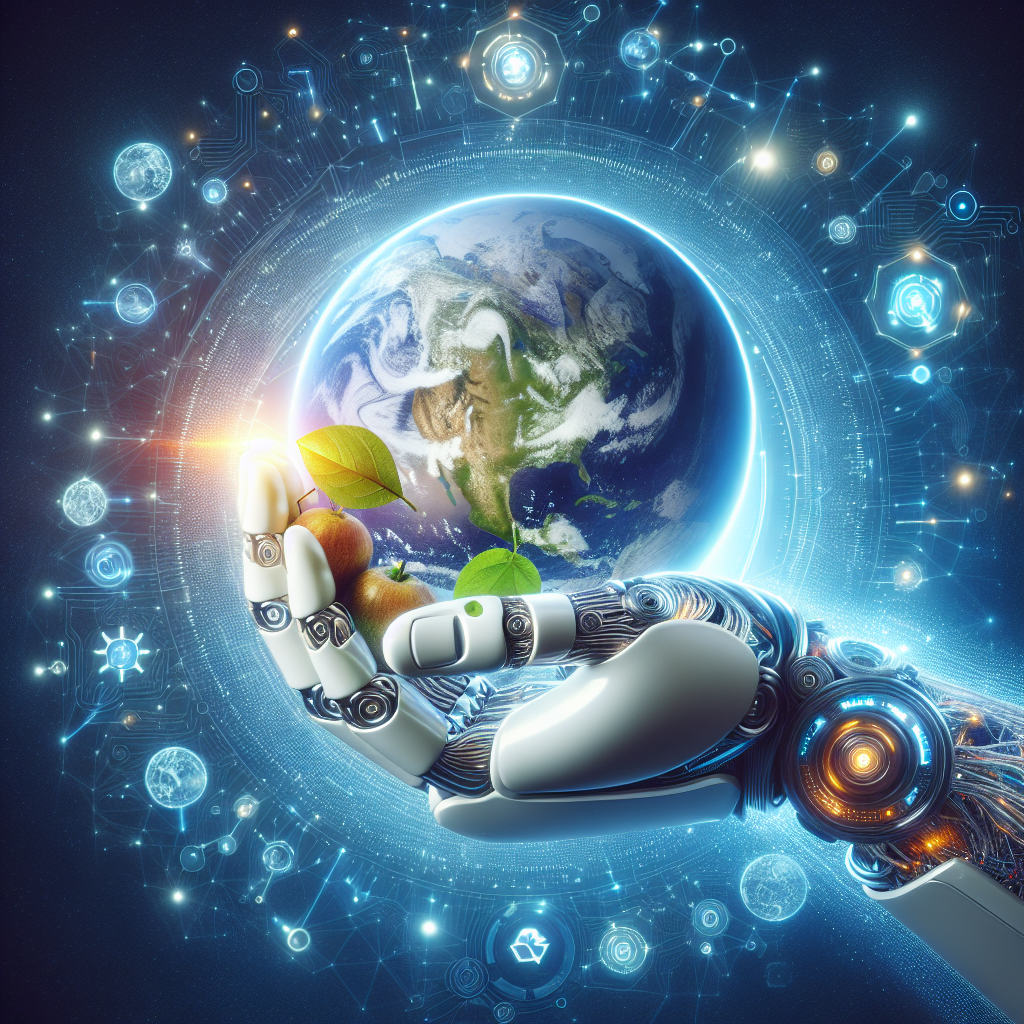
The Potential of AI in Addressing Global Challenges
Artificial Intelligence (AI) has the potential to revolutionize the way we address global challenges. From climate change to poverty alleviation, AI can help us find innovative solutions to some of the most pressing issues facing humanity. In this article, we will explore the potential of AI in addressing these challenges and how it can be used to create a more sustainable and equitable world.
Climate Change
One of the biggest challenges facing the world today is climate change. AI can play a crucial role in helping us mitigate its effects and adapt to a changing environment. For example, AI can be used to analyze large amounts of data to better understand climate patterns and predict future trends. This can help policymakers make informed decisions about how to reduce greenhouse gas emissions and protect vulnerable populations from the impacts of climate change.
AI can also be used to optimize energy use and reduce waste. For example, smart grids powered by AI can help us better manage our energy resources and reduce our carbon footprint. AI can also help us design more sustainable buildings and infrastructure, leading to a more environmentally friendly built environment.
Poverty Alleviation
Another major global challenge is poverty and inequality. AI can help us address these issues by creating new opportunities for economic growth and development. For example, AI-powered tools can help farmers increase their crop yields and improve their livelihoods. AI can also be used to provide access to financial services for underserved populations, helping them build wealth and improve their quality of life.
AI can also be used to improve access to education and healthcare, two key factors in reducing poverty and improving quality of life. For example, AI-powered tutoring systems can help students learn at their own pace and improve their academic performance. AI can also be used to diagnose and treat medical conditions, especially in remote areas where access to healthcare is limited.
Disaster Response
Natural disasters such as earthquakes, hurricanes, and wildfires pose a major threat to communities around the world. AI can help us better prepare for and respond to these disasters, saving lives and reducing the impact on infrastructure. For example, AI can be used to analyze satellite imagery to assess damage and prioritize rescue efforts. AI can also be used to predict the path of a hurricane or the spread of a wildfire, helping authorities evacuate people and allocate resources more effectively.
AI can also be used to improve communication during disasters, ensuring that affected communities receive timely and accurate information. For example, chatbots powered by AI can provide real-time updates on evacuation routes and emergency shelters. AI can also be used to analyze social media posts to identify areas in need of assistance and coordinate relief efforts.
Ethical Considerations
While AI has the potential to address global challenges, there are also ethical considerations that must be taken into account. For example, there is a risk that AI could be used to perpetuate discrimination and inequality, especially if biased data sets are used to train algorithms. It is important to ensure that AI systems are developed and deployed in a way that is fair and inclusive, taking into account the needs and perspectives of all stakeholders.
There is also a risk that AI could lead to job displacement, especially in industries that rely heavily on manual labor. It is important to invest in education and training programs to help workers adapt to the changing labor market and acquire the skills needed to thrive in a digital economy. Governments and businesses must also work together to create policies that protect workers’ rights and ensure a smooth transition to a more automated world.
FAQs
Q: How can AI be used to address global challenges?
A: AI can be used to analyze data, optimize processes, and make predictions that can help us address issues such as climate change, poverty alleviation, and disaster response.
Q: What are some examples of AI applications in addressing global challenges?
A: AI can be used to analyze climate data, optimize energy use, increase crop yields, provide access to financial services, improve education and healthcare, and coordinate disaster response efforts.
Q: What are some ethical considerations when using AI to address global challenges?
A: It is important to ensure that AI systems are developed and deployed in a fair and inclusive manner, taking into account the needs and perspectives of all stakeholders. There is also a risk of job displacement, so it is important to invest in education and training programs to help workers adapt to a more automated world.
In conclusion, AI has the potential to address global challenges in innovative and impactful ways. By harnessing the power of AI, we can create a more sustainable and equitable world for future generations. However, it is important to consider the ethical implications of AI and work together to ensure that its benefits are shared by all.