
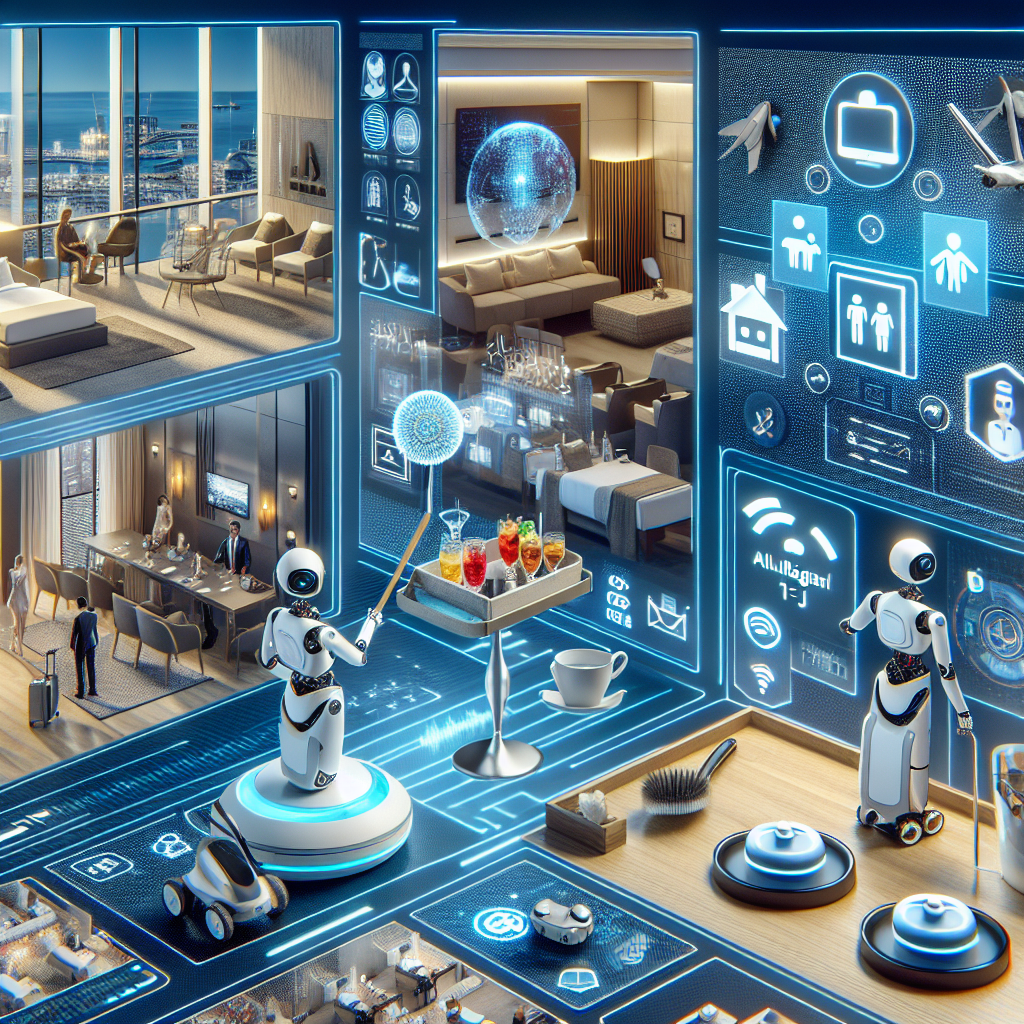
Artificial Intelligence (AI) is rapidly transforming various industries, and the hospitality industry is no exception. From personalized customer experiences to operational efficiency, AI is revolutionizing the way hospitality businesses operate and deliver services. In this article, we will explore the future of AI in the hospitality industry and how it is reshaping the sector.
AI in Customer Service
One of the most significant impacts of AI in the hospitality industry is in customer service. AI-powered chatbots and virtual assistants are being used to provide instant responses to customer queries, make personalized recommendations, and even handle bookings. These chatbots can be integrated into websites, social media platforms, and messaging apps, allowing customers to interact with businesses 24/7. This not only enhances customer satisfaction but also helps businesses save on labor costs.
AI is also being used to analyze customer data and preferences to offer personalized experiences. By leveraging machine learning algorithms, businesses can predict customer behavior, recommend relevant products and services, and tailor marketing campaigns to individual preferences. This not only improves customer satisfaction but also drives revenue and loyalty.
AI in Operations
AI is also revolutionizing operations in the hospitality industry, making them more efficient and cost-effective. Predictive analytics and machine learning algorithms are being used to optimize inventory management, pricing strategies, and staffing levels. By analyzing historical data and real-time information, businesses can make informed decisions that drive profitability and improve overall efficiency.
AI is also being used to automate routine tasks, such as check-ins, room service requests, and housekeeping. By deploying robots and smart devices, businesses can streamline operations and reduce labor costs. For example, hotels are using AI-powered robots to deliver room service, clean rooms, and even provide concierge services. This not only improves efficiency but also enhances the guest experience.
AI in Marketing
AI is playing a crucial role in marketing for the hospitality industry. By analyzing customer data and behavior, businesses can create targeted marketing campaigns that resonate with their target audience. AI-powered tools can segment customers based on their preferences, purchase history, and demographics, allowing businesses to deliver personalized offers and promotions.
AI is also being used to optimize digital marketing campaigns, such as search engine optimization (SEO), pay-per-click advertising, and social media marketing. By leveraging AI algorithms, businesses can identify trends, analyze performance, and make data-driven decisions that drive ROI. This not only improves marketing effectiveness but also reduces costs and increases revenue.
The Future of AI in the Hospitality Industry
The future of AI in the hospitality industry is bright, with continued advancements in technology driving innovation and transformation. Here are some key trends that we can expect to see in the coming years:
1. Personalized Experiences: AI will continue to play a crucial role in delivering personalized experiences to customers. By analyzing data and preferences, businesses can create tailored services that meet individual needs and expectations. From customized room amenities to personalized recommendations, AI will enable businesses to create unique experiences that drive loyalty and repeat business.
2. Voice Technology: Voice-powered assistants, such as Amazon Alexa and Google Assistant, are becoming increasingly popular in the hospitality industry. Hotels are integrating voice technology into rooms to provide guests with hands-free access to information and services. From ordering room service to controlling room temperature, voice technology will enhance the guest experience and streamline operations.
3. Robotics: Robots are already being used in the hospitality industry for tasks such as cleaning, room service, and concierge services. In the future, we can expect to see more advanced robotics being deployed in hotels and restaurants. For example, robots could be used for security patrols, luggage handling, and even cooking. This will not only improve efficiency but also reduce labor costs and enhance the guest experience.
4. Predictive Analytics: AI-powered predictive analytics will continue to drive operational efficiency and revenue growth in the hospitality industry. By analyzing data and trends, businesses can anticipate customer needs, optimize pricing strategies, and forecast demand. This will enable businesses to make informed decisions that drive profitability and improve overall performance.
5. Augmented Reality (AR) and Virtual Reality (VR): AR and VR technologies are being used to enhance the guest experience in the hospitality industry. Hotels and resorts are leveraging AR and VR to provide virtual tours, interactive experiences, and immersive storytelling. This not only engages customers but also differentiates businesses from competitors and drives brand loyalty.
Frequently Asked Questions (FAQs)
Q: How is AI being used in the hospitality industry?
A: AI is being used in the hospitality industry to enhance customer service, streamline operations, and improve marketing effectiveness. Chatbots, predictive analytics, and robotics are some of the key AI applications in the sector.
Q: How can AI improve customer service in the hospitality industry?
A: AI can improve customer service in the hospitality industry by providing instant responses to customer queries, offering personalized recommendations, and automating routine tasks. Chatbots and virtual assistants are being used to deliver seamless and efficient customer experiences.
Q: What are the benefits of using AI in the hospitality industry?
A: The benefits of using AI in the hospitality industry include improved customer satisfaction, increased operational efficiency, and enhanced marketing effectiveness. AI enables businesses to deliver personalized experiences, optimize operations, and drive revenue growth.
Q: What are some examples of AI applications in the hospitality industry?
A: Some examples of AI applications in the hospitality industry include chatbots for customer service, predictive analytics for operations, and robots for housekeeping and room service. AI technologies are being used to streamline processes, enhance the guest experience, and drive profitability.
Q: What are the future trends of AI in the hospitality industry?
A: The future trends of AI in the hospitality industry include personalized experiences, voice technology, robotics, predictive analytics, and AR/VR. These technologies will continue to transform the sector, driving innovation and differentiation.
In conclusion, AI is reshaping the hospitality industry by improving customer service, streamlining operations, and enhancing marketing effectiveness. With continued advancements in technology, we can expect to see even more innovative applications of AI in the sector, driving revenue growth and customer loyalty. The future of AI in the hospitality industry is bright, with endless possibilities for innovation and transformation.