
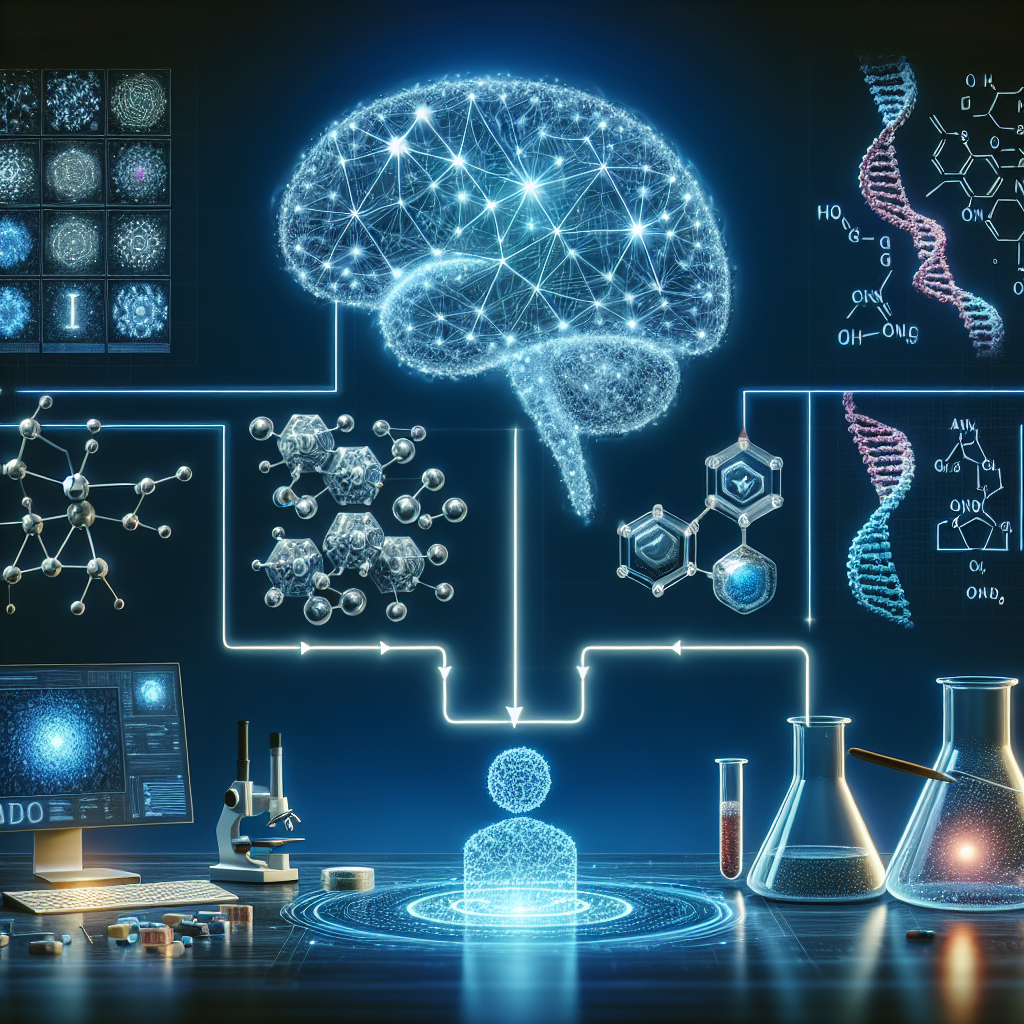
The Role of Generative AI in Drug Discovery
In recent years, the field of drug discovery has been revolutionized by the use of generative artificial intelligence (AI) technology. Generative AI refers to machine learning algorithms that can create new data, such as chemical structures, based on input data. This technology has the potential to significantly accelerate the drug discovery process by rapidly generating new molecules with desired properties for drug development.
Generative AI in drug discovery has the ability to design novel compounds with specific biological activities, optimize existing drug candidates, and predict potential drug-drug interactions. By harnessing the power of AI, researchers can explore vast chemical space more efficiently and effectively than traditional methods. This has the potential to significantly reduce the time and cost required to bring new drugs to market.
One of the key advantages of generative AI in drug discovery is its ability to predict the properties of novel compounds before they are synthesized and tested in the lab. This can help researchers prioritize the most promising candidates for further development, saving time and resources in the drug discovery process. Additionally, generative AI can be used to design molecules with specific properties, such as improved potency, selectivity, and safety profiles.
Generative AI can also be used to predict the likelihood of success of a drug candidate in clinical trials, based on factors such as pharmacokinetics, toxicity, and efficacy. This can help pharmaceutical companies make more informed decisions about which compounds to advance in their pipeline, ultimately leading to a higher success rate in bringing new drugs to market.
Furthermore, generative AI can be used to identify new targets for drug development by analyzing large datasets of biological and chemical information. By discovering new drug targets, researchers can develop novel therapeutics for diseases that were previously untreatable.
Overall, the role of generative AI in drug discovery is to expedite the process of identifying and developing new drugs with improved efficacy and safety profiles. By leveraging AI technology, researchers can explore chemical space more comprehensively and efficiently, leading to the discovery of novel drug candidates that have the potential to revolutionize the treatment of various diseases.
FAQs
Q: How does generative AI work in drug discovery?
A: Generative AI works by training machine learning algorithms on large datasets of chemical structures and biological data. These algorithms learn to generate new molecules with desired properties based on the input data. Researchers can then use generative AI to design novel compounds, optimize existing drug candidates, and predict potential drug-drug interactions.
Q: What are the advantages of using generative AI in drug discovery?
A: Generative AI has the ability to rapidly generate new molecules with specific properties, predict the properties of novel compounds before they are synthesized and tested, and identify new targets for drug development. This technology can significantly accelerate the drug discovery process, reduce costs, and increase the likelihood of success in bringing new drugs to market.
Q: How accurate is generative AI in predicting the properties of novel compounds?
A: Generative AI has been shown to be highly accurate in predicting the properties of novel compounds, such as pharmacokinetics, toxicity, and efficacy. By training machine learning algorithms on large datasets of chemical and biological data, researchers can leverage generative AI to design molecules with specific properties and prioritize the most promising candidates for further development.
Q: What are the limitations of generative AI in drug discovery?
A: While generative AI has shown great promise in drug discovery, there are still some limitations to consider. For example, the technology relies on the quality of the input data, so researchers must ensure that the datasets used to train the algorithms are accurate and representative. Additionally, generative AI is not a replacement for traditional drug discovery methods, but rather a complementary tool that can help researchers explore chemical space more efficiently.
Q: How is generative AI being used in the pharmaceutical industry?
A: Generative AI is being used in the pharmaceutical industry to design novel compounds, optimize existing drug candidates, predict potential drug-drug interactions, and identify new targets for drug development. By leveraging AI technology, pharmaceutical companies can accelerate the drug discovery process, reduce costs, and increase the likelihood of success in bringing new drugs to market.