
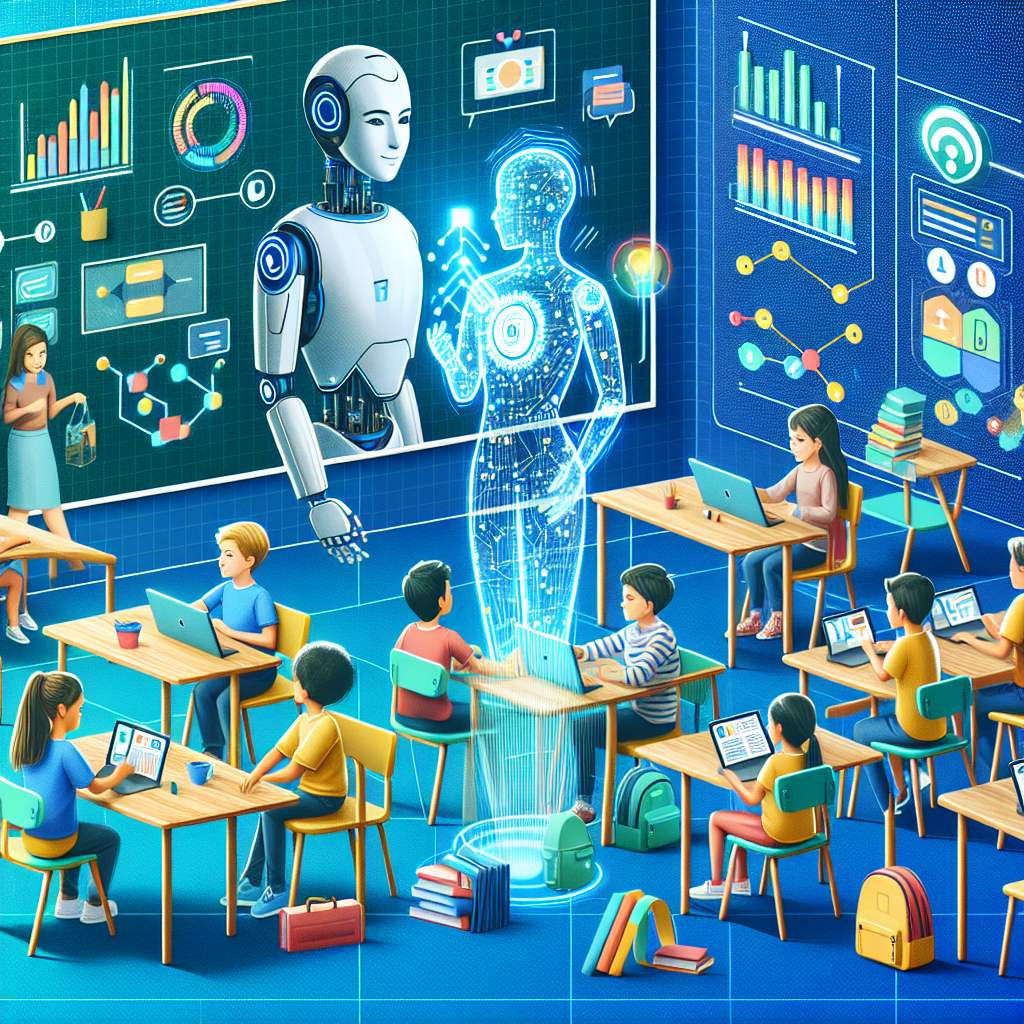
AI-driven solutions for personalized learning have gained significant traction in recent years as educators and students alike seek more efficient and effective ways to teach and learn. By leveraging the power of artificial intelligence, personalized learning platforms can tailor educational content and experiences to the individual needs and preferences of each learner, ultimately leading to improved student outcomes and engagement.
In this article, we will explore the various AI-driven solutions that are currently being used in personalized learning, as well as the potential benefits and challenges associated with their implementation. We will also address some frequently asked questions about AI-driven personalized learning to provide a comprehensive overview of this rapidly evolving field.
AI-driven Solutions for Personalized Learning
AI-driven solutions for personalized learning encompass a wide range of technologies and tools that are designed to adapt and customize educational content and experiences based on the unique characteristics and learning styles of individual students. These solutions can include intelligent tutoring systems, adaptive learning platforms, virtual reality simulations, and chatbots, among others.
Intelligent tutoring systems (ITS) are perhaps the most well-known AI-driven solution for personalized learning. These systems use algorithms to analyze student performance data and provide personalized feedback and guidance to help students improve their understanding of the material. ITS can adapt to the pace and preferences of each learner, offering targeted support and resources to address areas of weakness or challenge.
Adaptive learning platforms are another popular AI-driven solution for personalized learning. These platforms use machine learning algorithms to analyze student data and behavior in real-time, adjusting the difficulty and sequence of learning activities to match the individual needs and abilities of each student. Adaptive learning platforms can provide personalized recommendations for study materials, quizzes, and assignments, helping students stay engaged and motivated throughout their learning journey.
Virtual reality simulations are also being used to enhance personalized learning experiences. By immersing students in interactive, 3D environments, virtual reality simulations can provide hands-on learning opportunities that are tailored to the specific needs and interests of each student. These simulations can be particularly effective for teaching complex or abstract concepts in subjects such as science, math, and engineering.
Chatbots are another AI-driven solution that is increasingly being used in personalized learning. These conversational agents can engage with students in natural language conversations, providing personalized support and assistance in real-time. Chatbots can answer questions, provide feedback on assignments, and offer recommendations for further study, helping students navigate their learning experience more effectively.
Benefits of AI-driven Personalized Learning
There are several key benefits associated with the use of AI-driven solutions for personalized learning. One of the primary advantages is the ability to tailor educational content and experiences to the specific needs and preferences of each student. By leveraging AI algorithms to analyze student data and behavior, educators can provide targeted support and resources that are personalized to the individual learning styles and abilities of each student.
Another benefit of AI-driven personalized learning is the ability to track and monitor student progress in real-time. By analyzing student performance data, educators can identify areas of weakness or challenge and provide timely interventions to help students improve their understanding of the material. This can lead to improved student outcomes and higher levels of engagement and motivation.
Additionally, AI-driven personalized learning can help educators optimize their teaching strategies and resources. By analyzing student data and behavior, educators can gain insights into which instructional methods and materials are most effective for different types of learners. This can help educators tailor their teaching approach to better meet the needs of their students and improve overall learning outcomes.
Challenges of AI-driven Personalized Learning
While AI-driven solutions for personalized learning offer many benefits, there are also several challenges that educators and students may face when implementing these technologies. One of the primary challenges is the potential for bias in AI algorithms. If not carefully designed and monitored, AI algorithms can inadvertently perpetuate existing biases and inequalities in education, such as gender or racial biases in grading or recommendations.
Another challenge is the potential for data privacy and security concerns. AI-driven personalized learning platforms rely on large amounts of student data to analyze and adapt to individual learning needs. Educators must ensure that this data is handled securely and in compliance with relevant privacy regulations to protect student confidentiality and prevent unauthorized access or misuse.
Additionally, there may be concerns about the impact of AI-driven personalized learning on teacher roles and responsibilities. Some educators may worry that AI technologies will replace traditional teaching methods or reduce the need for human interaction in the classroom. It is important for educators to understand that AI-driven solutions are designed to complement, rather than replace, human teachers, and that they can enhance the teaching and learning experience by providing personalized support and resources.
Frequently Asked Questions about AI-driven Personalized Learning
Q: How can AI-driven personalized learning benefit students with diverse learning needs?
A: AI-driven personalized learning can benefit students with diverse learning needs by providing tailored support and resources that are personalized to their individual learning styles and abilities. By analyzing student data and behavior, AI algorithms can identify areas of weakness or challenge and provide targeted interventions to help students improve their understanding of the material.
Q: How can educators ensure that AI-driven personalized learning is implemented responsibly and ethically?
A: Educators can ensure that AI-driven personalized learning is implemented responsibly and ethically by carefully monitoring and evaluating the design and implementation of AI algorithms. Educators should also prioritize data privacy and security, ensuring that student data is handled securely and in compliance with relevant privacy regulations.
Q: How can AI-driven personalized learning help educators optimize their teaching strategies and resources?
A: AI-driven personalized learning can help educators optimize their teaching strategies and resources by analyzing student data and behavior to gain insights into which instructional methods and materials are most effective for different types of learners. Educators can use this information to tailor their teaching approach and improve overall learning outcomes.
Q: What are some examples of AI-driven solutions for personalized learning?
A: Some examples of AI-driven solutions for personalized learning include intelligent tutoring systems, adaptive learning platforms, virtual reality simulations, and chatbots. These technologies use AI algorithms to analyze student data and behavior and provide personalized feedback and guidance to help students improve their understanding of the material.
In conclusion, AI-driven solutions for personalized learning have the potential to revolutionize the way we teach and learn by tailoring educational content and experiences to the individual needs and preferences of each student. By leveraging the power of artificial intelligence, educators can provide targeted support and resources that are personalized to the unique characteristics and learning styles of each learner, ultimately leading to improved student outcomes and engagement. While there are challenges associated with the implementation of AI-driven personalized learning, such as bias in algorithms and data privacy concerns, these technologies offer many benefits for educators and students alike. By addressing these challenges and leveraging the potential of AI-driven personalized learning, we can create more effective and equitable educational experiences for all learners.