
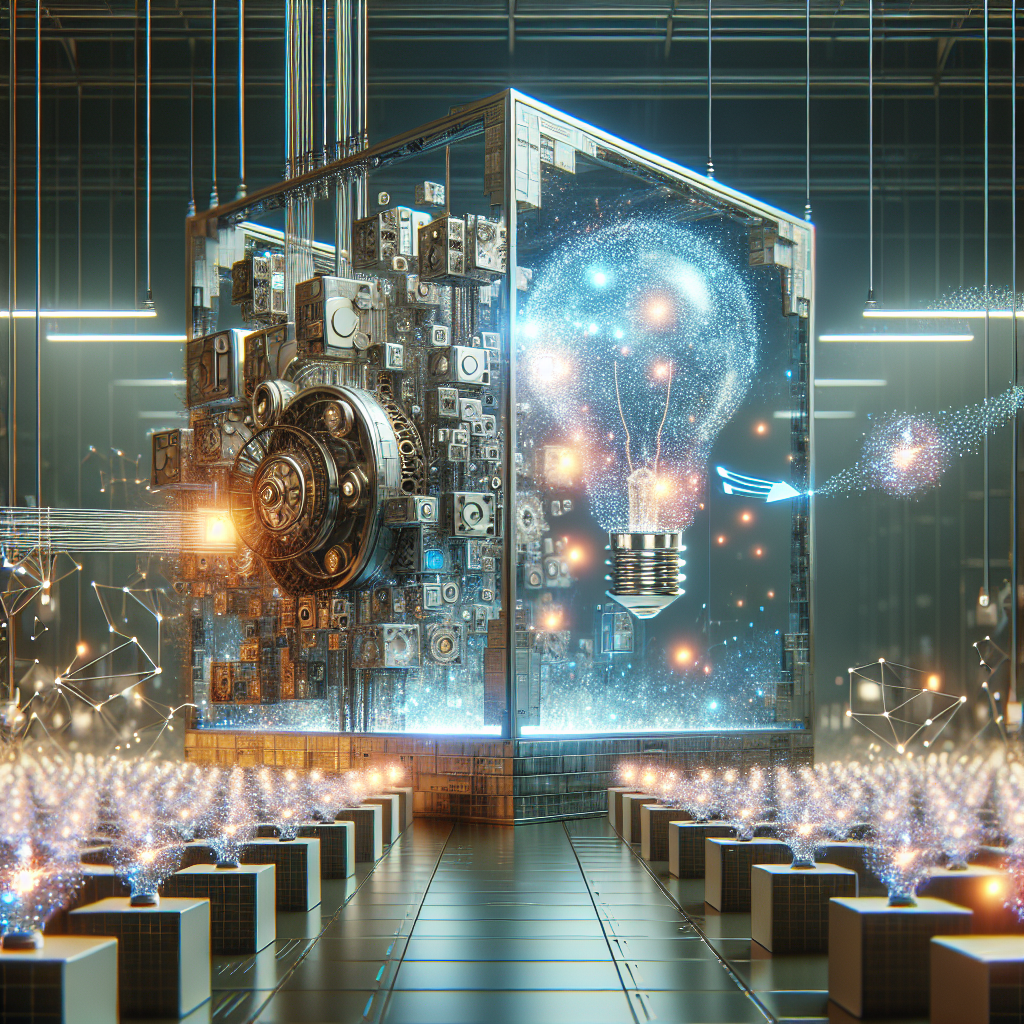
Generative AI: A Catalyst for Innovation
Artificial intelligence (AI) has been making significant advancements in recent years, with one of the most exciting developments being generative AI. Generative AI refers to algorithms that can create new content, such as images, text, or music, based on patterns and data it has been trained on. This technology has the potential to revolutionize industries ranging from art and design to healthcare and finance, as it enables the automated creation of new and innovative content.
Generative AI works by using deep learning techniques to analyze and learn from large datasets, such as images or text. It then uses this knowledge to generate new content that is similar in style and structure to the data it has been trained on. This process is known as generative modeling, and it has led to the creation of impressive applications such as deepfakes, which can create realistic-looking videos of people saying or doing things they never actually did.
One of the key advantages of generative AI is its ability to automate the creative process, allowing for the rapid creation of new and innovative content. For example, in the field of art and design, generative AI can be used to create unique and eye-catching designs, logos, or animations. This can save designers and artists time and effort, allowing them to focus on more complex and creative tasks.
In the healthcare industry, generative AI has the potential to revolutionize medical imaging and diagnosis. By analyzing large datasets of medical images, generative AI algorithms can generate new images that can help doctors identify and diagnose diseases more accurately and quickly. This can lead to improved patient outcomes and reduced healthcare costs.
Generative AI also has applications in the field of finance, where it can be used to generate realistic financial models and predictions based on historical data. This can help financial analysts and traders make more informed decisions and better manage risks in the market.
Overall, generative AI has the potential to be a catalyst for innovation in a wide range of industries, enabling the automated creation of new and innovative content that can drive growth and competitiveness.
FAQs
Q: How does generative AI differ from other types of AI?
A: Generative AI differs from other types of AI, such as machine learning or deep learning, in that it focuses on the creation of new content rather than just analyzing existing data. Generative AI algorithms are trained on large datasets and learn to generate new content based on the patterns and structures they have identified in the data.
Q: What are some examples of generative AI applications?
A: Some examples of generative AI applications include deepfakes, which can create realistic-looking videos of people saying or doing things they never actually did, and art and design tools that can automatically generate unique and eye-catching designs.
Q: How is generative AI being used in healthcare?
A: In healthcare, generative AI is being used to improve medical imaging and diagnosis. By analyzing large datasets of medical images, generative AI algorithms can generate new images that can help doctors identify and diagnose diseases more accurately and quickly.
Q: Can generative AI be used in finance?
A: Yes, generative AI can be used in finance to generate realistic financial models and predictions based on historical data. This can help financial analysts and traders make more informed decisions and better manage risks in the market.