
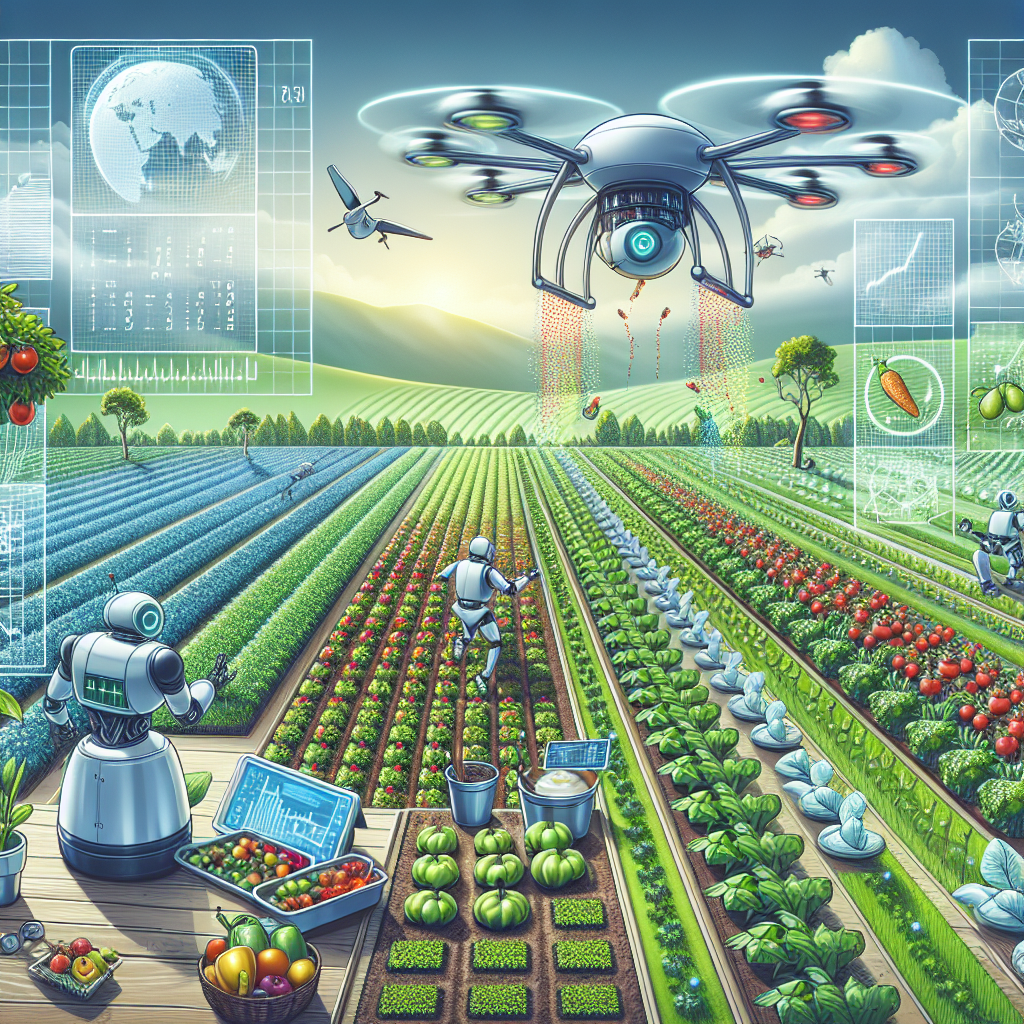
Artificial Intelligence (AI) is revolutionizing the way we approach various industries, and agriculture is no exception. With the global population projected to reach 9.7 billion by 2050, there is a pressing need for sustainable agriculture practices to ensure food security for all. AI-powered solutions are playing a crucial role in transforming the agricultural sector, making it more efficient, productive, and environmentally friendly.
AI technology uses data analytics, machine learning, and predictive modeling to optimize agricultural processes and decision-making. By analyzing large datasets, AI can provide insights and recommendations that help farmers improve crop yields, reduce waste, and minimize environmental impact. From precision farming to crop monitoring, AI-powered solutions are revolutionizing every aspect of agriculture.
One of the key benefits of AI in agriculture is its ability to enhance precision farming practices. Precision farming involves using data-driven insights to tailor farming practices to specific field conditions, optimizing resources such as water, fertilizers, and pesticides. AI algorithms can analyze satellite imagery, weather data, soil samples, and other relevant information to create detailed maps of fields, identifying areas that require specific treatments. This allows farmers to apply resources more efficiently, reducing costs and minimizing environmental impact.
AI-powered solutions also play a crucial role in crop monitoring and disease detection. By analyzing images captured by drones or sensors, AI algorithms can identify early signs of crop diseases, pest infestations, or nutrient deficiencies. This enables farmers to take proactive measures to prevent crop losses and optimize yield. AI can also help farmers track crop growth and development, predicting harvest times and optimizing harvesting schedules.
Furthermore, AI-powered solutions are revolutionizing supply chain management in agriculture. By analyzing market trends, consumer preferences, and transportation logistics, AI can help farmers and food producers optimize production and distribution processes. This ensures that food reaches consumers more efficiently, reducing waste and increasing profitability. AI can also help trace the origin of food products, ensuring transparency and accountability in the supply chain.
In addition to improving productivity and efficiency, AI-powered solutions are also contributing to sustainability in agriculture. By optimizing resource use and reducing waste, AI can help minimize the environmental impact of farming practices. For example, AI-powered irrigation systems can monitor soil moisture levels and weather conditions in real-time, adjusting water usage to prevent over-irrigation and water waste. Similarly, AI can help reduce the use of chemical pesticides and fertilizers by providing targeted recommendations for pest control and soil management.
Overall, AI-powered solutions are transforming agriculture into a more sustainable and efficient industry, ensuring food security for a growing global population. By harnessing the power of AI technology, farmers can optimize their practices, reduce waste, and minimize environmental impact, contributing to a more sustainable future for agriculture.
FAQs:
1. What are some examples of AI-powered solutions in agriculture?
– Some examples of AI-powered solutions in agriculture include precision farming, crop monitoring, disease detection, supply chain management, and irrigation systems.
2. How can AI help improve crop yields?
– AI can help improve crop yields by providing insights and recommendations on optimizing resources such as water, fertilizers, and pesticides. By analyzing field data, AI algorithms can identify areas that require specific treatments, enabling farmers to apply resources more efficiently.
3. How does AI contribute to sustainability in agriculture?
– AI contributes to sustainability in agriculture by optimizing resource use, reducing waste, and minimizing environmental impact. By providing targeted recommendations for pest control, soil management, and irrigation, AI helps farmers reduce the use of chemical pesticides and fertilizers, leading to a more sustainable farming practice.
4. What are the benefits of AI-powered solutions for food security?
– AI-powered solutions help ensure food security by improving productivity, efficiency, and sustainability in agriculture. By optimizing production processes, reducing waste, and enhancing supply chain management, AI contributes to a more secure and reliable food supply for a growing global population.