
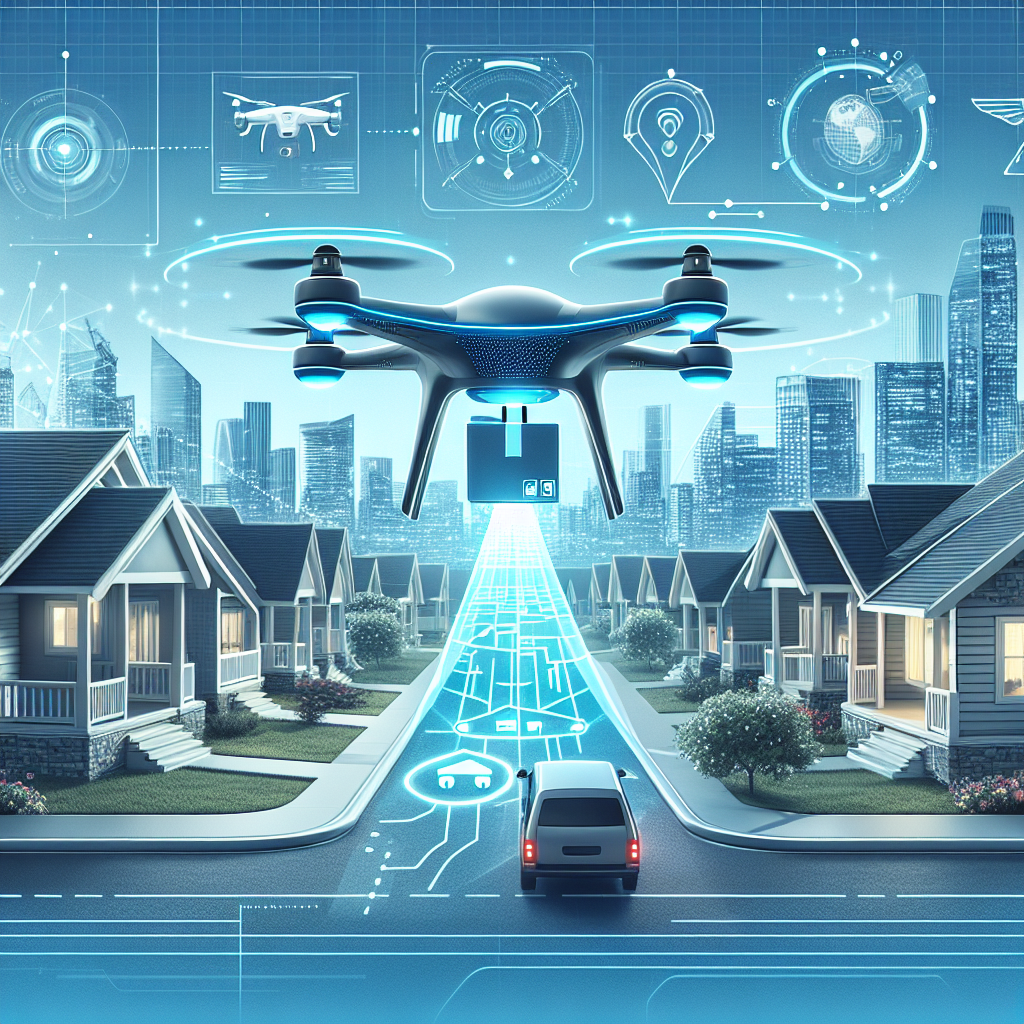
In today’s fast-paced world, last-mile delivery has become a key factor in the success of any e-commerce business. This final stage of the delivery process, from the distribution center to the customer’s doorstep, can often be the most challenging and costly part of the logistics chain. However, with the advancement of technology, particularly artificial intelligence (AI), businesses are finding new ways to enhance last-mile delivery and improve efficiency.
Artificial intelligence is revolutionizing the way companies approach last-mile delivery by providing real-time insights, predictive analytics, and automation capabilities. By leveraging AI technologies, businesses can optimize routes, reduce delivery times, and improve customer satisfaction. In this article, we will explore how AI is transforming last-mile delivery and the benefits it brings to e-commerce businesses.
1. Optimizing Delivery Routes
One of the key benefits of using AI in last-mile delivery is the ability to optimize delivery routes. Traditional route planning methods can be time-consuming and inefficient, leading to wasted resources and increased costs. AI algorithms can analyze large amounts of data, such as traffic patterns, weather conditions, and historical delivery data, to create the most efficient routes for drivers.
By optimizing delivery routes, businesses can reduce fuel consumption, lower transportation costs, and improve overall delivery times. This not only benefits the company’s bottom line but also enhances the customer experience by providing faster and more reliable deliveries.
2. Predictive Analytics
Another valuable application of AI in last-mile delivery is predictive analytics. By analyzing historical data and patterns, AI algorithms can predict future demand, identify potential bottlenecks, and anticipate customer preferences. This allows businesses to proactively address issues before they arise, such as predicting peak delivery times and adjusting staffing levels accordingly.
Predictive analytics can also help businesses identify opportunities for upselling and cross-selling by analyzing customer behavior and preferences. By leveraging AI technologies, businesses can personalize the delivery experience and increase customer satisfaction.
3. Automation
AI-powered automation is another game-changer in last-mile delivery. By automating repetitive tasks, such as order processing, route planning, and tracking, businesses can streamline operations and reduce human error. This allows drivers to focus on more value-added activities, such as customer service and problem-solving.
Automated delivery systems can also improve efficiency by enabling real-time tracking and communication with customers. By providing accurate delivery updates and notifications, businesses can enhance transparency and build trust with their customers.
4. Improved Customer Experience
Ultimately, the goal of enhancing last-mile delivery with AI is to improve the overall customer experience. By optimizing routes, predicting demand, and automating processes, businesses can provide faster, more reliable deliveries that meet customer expectations. This not only increases customer satisfaction but also encourages repeat business and positive word-of-mouth referrals.
In conclusion, artificial intelligence is transforming last-mile delivery by optimizing routes, providing predictive analytics, automating processes, and improving the customer experience. By leveraging AI technologies, e-commerce businesses can stay ahead of the competition, reduce costs, and drive growth. As the demand for fast and reliable deliveries continues to rise, AI will play an increasingly important role in enhancing last-mile delivery and shaping the future of e-commerce logistics.
FAQs:
Q: How does AI optimize delivery routes?
A: AI algorithms analyze data such as traffic patterns, weather conditions, and historical delivery data to create the most efficient routes for drivers. By optimizing routes, businesses can reduce fuel consumption, lower costs, and improve delivery times.
Q: What is predictive analytics in last-mile delivery?
A: Predictive analytics uses historical data and patterns to predict future demand, identify bottlenecks, and anticipate customer preferences. This allows businesses to proactively address issues and personalize the delivery experience.
Q: How does AI automation improve last-mile delivery?
A: AI-powered automation streamlines operations by automating repetitive tasks such as order processing, route planning, and tracking. This reduces human error and allows drivers to focus on customer service and problem-solving.
Q: What are the benefits of AI in last-mile delivery?
A: AI in last-mile delivery provides benefits such as optimized routes, predictive analytics, automation, and improved customer experience. By leveraging AI technologies, businesses can reduce costs, increase efficiency, and enhance customer satisfaction.