
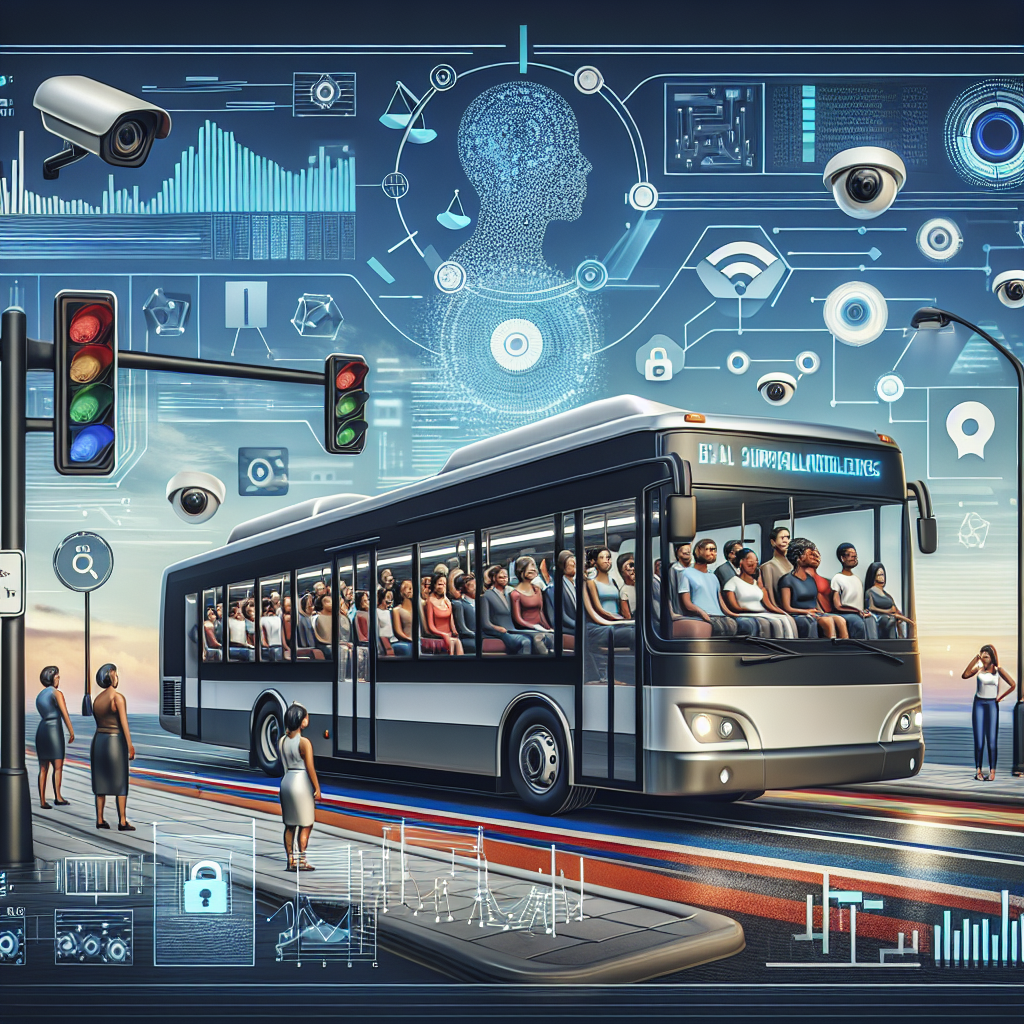
With the advancement of artificial intelligence (AI) technology, the use of AI-powered surveillance in public transportation has become a common practice in many cities around the world. This technology has the potential to enhance the safety and security of passengers and staff, as well as improve the efficiency of transportation systems. However, the use of AI-powered surveillance raises ethical considerations that must be carefully considered to ensure that privacy and civil liberties are protected.
One of the main ethical considerations of AI-powered surveillance in public transportation is the potential invasion of privacy. The use of facial recognition technology and other biometric data to track and monitor individuals can raise concerns about the collection and storage of personal information without consent. This can lead to the tracking of individuals’ movements and behaviors without their knowledge, potentially infringing on their right to privacy.
Another ethical consideration is the potential for discrimination and bias in AI-powered surveillance systems. These systems are programmed to analyze and interpret data to identify potential threats or suspicious behavior. However, if the algorithms used in these systems are biased or flawed, they may disproportionately target certain groups based on race, gender, or other characteristics. This can lead to unfair treatment and discrimination against individuals who are wrongly identified as threats.
Furthermore, there is the issue of transparency and accountability in AI-powered surveillance systems. The algorithms used in these systems are often proprietary and not easily accessible to the public. This lack of transparency makes it difficult to assess the accuracy and reliability of these systems, as well as hold operators accountable for any misuse of the technology. Without proper oversight and regulation, there is the risk of abuse and misuse of AI-powered surveillance in public transportation.
In addition, there is the concern of data security and potential breaches of personal information. AI-powered surveillance systems collect and store large amounts of data on individuals, including their biometric information and travel patterns. If this data is not properly secured and protected, it can be vulnerable to hacking and unauthorized access, leading to the exposure of sensitive personal information.
To address these ethical considerations, it is important for policymakers, transportation authorities, and technology companies to establish clear guidelines and regulations for the use of AI-powered surveillance in public transportation. These guidelines should prioritize the protection of privacy and civil liberties, as well as ensure transparency, accountability, and fairness in the use of these systems.
One way to address the invasion of privacy is to implement strict data protection measures, such as anonymizing data and limiting the retention period of surveillance footage. Additionally, individuals should have the right to opt out of being tracked and monitored by AI-powered surveillance systems, unless there is a legitimate reason for doing so.
To mitigate the risk of discrimination and bias in AI-powered surveillance systems, it is essential to conduct regular audits and testing to assess the effectiveness and fairness of these systems. This includes examining the accuracy and reliability of the algorithms used, as well as ensuring that they do not disproportionately target certain groups or individuals.
Transparency and accountability can be achieved by making the algorithms and data used in AI-powered surveillance systems accessible to the public and subject to independent oversight. This can help build trust and confidence in the technology, as well as hold operators accountable for any misuse or abuse of the surveillance systems.
To address data security concerns, it is crucial to implement robust cybersecurity measures to protect the personal information collected by AI-powered surveillance systems. This includes encrypting data, implementing access controls, and regularly monitoring and auditing the systems for any potential vulnerabilities.
Overall, the ethical considerations of AI-powered surveillance in public transportation are complex and multifaceted. It is important for all stakeholders involved to work together to ensure that the use of this technology is done in a responsible and ethical manner, while also prioritizing the safety and security of passengers and staff.
FAQs:
Q: What are the benefits of AI-powered surveillance in public transportation?
A: AI-powered surveillance can enhance the safety and security of passengers and staff by identifying potential threats and suspicious behavior in real-time. It can also improve the efficiency of transportation systems by optimizing routes and schedules based on passenger demand.
Q: How can AI-powered surveillance systems protect privacy?
A: AI-powered surveillance systems can protect privacy by implementing strict data protection measures, such as anonymizing data and limiting the retention period of surveillance footage. Individuals should also have the right to opt out of being tracked and monitored by these systems, unless there is a legitimate reason for doing so.
Q: How can bias and discrimination be addressed in AI-powered surveillance systems?
A: Bias and discrimination in AI-powered surveillance systems can be addressed by conducting regular audits and testing to assess the effectiveness and fairness of the algorithms used. It is also important to ensure that these systems do not disproportionately target certain groups or individuals based on race, gender, or other characteristics.
Q: How can transparency and accountability be ensured in AI-powered surveillance systems?
A: Transparency and accountability in AI-powered surveillance systems can be ensured by making the algorithms and data used in these systems accessible to the public and subject to independent oversight. This can help build trust and confidence in the technology, as well as hold operators accountable for any misuse or abuse of the surveillance systems.
Q: What measures can be taken to improve data security in AI-powered surveillance systems?
A: To improve data security in AI-powered surveillance systems, robust cybersecurity measures should be implemented to protect the personal information collected by these systems. This includes encrypting data, implementing access controls, and regularly monitoring and auditing the systems for any potential vulnerabilities.