
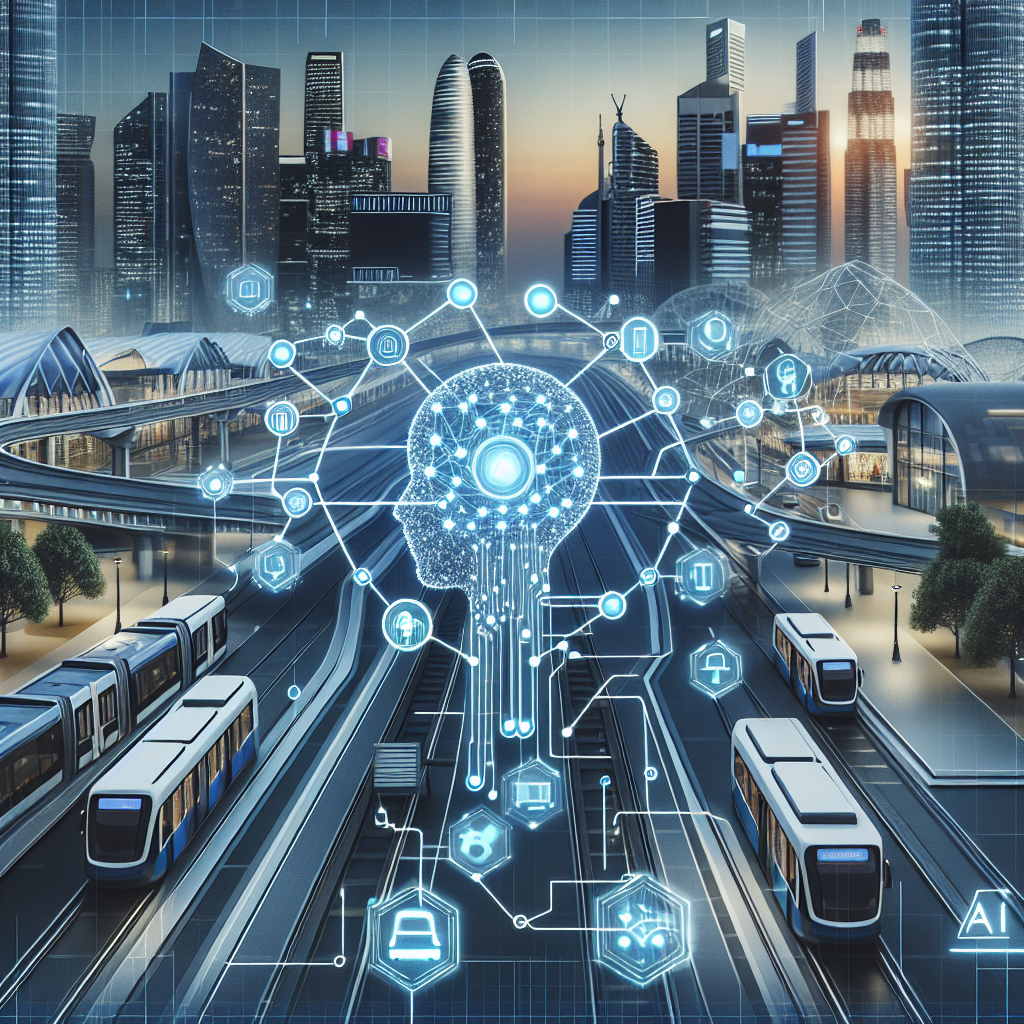
Public transportation plays a crucial role in cities around the world, providing a cost-effective and environmentally friendly way for people to get around. With the rise of urbanization and population growth, cities are facing increasing challenges in managing their public transportation systems efficiently. This is where artificial intelligence (AI) comes in as a powerful tool to help optimize and improve public transportation planning.
AI technology has the potential to revolutionize the way cities plan, manage, and optimize their public transportation systems. By leveraging AI algorithms and machine learning techniques, cities can analyze vast amounts of data to make better decisions, improve the efficiency of their public transportation networks, and provide a better experience for passengers. In this article, we will explore the use of AI in public transportation planning and optimization, its benefits, challenges, and future prospects.
Benefits of AI in Public Transportation Planning and Optimization
1. Improved Efficiency: AI can help cities optimize their public transportation systems by analyzing real-time data, predicting demand, and identifying bottlenecks. This can lead to better scheduling, routing, and resource allocation, resulting in improved efficiency and reduced operating costs.
2. Enhanced Passenger Experience: By using AI algorithms to analyze passenger data, cities can better understand passenger behavior, preferences, and travel patterns. This information can be used to improve service quality, reduce waiting times, and provide personalized recommendations to passengers.
3. Reduced Congestion: AI can help cities reduce traffic congestion by optimizing public transportation routes, coordinating schedules with other modes of transportation, and implementing dynamic pricing strategies. This can lead to fewer cars on the road, shorter travel times, and a more sustainable urban environment.
4. Cost Savings: By optimizing public transportation systems with AI, cities can reduce operating costs, improve revenue generation, and make better use of existing infrastructure. This can help cities provide more efficient and affordable transportation services to their residents.
Challenges of AI in Public Transportation Planning and Optimization
1. Data Quality and Privacy: One of the biggest challenges in using AI for public transportation planning is the availability and quality of data. Cities need access to accurate and up-to-date data on passenger flows, traffic patterns, and infrastructure to make informed decisions. Moreover, privacy concerns related to collecting and analyzing passenger data must be addressed to ensure compliance with data protection regulations.
2. Implementation Costs: Implementing AI solutions for public transportation planning can be costly, requiring investment in technology, infrastructure, and training. Cities must carefully evaluate the potential benefits and costs of AI adoption to ensure a positive return on investment.
3. Integration with Existing Systems: Integrating AI technologies with existing public transportation systems can be challenging, as it requires coordination between different stakeholders, data sources, and software platforms. Cities must develop clear strategies for integrating AI solutions with legacy systems to avoid compatibility issues and ensure smooth operations.
4. Regulatory and Legal Issues: The use of AI in public transportation planning raises a number of regulatory and legal issues, such as liability, accountability, and transparency. Cities must establish clear guidelines and regulations to govern the use of AI in public transportation and address potential ethical concerns related to algorithmic decision-making.
Future Prospects of AI in Public Transportation Planning and Optimization
Despite the challenges, the future of AI in public transportation planning looks promising. As AI technologies continue to evolve and improve, cities will have access to more advanced tools and algorithms to optimize their public transportation systems. Some of the key trends shaping the future of AI in public transportation planning include:
1. Predictive Analytics: AI algorithms can analyze historical data to predict future trends and patterns in public transportation demand. By using predictive analytics, cities can anticipate changes in passenger behavior, adapt their services accordingly, and proactively address potential bottlenecks.
2. Autonomous Vehicles: The rise of autonomous vehicles powered by AI technology is set to transform the public transportation landscape. Self-driving buses, shuttles, and taxis can provide on-demand, efficient, and cost-effective transportation services to passengers, reducing the need for traditional fixed-route transit systems.
3. Mobility as a Service (MaaS): MaaS platforms leverage AI algorithms to integrate multiple modes of transportation, such as buses, trains, bikes, and ridesharing services, into a seamless and interconnected network. By offering a single platform for planning, booking, and paying for transportation services, MaaS can improve the overall mobility experience for passengers and optimize the use of transportation resources.
4. Real-time Optimization: AI can enable real-time optimization of public transportation systems by continuously analyzing data, adjusting schedules, and rerouting vehicles to respond to changing demand and traffic conditions. Real-time optimization can help cities improve service reliability, reduce delays, and enhance the overall passenger experience.
5. Sustainable Transportation Solutions: AI can help cities develop more sustainable transportation solutions by promoting the use of public transportation, reducing car dependency, and minimizing environmental impact. By optimizing public transportation systems with AI, cities can achieve their sustainability goals and create a more livable and eco-friendly urban environment.
FAQs
1. How does AI improve public transportation planning and optimization?
AI improves public transportation planning and optimization by analyzing data, predicting demand, identifying bottlenecks, and optimizing routes, schedules, and resource allocation. By leveraging AI algorithms and machine learning techniques, cities can make better decisions, improve efficiency, enhance passenger experience, and reduce operating costs.
2. What are the benefits of using AI in public transportation planning?
The benefits of using AI in public transportation planning include improved efficiency, enhanced passenger experience, reduced congestion, cost savings, and sustainable transportation solutions. AI can help cities optimize their public transportation systems, provide personalized recommendations to passengers, reduce traffic congestion, lower operating costs, and promote the use of public transportation as a more environmentally friendly mode of transportation.
3. What are the challenges of using AI in public transportation planning?
The challenges of using AI in public transportation planning include data quality and privacy concerns, implementation costs, integration with existing systems, and regulatory and legal issues. Cities must address these challenges to successfully adopt AI solutions for public transportation planning and ensure compliance with data protection regulations, compatibility with legacy systems, and transparency in algorithmic decision-making.
4. What are the future prospects of AI in public transportation planning and optimization?
The future prospects of AI in public transportation planning and optimization include predictive analytics, autonomous vehicles, Mobility as a Service (MaaS), real-time optimization, and sustainable transportation solutions. As AI technologies continue to evolve, cities will have access to more advanced tools and algorithms to optimize their public transportation systems, improve service reliability, reduce delays, and create a more sustainable and eco-friendly urban environment.
In conclusion, AI has the potential to revolutionize public transportation planning and optimization by leveraging data analytics, predictive modeling, and real-time optimization to improve efficiency, enhance passenger experience, and promote sustainable transportation solutions. While there are challenges to overcome, the benefits of using AI in public transportation planning are substantial, making it a promising technology for cities to adopt in the future. By embracing AI, cities can create more efficient, reliable, and sustainable public transportation systems that meet the needs of their residents and contribute to a more livable urban environment.