
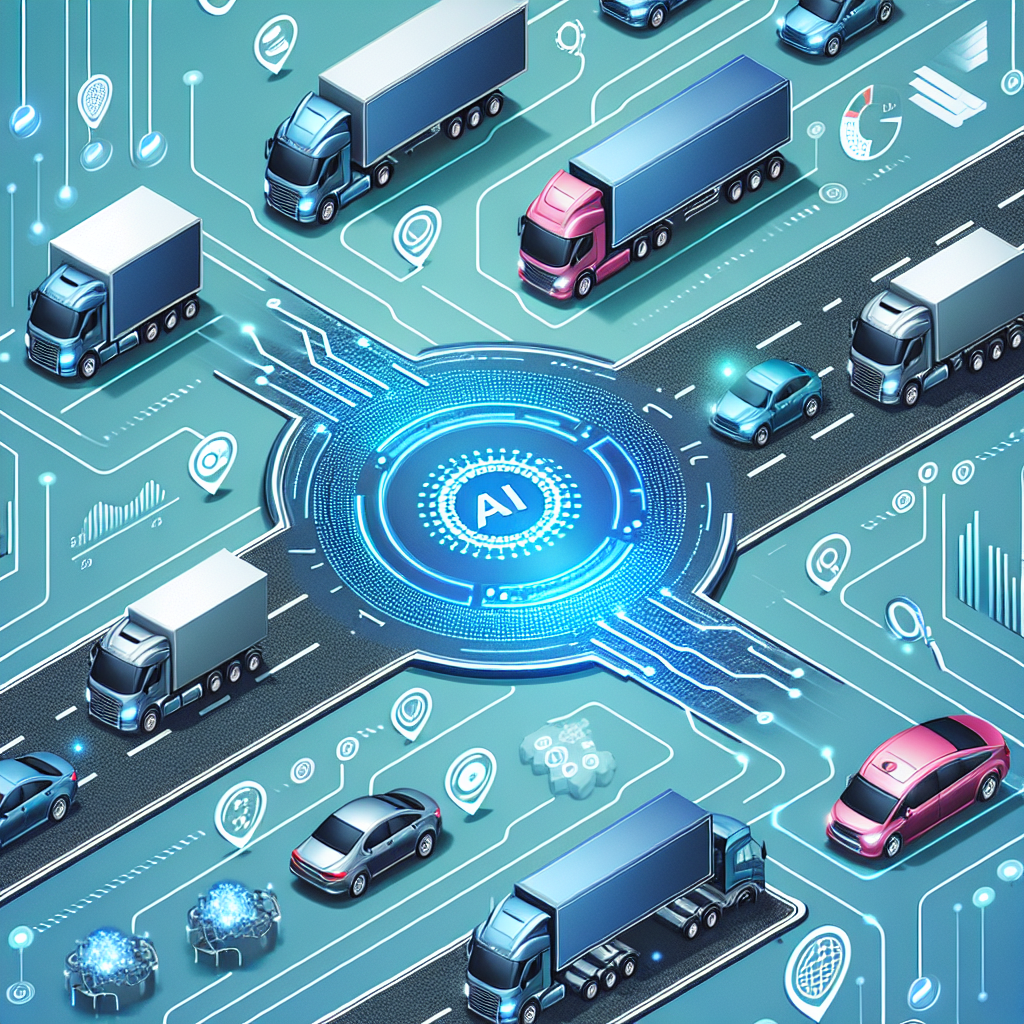
Fleet management is a critical aspect of any business that relies on a fleet of vehicles to operate. It involves the management of vehicles, drivers, and associated tasks such as maintenance, routing, and scheduling. With the advancement of technology, artificial intelligence (AI) has emerged as a powerful tool in fleet management, offering numerous benefits to businesses of all sizes. In this article, we will discuss the benefits of AI in fleet management and address some frequently asked questions about this technology.
Benefits of AI in Fleet Management
1. Enhanced Efficiency: One of the key benefits of AI in fleet management is enhanced efficiency. AI algorithms can analyze vast amounts of data in real-time to optimize routes, reduce fuel consumption, and improve driver behavior. This results in cost savings for businesses and improved productivity.
2. Real-Time Monitoring: AI-powered fleet management systems offer real-time monitoring of vehicles, drivers, and cargo. This allows fleet managers to track the location of vehicles, monitor driver behavior, and receive alerts for maintenance issues or emergencies. Real-time monitoring helps businesses to improve safety, compliance, and customer service.
3. Predictive Maintenance: AI algorithms can analyze historical data to predict when a vehicle is likely to require maintenance. This proactive approach to maintenance helps businesses to reduce downtime, extend the lifespan of vehicles, and lower maintenance costs. By addressing maintenance issues before they become critical, businesses can avoid costly repairs and keep their fleet running smoothly.
4. Improved Safety: AI technology can help improve safety in fleet management by monitoring driver behavior, detecting risky driving patterns, and providing real-time feedback to drivers. AI-powered dashcams can record video footage of driving events such as harsh braking or acceleration, speeding, and distracted driving. This data can be used to coach drivers, identify training needs, and prevent accidents.
5. Route Optimization: AI algorithms can analyze traffic patterns, weather conditions, and other factors to optimize routes for fleet vehicles. By finding the most efficient routes, businesses can reduce fuel consumption, lower operating costs, and improve on-time delivery performance. Route optimization also helps to reduce wear and tear on vehicles, extend their lifespan, and improve overall fleet efficiency.
6. Compliance Management: AI technology can help businesses to stay compliant with regulations such as hours of service, vehicle maintenance, and driver safety. AI-powered fleet management systems can track driver hours, monitor vehicle maintenance schedules, and generate reports for regulatory authorities. By automating compliance management, businesses can avoid fines, penalties, and legal issues.
7. Data Analytics: AI technology enables businesses to analyze large amounts of data to gain insights into their fleet operations. By collecting data on fuel consumption, driver behavior, vehicle performance, and other metrics, businesses can identify trends, make informed decisions, and improve overall efficiency. Data analytics can help businesses to identify areas for improvement, set performance benchmarks, and track progress over time.
8. Cost Savings: Overall, the use of AI in fleet management can lead to significant cost savings for businesses. By optimizing routes, reducing fuel consumption, improving driver behavior, and enhancing overall efficiency, businesses can lower operating costs, increase profitability, and gain a competitive edge in the market. AI technology offers a return on investment by improving fleet performance, reducing risks, and enhancing customer satisfaction.
FAQs about AI in Fleet Management
Q: How can AI improve driver behavior in fleet management?
A: AI technology can monitor driver behavior in real-time, provide feedback to drivers, and identify areas for improvement. By analyzing driving patterns such as speeding, harsh braking, and distracted driving, AI algorithms can help to coach drivers, reduce risks, and improve safety on the road.
Q: What are the key features of AI-powered fleet management systems?
A: AI-powered fleet management systems offer features such as real-time monitoring, predictive maintenance, route optimization, compliance management, data analytics, and cost savings. These systems use AI algorithms to analyze data, make predictions, and optimize fleet operations for improved efficiency and performance.
Q: How can businesses implement AI in fleet management?
A: Businesses can implement AI in fleet management by investing in AI-powered software, hardware, and training for their employees. By partnering with technology providers, businesses can access advanced AI algorithms, data analytics tools, and real-time monitoring capabilities to improve their fleet operations.
Q: What are the potential challenges of implementing AI in fleet management?
A: Some potential challenges of implementing AI in fleet management include the initial cost of investment, technical complexity, data security concerns, and employee resistance to change. Businesses may need to address these challenges by providing training, support, and resources to ensure a successful implementation of AI technology.
Q: How can AI help businesses to stay compliant with regulations in fleet management?
A: AI technology can help businesses to stay compliant with regulations by tracking driver hours, monitoring vehicle maintenance schedules, and generating reports for regulatory authorities. By automating compliance management, businesses can avoid fines, penalties, and legal issues related to fleet operations.
In conclusion, AI technology offers numerous benefits to businesses in fleet management, including enhanced efficiency, real-time monitoring, predictive maintenance, improved safety, route optimization, compliance management, data analytics, and cost savings. By leveraging AI algorithms, businesses can optimize their fleet operations, reduce risks, and gain a competitive edge in the market. As technology continues to evolve, AI is expected to play an increasingly important role in fleet management, helping businesses to improve performance, reduce costs, and achieve their goals.