
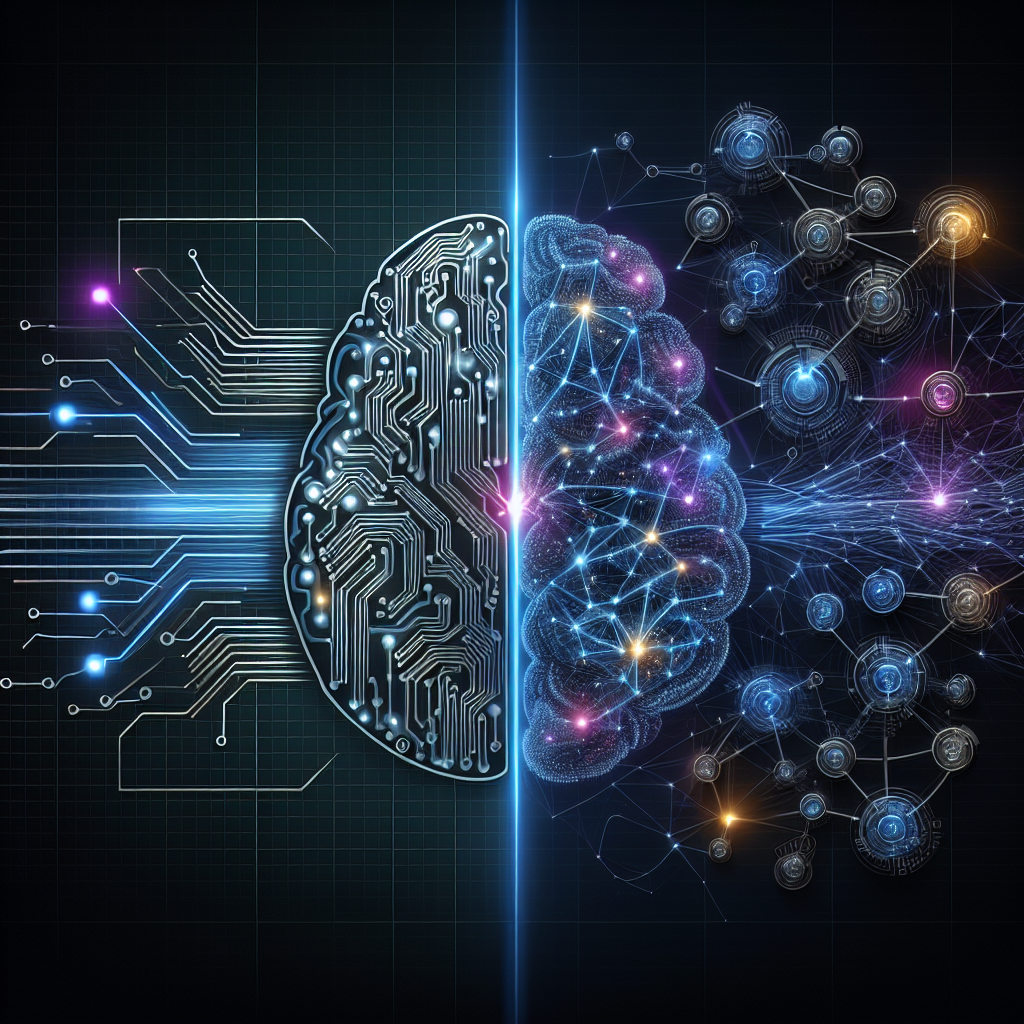
Artificial Intelligence (AI) and Machine Learning (ML) are two of the most talked-about technologies in the world today. They are often used interchangeably, but they are actually two distinct concepts that work together to make our lives easier and more efficient. In this article, we will discuss the differences between AI and ML, their applications, and how they are shaping the future of technology.
AI vs ML: Understanding the Difference
Artificial Intelligence is a broad field of computer science that aims to create machines that can perform tasks that typically require human intelligence. This includes tasks such as speech recognition, decision-making, language translation, and more. AI systems are designed to learn from experience, adapt to new situations, and improve their performance over time.
Machine Learning, on the other hand, is a subset of AI that focuses on the development of algorithms that can learn from and make predictions or decisions based on data. ML algorithms are trained on large datasets to recognize patterns and make intelligent decisions without being explicitly programmed to do so.
In simple terms, AI is the broader concept of creating intelligent machines, while ML is the specific approach to achieving that goal through data-driven algorithms.
Applications of AI and ML
AI and ML have a wide range of applications across various industries, including healthcare, finance, transportation, and more. Some common examples of AI and ML in action include:
1. Personalized recommendations: Companies like Netflix and Amazon use AI and ML algorithms to analyze user behavior and provide personalized recommendations for movies, products, and more.
2. Fraud detection: Banks and financial institutions use ML algorithms to detect fraudulent activities and prevent unauthorized transactions.
3. Healthcare: AI-powered systems can analyze medical images, predict patient outcomes, and assist doctors in diagnosing diseases.
4. Autonomous vehicles: Self-driving cars rely on AI and ML algorithms to navigate roads, avoid obstacles, and make split-second decisions.
5. Natural language processing: AI systems like chatbots and virtual assistants use ML algorithms to understand and respond to human language.
The Battle of the Technologies
While AI and ML are often used together, there is a constant battle between the two technologies in terms of their capabilities and limitations. Here are some key differences between AI and ML:
1. Scope: AI is a broader concept that encompasses a wide range of technologies and applications, while ML is a specific approach to achieving AI goals through data-driven algorithms.
2. Learning: AI systems can learn from experience, adapt to new situations, and improve their performance over time. ML algorithms, on the other hand, are trained on large datasets to recognize patterns and make decisions based on that data.
3. Flexibility: AI systems are more flexible and adaptable compared to ML algorithms, as they can perform a wider range of tasks and learn from different types of data.
4. Interpretability: ML algorithms are often criticized for being “black boxes,” meaning that it can be difficult to understand how they make decisions. AI systems, on the other hand, can be more transparent in their decision-making process.
5. Complexity: AI systems are more complex and require more resources compared to ML algorithms, which can be simpler and more efficient in certain applications.
FAQs
Q: What are some common misconceptions about AI and ML?
A: One common misconception is that AI and ML are the same thing. While they are related, AI is a broader concept that encompasses a wide range of technologies, while ML is a specific approach to achieving AI goals through data-driven algorithms. Another misconception is that AI will replace humans in the workforce, when in reality, AI is meant to augment human capabilities and improve efficiency.
Q: How can businesses benefit from AI and ML?
A: Businesses can benefit from AI and ML in a variety of ways, including improved decision-making, personalized customer experiences, increased efficiency, and reduced costs. AI and ML can help businesses analyze data, automate repetitive tasks, and make predictions to drive growth and innovation.
Q: What are some challenges in implementing AI and ML?
A: Some challenges in implementing AI and ML include data quality issues, lack of skilled professionals, regulatory concerns, and ethical considerations. Businesses must ensure that they have access to high-quality data, invest in training their employees, and comply with regulations to successfully implement AI and ML technologies.
In conclusion, AI and ML are two powerful technologies that are shaping the future of technology and revolutionizing the way we live and work. While they have their differences, they work together to create intelligent machines that can learn from experience, adapt to new situations, and make decisions based on data. As businesses continue to invest in AI and ML, we can expect to see even more exciting applications and innovations in the years to come.