
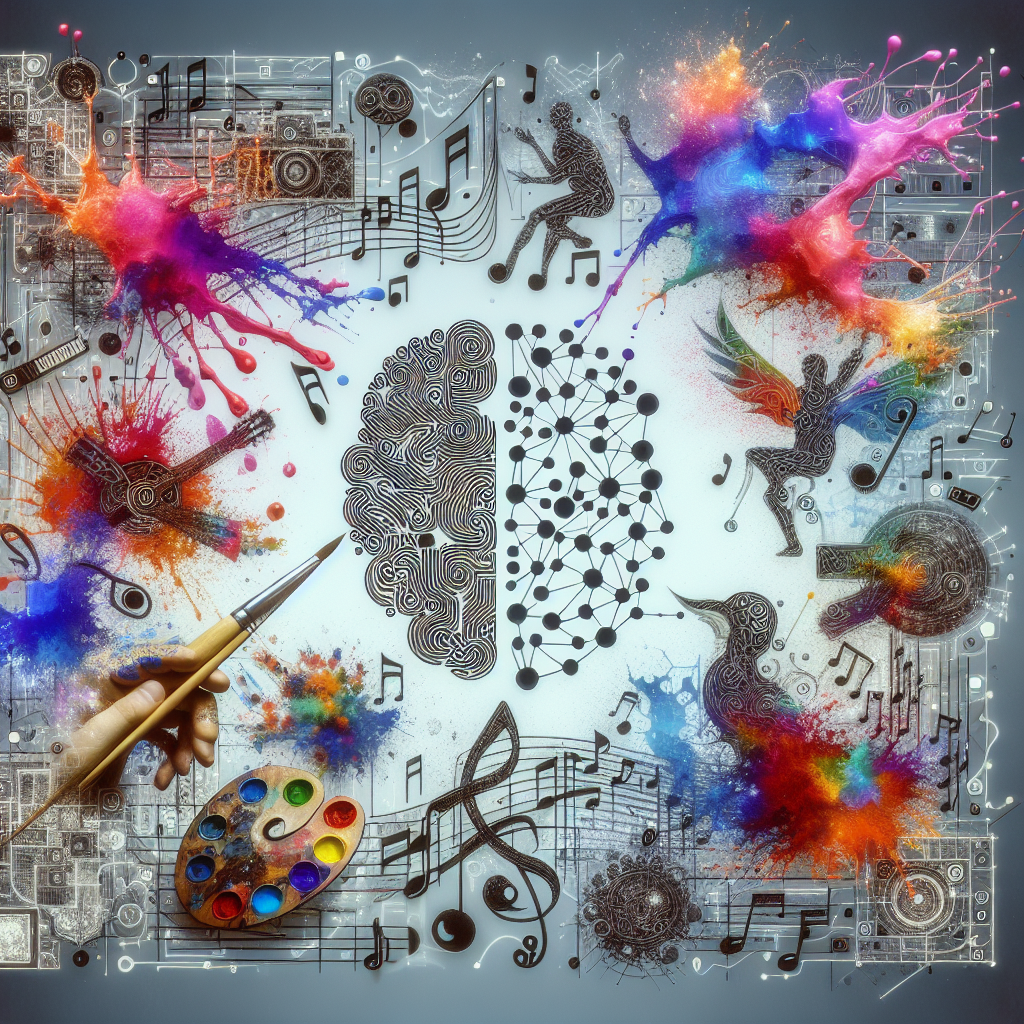
Artificial intelligence (AI) has been making significant strides in various fields, from healthcare to finance to entertainment. One area where AI is starting to show promise is in the realm of creativity and improvisation. Traditionally, creativity has been seen as a distinctly human trait, but with advances in AI technology, machines are starting to demonstrate the ability to generate creative and spontaneous ideas.
Improvisation is a key component of creativity, as it involves reacting and responding in real-time to unexpected situations. In the world of music, for example, improvisation is a common practice among jazz musicians, who often create new melodies and harmonies on the spot. In theater, improvisational actors engage in spontaneous storytelling and dialogue, often based on audience suggestions.
AI systems are now being developed that can mimic this improvisational process. These systems are trained on large datasets of creative works, such as music compositions, paintings, or literature, and use machine learning algorithms to generate new and original content. By analyzing patterns and structures in the data, AI can produce novel and unexpected output that can rival the work of human creators.
One of the key advantages of AI in the realm of improvisation is its ability to process vast amounts of information quickly and efficiently. While human creators may have limitations in terms of time, energy, and resources, AI systems can work tirelessly to generate new ideas and possibilities. This can lead to a greater diversity of creative output and open up new avenues for exploration and innovation.
AI can also help to overcome creative blocks and obstacles that human creators may face. By providing suggestions, prompts, or feedback, AI systems can inspire and motivate artists to push their boundaries and experiment with new ideas. This collaborative approach between human and machine can lead to unexpected and exciting results that may not have been possible through traditional methods alone.
One example of AI improvisation in action is the project “AIVA” (Artificial Intelligence Virtual Artist), a music composition software that uses deep learning algorithms to create original compositions in various genres. AIVA has been used in film scores, video games, and advertisements, demonstrating the potential of AI to break new ground in the creative industry.
Another example is the AI art generator “DeepDream,” which uses neural networks to transform images into psychedelic and surreal artworks. By manipulating pixels and patterns in unexpected ways, DeepDream can produce visually stunning and thought-provoking pieces that challenge traditional notions of art and aesthetics.
While AI improvisation holds great promise for the future of creativity, there are also some challenges and ethical considerations to be aware of. For one, there is the risk of AI systems producing content that is plagiarized or infringes on copyright laws. As AI becomes more advanced and capable of generating highly realistic and original works, there may be a need for stricter regulations and guidelines to protect intellectual property rights.
There is also the question of authenticity and authorship in AI-generated works. While AI systems can create impressive and innovative content, some may argue that the true essence of creativity lies in the human experience and expression. It is important to consider the role of human creators in the creative process and ensure that AI is used as a tool to enhance, rather than replace, human ingenuity and imagination.
Despite these challenges, the potential of AI improvisation to revolutionize the creative industry is undeniable. By harnessing the power of machine learning and neural networks, artists, musicians, and writers can explore new realms of possibility and push the boundaries of what is considered possible in the realm of creativity.
FAQs:
Q: Can AI truly be creative?
A: While AI systems can generate creative output, some argue that true creativity involves a level of human experience and emotion that machines cannot replicate. However, AI can still be a valuable tool for inspiring and supporting human creativity.
Q: How can AI help artists and creators in their work?
A: AI can provide artists with new ideas, suggestions, and feedback to enhance their creative process. By analyzing patterns and structures in data, AI can offer insights and inspiration that may not have been possible through traditional methods alone.
Q: What are the ethical considerations of using AI in creative processes?
A: There are concerns about plagiarism, copyright infringement, and the role of human creators in AI-generated works. It is important to establish guidelines and regulations to protect intellectual property rights and ensure that AI is used responsibly in the creative industry.