
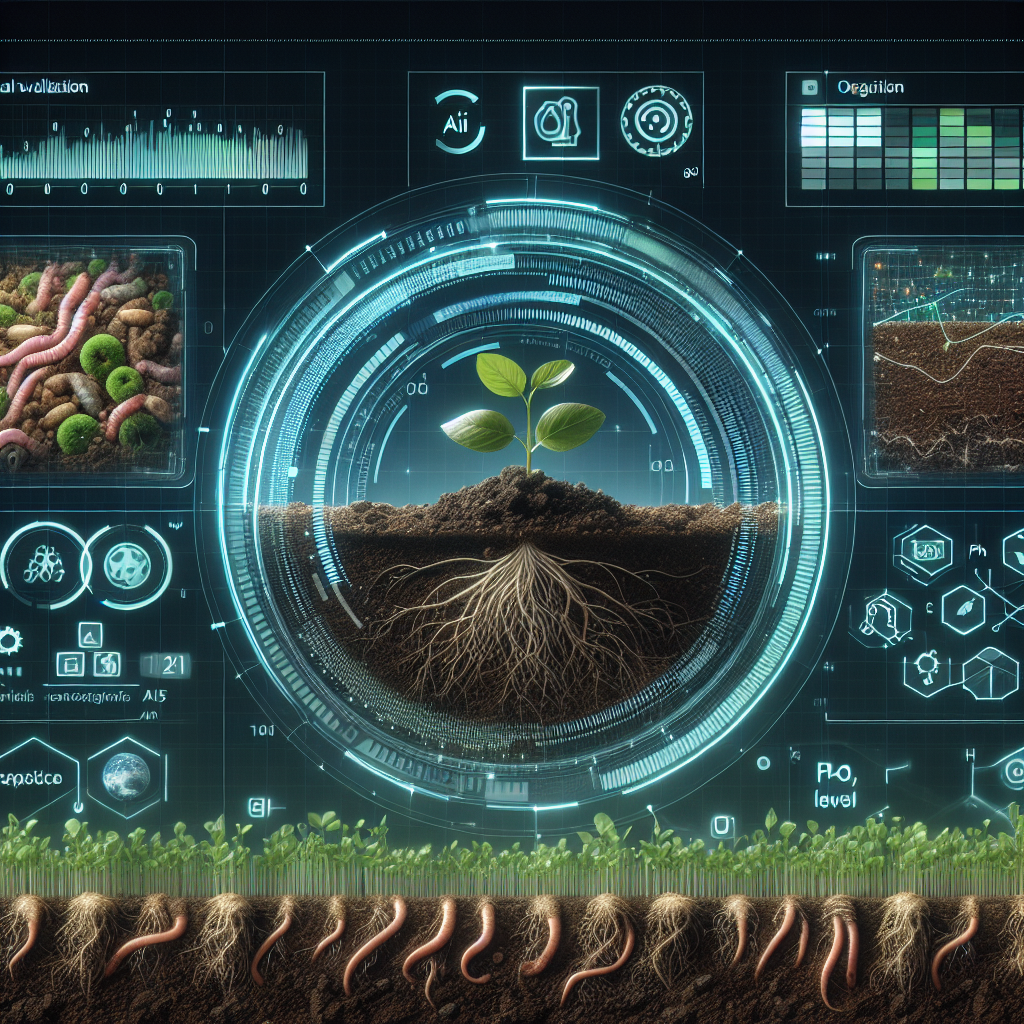
Improving Soil Health with AI-driven Analytics
Soil health is a critical factor in agriculture, as healthy soil leads to better crop yields, reduced water usage, and improved sustainability. With the increasing challenges of climate change, soil degradation, and limited resources, it is more important than ever to focus on improving soil health. One way to do this is through the use of AI-driven analytics.
Artificial intelligence (AI) has the potential to revolutionize the way we approach soil health management. By utilizing AI algorithms and machine learning techniques, farmers and researchers can analyze vast amounts of data to gain insights into soil health and make informed decisions to improve it. In this article, we will explore how AI-driven analytics can be used to enhance soil health and address some common questions about this technology.
How AI-driven Analytics Works
AI-driven analytics works by collecting and analyzing data from various sources to provide insights and recommendations for improving soil health. This data can come from a variety of sources, including sensors, satellites, weather stations, and historical records. By using machine learning algorithms, AI can identify patterns and trends in the data that may not be immediately apparent to humans.
For example, AI can analyze soil samples to determine nutrient levels, organic matter content, and pH levels. It can also analyze weather data to predict soil moisture levels and potential erosion risks. By combining these data points, AI can generate recommendations for optimizing soil health, such as adjusting fertilizer applications, implementing cover cropping, or practicing conservation tillage.
Benefits of AI-driven Analytics for Soil Health
There are several benefits to using AI-driven analytics for soil health management:
1. Improved decision-making: AI can process large amounts of data quickly and accurately, providing farmers with real-time insights and recommendations for improving soil health. This can help farmers make more informed decisions about crop management practices, leading to better yields and reduced environmental impact.
2. Increased efficiency: By automating data collection and analysis, AI can save farmers time and resources. This allows farmers to focus on other aspects of their operation while still optimizing soil health.
3. Enhanced sustainability: AI-driven analytics can help farmers implement more sustainable practices, such as reducing chemical inputs, conserving water, and improving soil structure. This can lead to long-term benefits for both the environment and the farm’s bottom line.
4. Adaptability: AI algorithms can learn and adapt over time, allowing them to continually improve their recommendations based on new data and changing conditions. This flexibility is crucial in the face of climate change and other unpredictable factors.
Common FAQs about AI-driven Analytics for Soil Health
Q: Can AI replace traditional soil testing methods?
A: While AI can provide valuable insights into soil health, it is not meant to replace traditional soil testing methods entirely. Instead, AI can complement these methods by providing additional data and analysis to support decision-making.
Q: Is AI-driven analytics affordable for small-scale farmers?
A: The cost of implementing AI-driven analytics can vary depending on the complexity of the system and the amount of data being analyzed. However, there are increasingly affordable options available for small-scale farmers, such as mobile apps and cloud-based services that can provide valuable insights at a lower cost.
Q: How accurate are AI recommendations for soil health management?
A: AI recommendations are only as accurate as the data they are based on. It is important to ensure that the data being used is reliable and up-to-date to ensure the accuracy of the recommendations. Additionally, it is recommended to validate AI recommendations with on-the-ground observations and traditional soil testing methods.
Q: What are the limitations of AI-driven analytics for soil health management?
A: While AI-driven analytics can provide valuable insights into soil health, there are some limitations to consider. For example, AI algorithms may struggle to account for local variations in soil types, weather conditions, and management practices. Additionally, AI recommendations should be used in conjunction with expert knowledge and on-the-ground observations to ensure the best outcomes.
In conclusion, AI-driven analytics has the potential to revolutionize soil health management by providing farmers with real-time insights and recommendations for improving soil health. By leveraging the power of AI, farmers can make more informed decisions, increase efficiency, enhance sustainability, and adapt to changing conditions. While there are some limitations to consider, the benefits of using AI for soil health management far outweigh the challenges. As technology continues to advance, AI-driven analytics will play an increasingly important role in sustainable agriculture and environmental stewardship.