
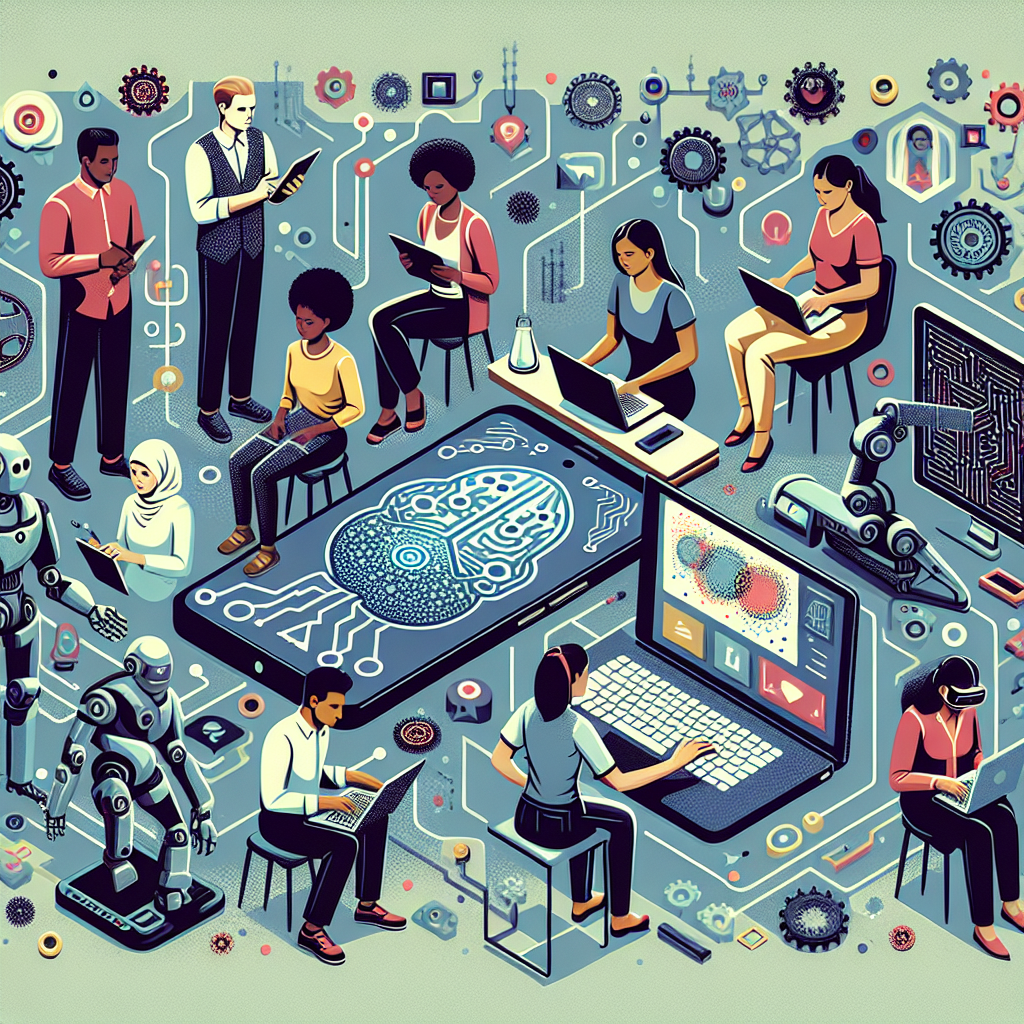
In recent years, artificial intelligence (AI) has become an integral part of our daily lives. From virtual assistants like Siri and Alexa to personalized recommendations on streaming services, AI technology is all around us. However, despite its widespread use, access to AI tools and resources has traditionally been limited to a select few with the technical expertise and resources to develop and deploy AI solutions.
This lack of access to AI tools and resources has created a digital divide, with many individuals and organizations unable to benefit from the potential of AI technology. Recognizing the need to democratize access to AI, a growing number of companies, organizations, and governments are working to make AI tools and resources more accessible to all.
One of the key ways in which access to AI tools and resources is being democratized is through the development of user-friendly AI platforms and tools. These platforms are designed to make it easier for individuals and organizations with limited technical expertise to develop and deploy AI solutions. By providing pre-built models, drag-and-drop interfaces, and other user-friendly features, these platforms are lowering the barrier to entry for AI development.
Another important aspect of democratizing access to AI tools and resources is the availability of open-source AI frameworks and libraries. These open-source tools enable developers to leverage the collective knowledge and expertise of the global AI community to build AI solutions. By making these tools freely available, developers of all skill levels can access cutting-edge AI technology and contribute to the advancement of the field.
In addition to user-friendly platforms and open-source tools, efforts to democratize access to AI tools and resources also include initiatives to provide training and education in AI. By offering online courses, workshops, and other resources, individuals can learn the skills needed to develop AI solutions. This training is essential for empowering individuals from diverse backgrounds to participate in the AI field and contribute their unique perspectives and expertise.
Furthermore, efforts to democratize access to AI tools and resources are also focused on ensuring that AI technology is used ethically and responsibly. By promoting principles such as transparency, fairness, and accountability in AI development and deployment, organizations can build trust with users and stakeholders. This trust is essential for ensuring that AI technology is used to benefit society as a whole.
Overall, democratizing access to AI tools and resources is essential for realizing the full potential of AI technology and ensuring that it benefits everyone. By making AI technology more accessible, organizations can empower individuals and communities to leverage AI solutions to solve complex problems and drive innovation.
FAQs:
Q: What are some examples of user-friendly AI platforms?
A: Some examples of user-friendly AI platforms include Google Cloud AI Platform, Microsoft Azure AI, and IBM Watson Studio. These platforms offer a range of tools and features to simplify AI development for individuals and organizations with limited technical expertise.
Q: How can open-source AI frameworks and libraries benefit developers?
A: Open-source AI frameworks and libraries enable developers to access cutting-edge AI technology and collaborate with the global AI community. By leveraging open-source tools, developers can accelerate the development of AI solutions and contribute to the advancement of the field.
Q: What types of training and education are available in AI?
A: There are a variety of training and education options available in AI, including online courses, workshops, and certifications. These resources cover a wide range of topics, from basic AI concepts to advanced machine learning techniques, and are designed to help individuals develop the skills needed to build AI solutions.
Q: How can organizations ensure that AI technology is used ethically and responsibly?
A: Organizations can promote ethical and responsible AI development and deployment by following principles such as transparency, fairness, and accountability. By incorporating these principles into their AI practices, organizations can build trust with users and stakeholders and ensure that AI technology benefits society as a whole.