
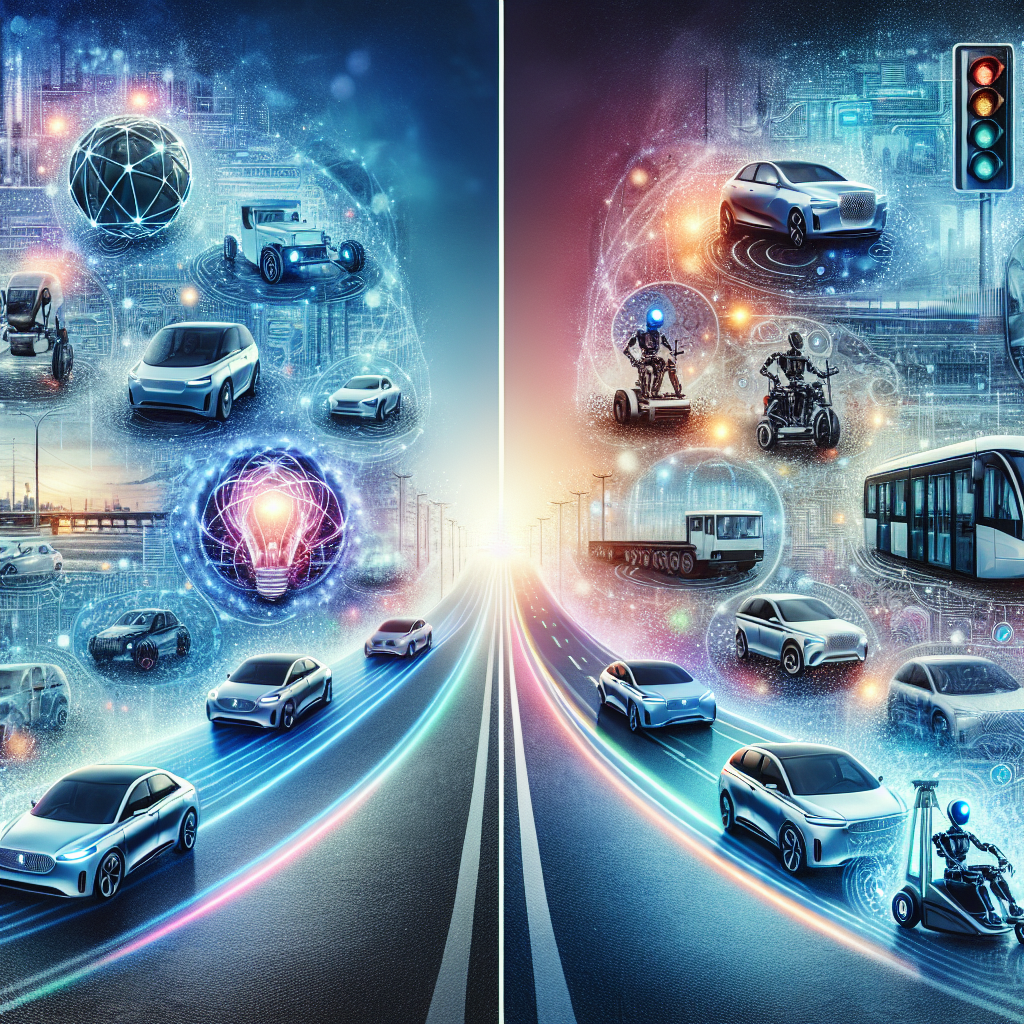
Artificial Intelligence (AI) development in autonomous vehicles has been a rapidly advancing field in recent years. The integration of AI technology in vehicles has the potential to revolutionize the way we travel, making transportation safer, more efficient, and more convenient. However, there are also significant challenges that must be overcome in order to fully realize the potential of autonomous vehicles. In this article, we will explore the advancements in AI development for autonomous vehicles, as well as the challenges that researchers and developers are currently facing.
Advancements in AI Development for Autonomous Vehicles
There have been many exciting advancements in AI development for autonomous vehicles in recent years. One of the key technologies that has enabled the development of autonomous vehicles is machine learning. Machine learning algorithms allow vehicles to learn from data and make decisions based on that data, rather than relying on pre-programmed instructions. This allows autonomous vehicles to adapt to changing road conditions and unexpected events in real-time.
Another important advancement in AI development for autonomous vehicles is the use of computer vision technology. Computer vision algorithms allow vehicles to “see” and interpret their surroundings, using cameras and sensors to detect objects, pedestrians, and other vehicles on the road. This technology is essential for enabling autonomous vehicles to navigate safely and avoid collisions.
In addition to machine learning and computer vision, AI development for autonomous vehicles also involves the use of sensor fusion technology. Sensor fusion combines data from multiple sensors, such as cameras, lidar, radar, and GPS, to create a more comprehensive and accurate picture of the vehicle’s environment. This allows autonomous vehicles to make better decisions and navigate more effectively in complex and dynamic environments.
One of the most exciting advancements in AI development for autonomous vehicles is the development of deep learning algorithms. Deep learning algorithms are a type of machine learning algorithm that are inspired by the way the human brain works. These algorithms have been shown to be highly effective at tasks such as image recognition, speech recognition, and natural language processing, making them well-suited for use in autonomous vehicles.
Challenges in AI Development for Autonomous Vehicles
While there have been many advancements in AI development for autonomous vehicles, there are also significant challenges that must be overcome in order to fully realize the potential of autonomous vehicles. One of the biggest challenges is ensuring the safety and reliability of autonomous vehicles. Autonomous vehicles must be able to operate safely in a wide range of conditions, including inclement weather, heavy traffic, and unexpected obstacles. Ensuring that autonomous vehicles can make accurate decisions in these conditions is a significant technical challenge.
Another challenge in AI development for autonomous vehicles is ensuring that vehicles can communicate effectively with each other and with infrastructure such as traffic lights and road signs. This requires the development of robust communication protocols and standards that allow vehicles to exchange information in real-time, enabling them to coordinate their movements and avoid collisions.
Privacy and security are also significant challenges in AI development for autonomous vehicles. Autonomous vehicles collect and generate large amounts of data, including information about their surroundings, their passengers, and their own operations. Ensuring that this data is secure and protected from hacking and unauthorized access is essential for the safe and reliable operation of autonomous vehicles.
Finally, there are also ethical and regulatory challenges in AI development for autonomous vehicles. Autonomous vehicles raise complex ethical questions, such as how to prioritize the safety of passengers versus other road users, how to allocate blame in the event of an accident, and how to ensure that autonomous vehicles do not discriminate against certain groups of people. Addressing these ethical questions will require careful consideration and collaboration between researchers, developers, policymakers, and the public.
FAQs
Q: How do autonomous vehicles use AI technology to navigate?
A: Autonomous vehicles use a combination of machine learning, computer vision, sensor fusion, and deep learning algorithms to navigate. These algorithms allow vehicles to detect and interpret their surroundings, make decisions in real-time, and adapt to changing road conditions.
Q: Are autonomous vehicles safe?
A: Autonomous vehicles have the potential to be safer than human-driven vehicles, as they do not suffer from human error, fatigue, or distraction. However, ensuring the safety of autonomous vehicles requires rigorous testing, validation, and certification processes to ensure that they can operate safely in a wide range of conditions.
Q: How do autonomous vehicles communicate with each other and with infrastructure?
A: Autonomous vehicles use wireless communication technologies such as Wi-Fi, 5G, and dedicated short-range communication (DSRC) to communicate with each other and with infrastructure such as traffic lights and road signs. These communication technologies allow vehicles to exchange information in real-time, enabling them to coordinate their movements and avoid collisions.
Q: What are the ethical considerations of autonomous vehicles?
A: Autonomous vehicles raise complex ethical questions, such as how to prioritize the safety of passengers versus other road users, how to allocate blame in the event of an accident, and how to ensure that autonomous vehicles do not discriminate against certain groups of people. Addressing these ethical questions will require careful consideration and collaboration between researchers, developers, policymakers, and the public.