
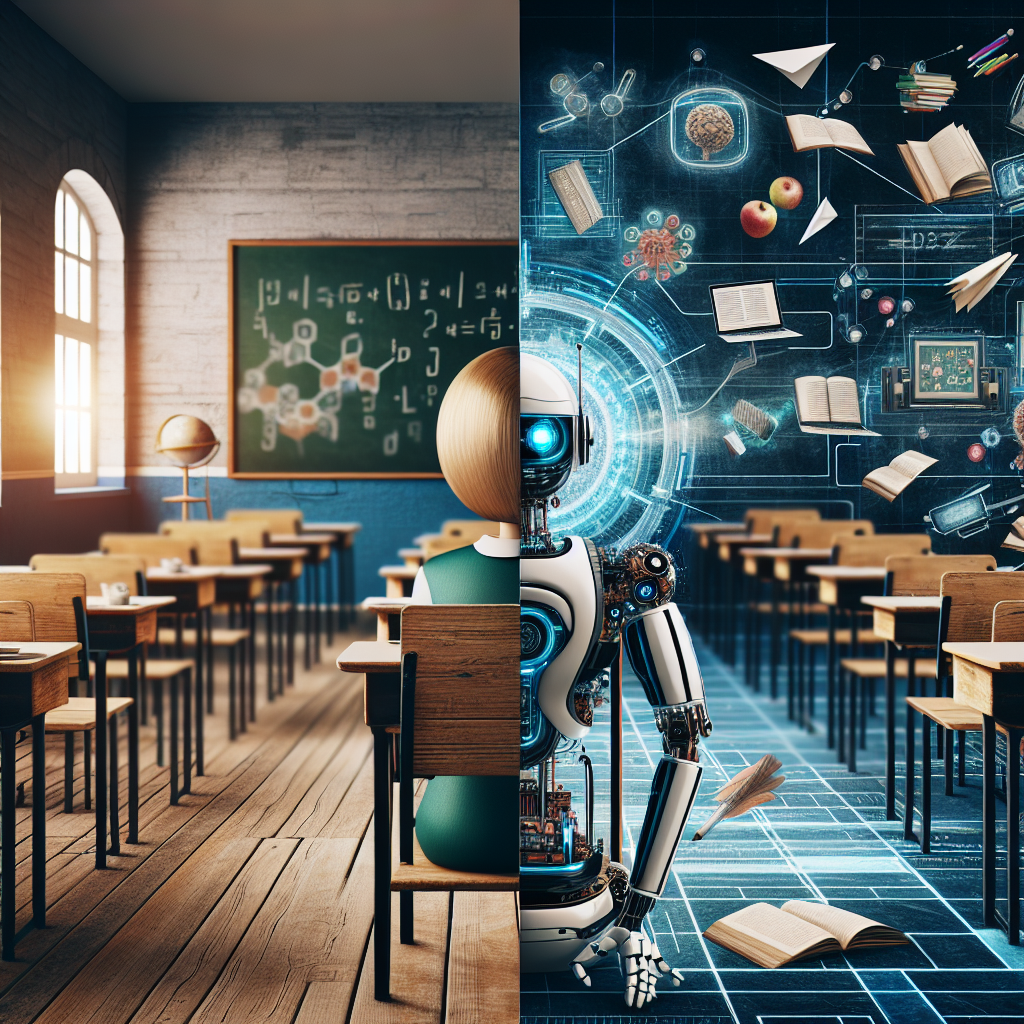
Artificial Intelligence (AI) has been transforming various industries, and education is no exception. In recent years, AI has been increasingly used in educational assessment to improve the efficiency, accuracy, and fairness of evaluating students’ performance. From automated grading systems to personalized learning platforms, AI is revolutionizing the way students are assessed in the classroom.
One of the key advantages of using AI in educational assessment is its ability to provide instant feedback to students. Traditionally, teachers would have to spend hours grading papers and exams, delaying the feedback process. With AI-powered grading systems, students can receive feedback on their work almost instantly, allowing them to learn from their mistakes and improve their performance more effectively.
AI can also help to personalize the learning experience for students by analyzing their strengths and weaknesses. By tracking students’ progress and understanding their learning patterns, AI can recommend personalized study materials and resources to help them improve in specific areas. This individualized approach to learning can be especially beneficial for students with different learning styles and abilities.
Furthermore, AI can help to reduce biases in educational assessment by providing more objective evaluations of students’ work. Studies have shown that human graders can be influenced by various factors, such as the gender or ethnicity of the student, leading to biased evaluations. AI, on the other hand, can assess students’ work based on predefined criteria, minimizing the risk of bias in the grading process.
AI is also being used to detect plagiarism in students’ work more effectively. By analyzing the text and structure of students’ essays, AI-powered plagiarism detection tools can identify instances of copied content and provide teachers with detailed reports on the original sources. This not only helps to maintain academic integrity but also educates students about the importance of citing sources properly.
Another area where AI is transforming educational assessment is in adaptive testing. Adaptive testing involves adjusting the difficulty of test questions based on students’ responses, allowing for a more accurate assessment of their knowledge and skills. AI algorithms can analyze students’ responses in real-time and select the next set of questions that are appropriate for their level of understanding. This adaptive approach to testing can help to identify students’ strengths and weaknesses more effectively, leading to more targeted interventions and support.
In addition to improving the assessment process, AI is also being used to enhance the overall learning experience for students. Virtual tutors powered by AI algorithms can provide students with personalized support and guidance, answering their questions and helping them to understand complex concepts. These virtual tutors can adapt to students’ individual learning styles and pace, providing a more engaging and interactive learning experience.
Despite the numerous benefits of using AI in educational assessment, there are also challenges and concerns that need to be addressed. One of the main concerns is the potential for AI to perpetuate inequalities in education. If not implemented carefully, AI-powered assessment systems could inadvertently favor students from privileged backgrounds or those with access to the latest technology. It is important for educators and policymakers to ensure that AI is used in a way that promotes equity and inclusivity in education.
Another challenge is the ethical implications of using AI in educational assessment. For example, there are concerns about data privacy and security, as AI systems collect and analyze large amounts of sensitive student data. It is crucial for schools and educational institutions to have robust data protection policies in place to safeguard students’ privacy and ensure the responsible use of AI technology.
Furthermore, there is a need for ongoing professional development for teachers to effectively integrate AI into their assessment practices. Educators need to be trained on how to use AI-powered tools and interpret the data they provide in order to make informed decisions about students’ learning. This requires investment in teacher training programs and ongoing support to ensure that teachers are equipped with the knowledge and skills to leverage AI effectively in the classroom.
In conclusion, AI is transforming educational assessment by providing instant feedback, personalizing learning experiences, reducing biases, detecting plagiarism, and enabling adaptive testing. While there are challenges and concerns that need to be addressed, the potential benefits of using AI in educational assessment are significant. By harnessing the power of AI technology, educators can improve the assessment process, enhance the learning experience for students, and ultimately help to achieve better outcomes in education.
FAQs:
Q: How does AI-powered grading systems work?
A: AI-powered grading systems use algorithms to analyze students’ work based on predefined criteria, such as grammar, content, and organization. These systems can provide instant feedback to students and help to reduce biases in the grading process.
Q: How can AI personalize the learning experience for students?
A: AI can analyze students’ strengths and weaknesses, track their progress, and recommend personalized study materials and resources to help them improve in specific areas. This individualized approach to learning can benefit students with different learning styles and abilities.
Q: What are the ethical concerns associated with using AI in educational assessment?
A: Some of the ethical concerns include data privacy and security, potential biases in AI algorithms, and the need for ongoing professional development for teachers to effectively integrate AI into their assessment practices. It is important for schools and educational institutions to have robust data protection policies in place and invest in teacher training programs to ensure the responsible use of AI technology.