
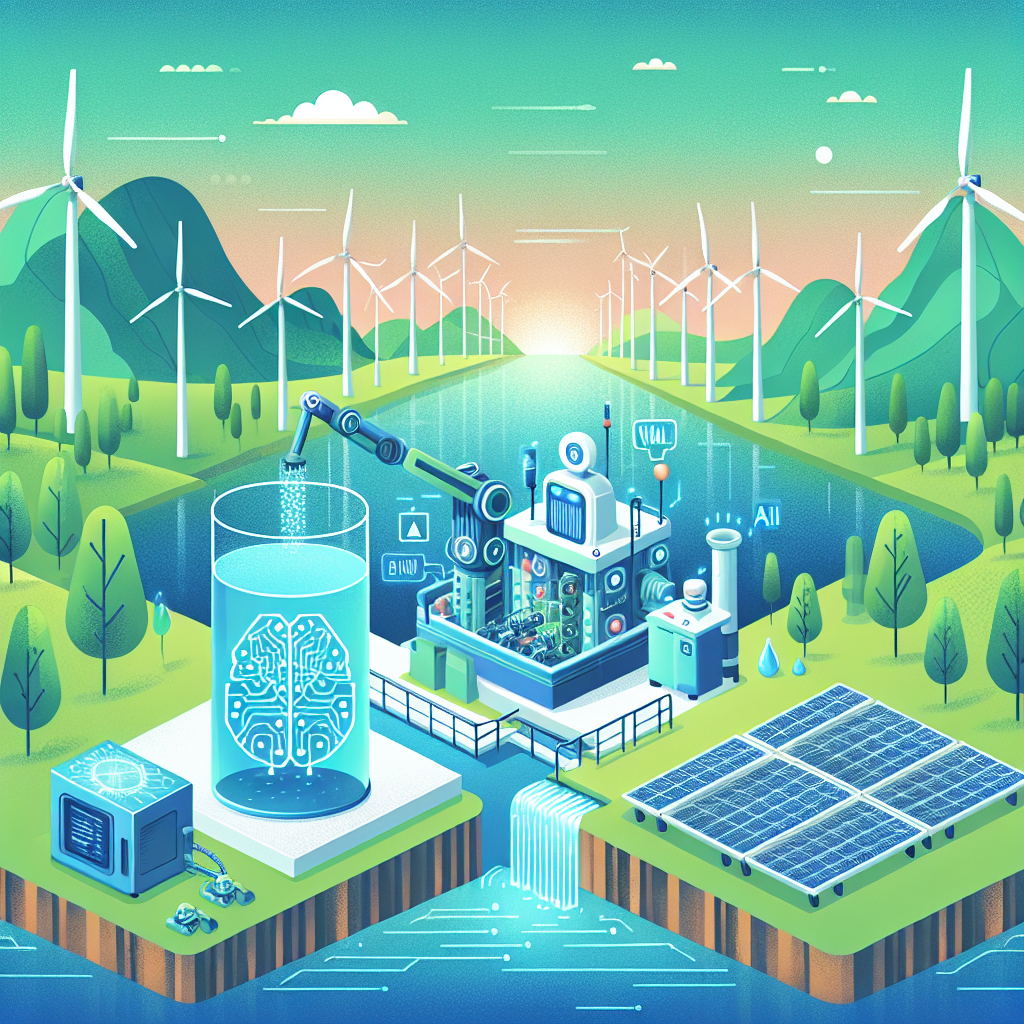
AI Applications in Sustainable Water and Sanitation Management
Introduction
Water is essential for life, and access to clean and safe water is a basic human right. However, with increasing population growth, rapid urbanization, and climate change, water resources are becoming scarce and polluted. Sustainable water and sanitation management are crucial to ensure access to clean water for all while protecting the environment. Artificial Intelligence (AI) has the potential to revolutionize water and sanitation management by improving efficiency, accuracy, and sustainability.
AI Applications in Sustainable Water Management
1. Water Quality Monitoring
AI can be used to monitor water quality in real-time by analyzing data from sensors placed in water bodies. Machine learning algorithms can detect patterns and anomalies in water quality data, enabling early detection of pollution events and timely intervention. This technology can help prevent waterborne diseases and protect ecosystems.
2. Leak Detection
Water leaks in pipelines are a common problem that leads to water wastage and infrastructure damage. AI-powered systems can analyze data from sensors to detect leaks in pipelines quickly and accurately. By detecting leaks early, water utilities can reduce water losses and save costs on repairs.
3. Water Distribution Optimization
AI can optimize water distribution networks by analyzing data on water demand, supply, and infrastructure conditions. Machine learning algorithms can predict water demand patterns and optimize water flow in distribution networks to minimize energy consumption and reduce water losses. This technology can help water utilities improve the efficiency of water distribution systems and ensure reliable water supply to consumers.
4. Flood Prediction and Management
AI can be used to predict floods and manage flood risks by analyzing data from weather sensors, satellite imagery, and hydrological models. Machine learning algorithms can forecast flood events with high accuracy and provide early warnings to at-risk communities. This technology can help reduce the impact of floods on infrastructure, property, and human lives.
5. Wastewater Treatment
AI can optimize wastewater treatment processes by analyzing data on water quality, flow rates, and treatment efficiency. Machine learning algorithms can predict treatment outcomes, optimize chemical dosages, and control treatment systems in real-time. This technology can help wastewater treatment plants improve treatment efficiency, reduce operating costs, and comply with environmental regulations.
AI Applications in Sustainable Sanitation Management
1. Smart Toilets
AI-powered smart toilets can monitor human waste for signs of diseases and provide personalized health insights to users. These toilets can analyze urine and feces samples for biomarkers and send health alerts to users and healthcare providers. This technology can help prevent the spread of diseases and improve public health.
2. Sanitation Planning
AI can be used to optimize sanitation planning by analyzing data on population density, infrastructure conditions, and sanitation service coverage. Machine learning algorithms can identify underserved areas, prioritize sanitation investments, and optimize the allocation of resources. This technology can help governments and organizations improve access to sanitation services and reduce health risks.
3. Waste Management
AI can optimize waste management systems by analyzing data on waste generation, collection routes, and recycling rates. Machine learning algorithms can predict waste generation patterns, optimize collection schedules, and identify opportunities for waste recycling. This technology can help cities reduce waste generation, increase recycling rates, and promote sustainable waste management practices.
4. Water-Energy-Food Nexus
AI can optimize the water-energy-food nexus by analyzing data on water, energy, and food systems. Machine learning algorithms can identify synergies and trade-offs between water, energy, and food resources, and optimize resource allocation to maximize sustainability. This technology can help policymakers and stakeholders make informed decisions to achieve sustainable development goals.
Frequently Asked Questions (FAQs)
Q: How can AI improve water quality monitoring?
A: AI can analyze data from sensors to detect patterns and anomalies in water quality, enabling early detection of pollution events and timely intervention. This technology can help prevent waterborne diseases and protect ecosystems.
Q: How can AI optimize water distribution networks?
A: AI can predict water demand patterns, optimize water flow in distribution networks, and minimize energy consumption and water losses. This technology can help water utilities improve the efficiency of water distribution systems and ensure reliable water supply to consumers.
Q: How can AI predict floods and manage flood risks?
A: AI can analyze data from weather sensors, satellite imagery, and hydrological models to forecast flood events with high accuracy and provide early warnings to at-risk communities. This technology can help reduce the impact of floods on infrastructure, property, and human lives.
Q: How can AI optimize wastewater treatment processes?
A: AI can analyze data on water quality, flow rates, and treatment efficiency to predict treatment outcomes, optimize chemical dosages, and control treatment systems in real-time. This technology can help wastewater treatment plants improve treatment efficiency, reduce operating costs, and comply with environmental regulations.
Q: How can AI-powered smart toilets improve public health?
A: AI-powered smart toilets can monitor human waste for signs of diseases, analyze urine and feces samples for biomarkers, and provide personalized health insights to users and healthcare providers. This technology can help prevent the spread of diseases and improve public health.
Conclusion
AI has the potential to revolutionize water and sanitation management by improving efficiency, accuracy, and sustainability. By leveraging AI technologies, governments, organizations, and stakeholders can optimize water and sanitation systems, reduce resource wastage, and promote sustainable development. As the demand for clean water grows and environmental challenges intensify, AI applications in water and sanitation management will play a crucial role in ensuring access to clean water for all while protecting the environment.