
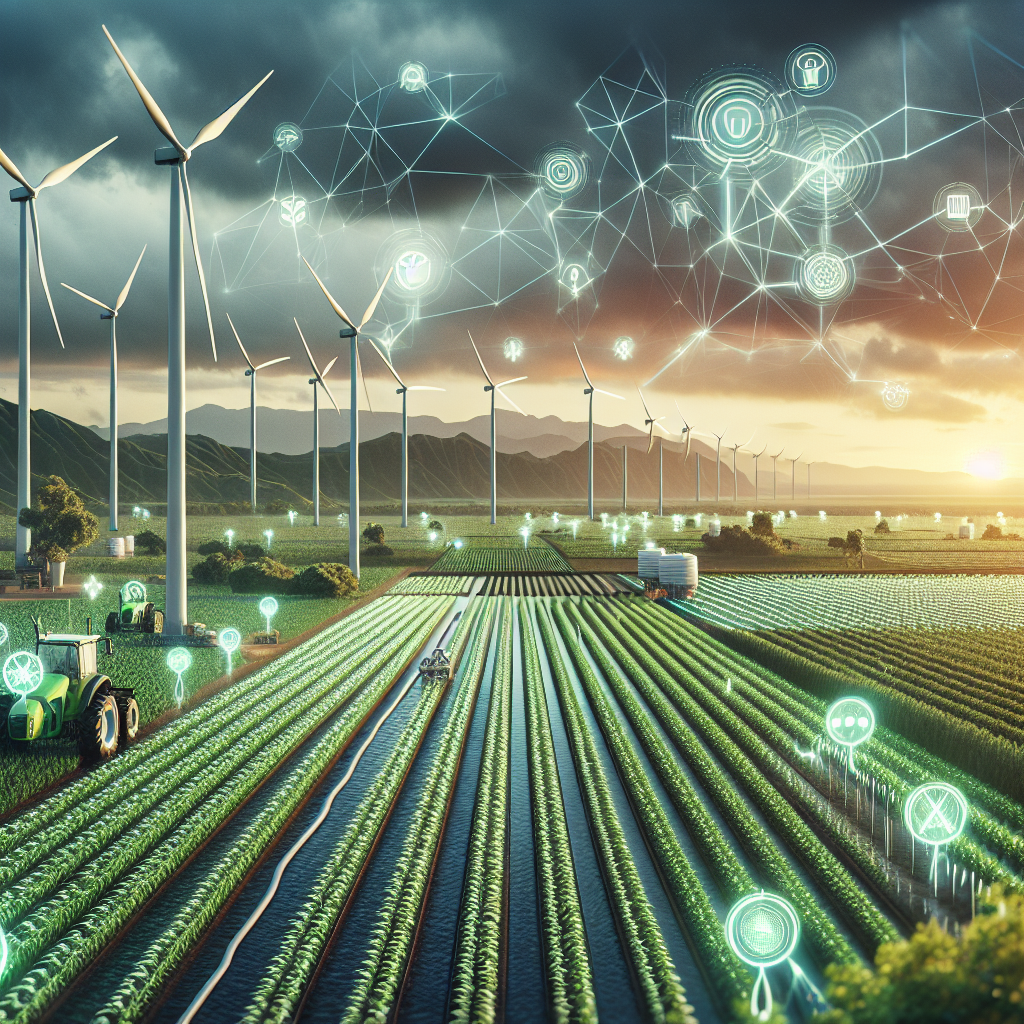
In recent years, climate change has become a major concern for the agricultural sector. Extreme weather events, changing precipitation patterns, and rising temperatures are all impacting crop yields and food security around the world. In order to adapt to these changing conditions and build resilience in the face of climate change, farmers are turning to new technologies, including artificial intelligence (AI).
AI has the potential to revolutionize agriculture by providing farmers with real-time data and insights that can help them make better decisions about how to manage their crops and resources. From predicting weather patterns to monitoring soil health, AI can be used to optimize farming practices, increase productivity, and reduce the environmental impact of agriculture.
One of the key ways in which AI is being harnessed for climate-resilient agriculture is through the use of predictive analytics. By analyzing historical data on weather patterns, soil conditions, and crop performance, AI algorithms can predict future trends and help farmers anticipate and mitigate the impact of climate change on their crops. For example, AI-powered weather forecasting systems can provide farmers with accurate predictions of upcoming storms or droughts, allowing them to take proactive measures to protect their crops and reduce losses.
Another way in which AI is being used in agriculture is through precision farming techniques. By using sensors, drones, and other IoT devices to collect data on soil moisture, nutrient levels, and crop health, farmers can optimize their use of resources and reduce waste. AI algorithms can analyze this data in real-time and provide farmers with recommendations on how to adjust their irrigation, fertilization, and pest control practices to maximize yields and minimize environmental impact.
AI can also be used to improve crop breeding and genetic engineering. By analyzing genetic data and predicting the performance of different crop varieties under different climate conditions, AI algorithms can help breeders develop new crop varieties that are more resilient to climate change. For example, researchers are using AI to identify genes that confer drought tolerance in crops like rice and wheat, with the goal of developing new varieties that can thrive in water-stressed environments.
In addition to these applications, AI is also being used to monitor and manage the impacts of climate change on agriculture. For example, AI-powered drones can be used to survey fields and detect signs of crop stress or disease, allowing farmers to take targeted action to protect their crops. AI can also be used to analyze satellite imagery and track changes in land use and vegetation cover, providing valuable insights into the impact of climate change on ecosystems and biodiversity.
Overall, harnessing AI for climate-resilient agriculture has the potential to transform the way we grow food and manage our natural resources. By providing farmers with real-time data and insights, AI can help them adapt to changing climate conditions, improve productivity, and reduce environmental impact. As we face the challenges of climate change and a growing global population, the role of AI in agriculture will only become more important in ensuring food security and sustainability for future generations.
FAQs:
Q: How can AI help farmers adapt to climate change?
A: AI can help farmers adapt to climate change by providing them with real-time data and insights on weather patterns, soil conditions, and crop performance. By analyzing this data, AI algorithms can help farmers anticipate and mitigate the impact of climate change on their crops, allowing them to take proactive measures to protect their yields and reduce losses.
Q: What are some examples of AI applications in agriculture?
A: Some examples of AI applications in agriculture include predictive analytics for weather forecasting, precision farming techniques for optimizing resource use, and crop breeding and genetic engineering for developing new varieties that are more resilient to climate change. AI can also be used for monitoring and managing the impacts of climate change on agriculture, such as detecting crop stress or disease using drones and analyzing satellite imagery to track changes in land use.
Q: How can AI help improve food security?
A: AI can help improve food security by increasing crop yields, reducing losses, and minimizing environmental impact. By providing farmers with real-time data and insights, AI can help them optimize their farming practices and adapt to changing climate conditions, ensuring a more reliable and sustainable food supply for future generations.