
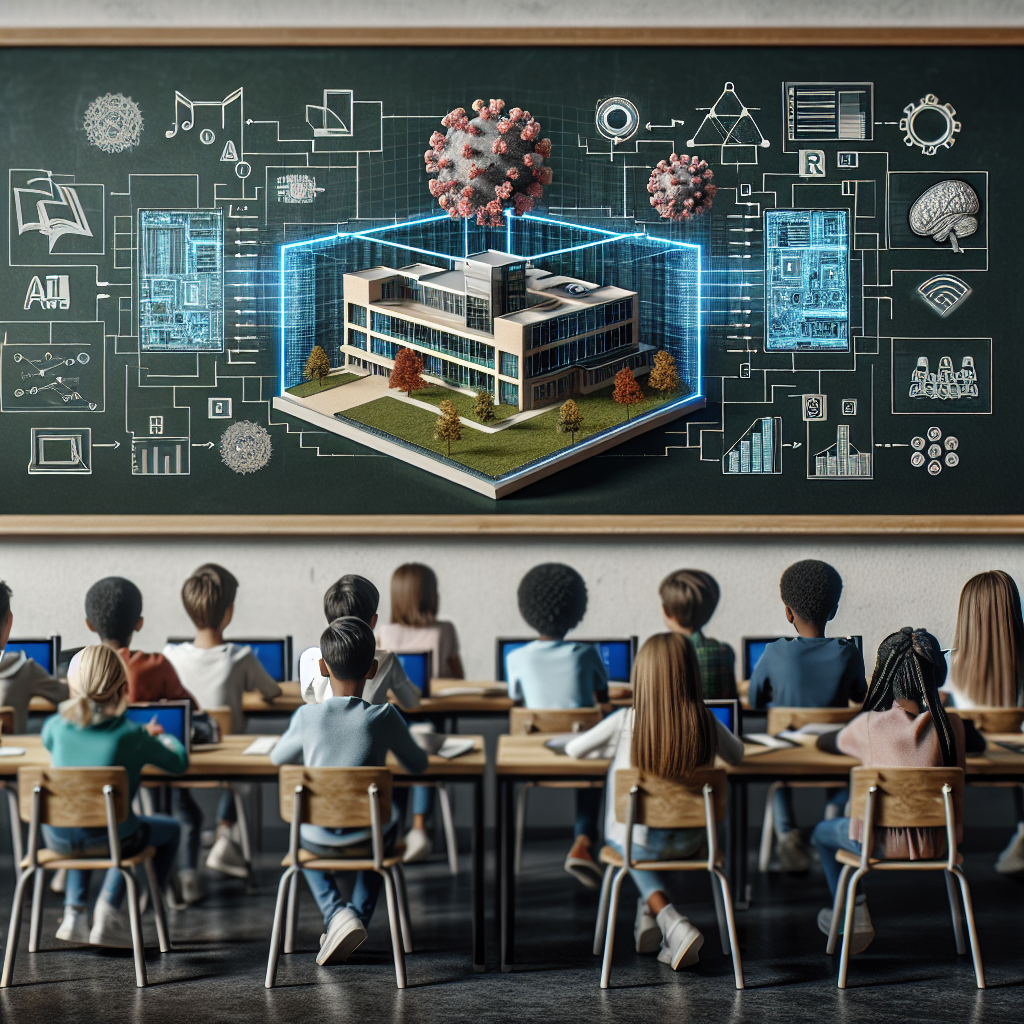
The integration of artificial intelligence (AI) in architectural education is a growing trend that is revolutionizing the way students learn and practice architecture. AI technology is being used to enhance design processes, improve efficiency, and enable new forms of creativity in architectural education. This article will explore the various ways in which AI is being integrated into architectural education, the benefits and challenges of this integration, and the future implications for the field.
One of the main ways in which AI is being integrated into architectural education is through the use of AI design tools. These tools use machine learning algorithms to analyze and generate design solutions based on input from users. Students can use these tools to explore different design options, test out ideas, and generate new concepts quickly and efficiently. This allows students to spend more time on the creative aspects of design, rather than getting bogged down in technical details.
Another way in which AI is being used in architectural education is through the use of virtual reality (VR) and augmented reality (AR) technology. These technologies allow students to visualize their designs in a realistic 3D environment, helping them to better understand spatial relationships and scale. AI algorithms can also be used to generate realistic renderings of architectural designs, helping students to communicate their ideas more effectively.
AI is also being used to automate repetitive tasks in architectural education, such as drafting and documentation. AI algorithms can analyze building codes and regulations, generate construction documents, and even assist in the project management process. This allows students to focus on more creative and strategic aspects of architecture, rather than getting bogged down in tedious paperwork.
There are many benefits to integrating AI into architectural education. One of the main benefits is that AI technology can help students to learn and practice architecture more efficiently. By automating repetitive tasks and providing tools for design exploration, AI can help students to work faster and more effectively. This can lead to better design outcomes, as students have more time to experiment and refine their ideas.
AI technology can also help students to develop new skills and perspectives in architecture. By using AI design tools, students can explore new design possibilities that they may not have considered otherwise. AI algorithms can help students to think outside the box, challenge their assumptions, and push the boundaries of traditional design practice.
Furthermore, integrating AI into architectural education can help to prepare students for the future of the profession. As AI technology becomes more prevalent in the architecture industry, students who are familiar with AI tools and techniques will be better equipped to succeed in their careers. By incorporating AI into their education, students can gain a competitive edge in the job market and stay ahead of the curve in a rapidly changing field.
However, there are also challenges to integrating AI into architectural education. One of the main challenges is the need for faculty to be trained in AI technology and techniques. Many educators may not be familiar with AI tools and may struggle to incorporate them into their curriculum. This can lead to a lack of support for AI integration and hinder the adoption of new technologies in architectural education.
Another challenge is the potential for AI technology to replace human creativity and intuition in the design process. While AI can assist in generating design solutions, it cannot replace the unique insights and ideas that human architects bring to the table. It is important for students to balance the use of AI tools with their own creative thinking and design skills, in order to produce truly innovative and meaningful architecture.
In conclusion, the integration of AI in architectural education is a promising development that has the potential to transform the way students learn and practice architecture. By using AI design tools, VR/AR technology, and automation algorithms, students can work more efficiently, develop new skills, and prepare for the future of the profession. While there are challenges to overcome, the benefits of integrating AI into architectural education are clear. By embracing AI technology, students can become more creative, versatile, and competitive architects in a rapidly changing industry.
FAQs:
Q: How can AI technology enhance the design process in architectural education?
A: AI technology can enhance the design process by providing tools for design exploration, automating repetitive tasks, and generating realistic renderings of architectural designs. This can help students to work more efficiently, develop new skills, and produce better design outcomes.
Q: What skills do students need to develop in order to effectively use AI in architectural education?
A: Students need to develop skills in using AI design tools, understanding machine learning algorithms, and incorporating AI technology into their design process. They also need to balance the use of AI tools with their own creative thinking and design skills.
Q: What are some challenges to integrating AI into architectural education?
A: Some challenges include the need for faculty training in AI technology, the potential for AI to replace human creativity in the design process, and the resistance to change in traditional educational practices. Overcoming these challenges will require a concerted effort to support AI integration and foster a culture of innovation in architectural education.