
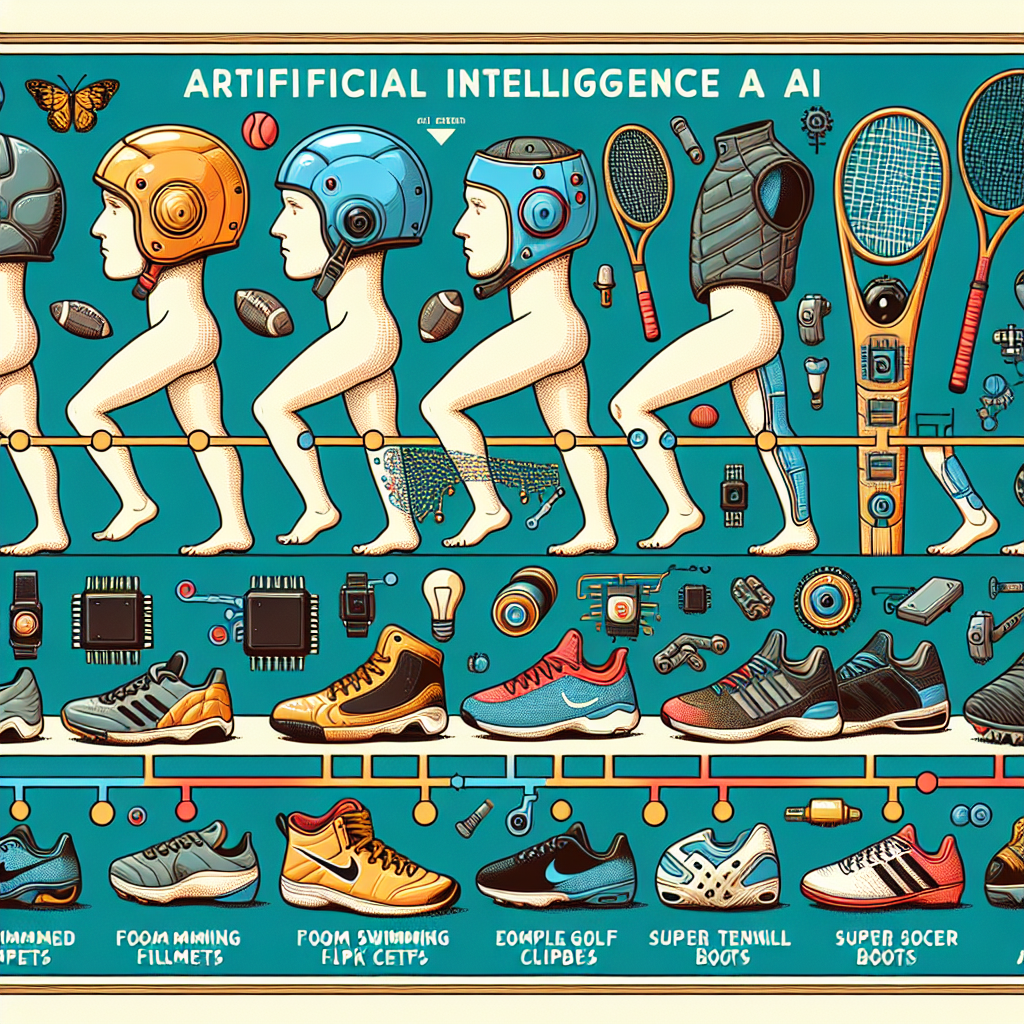
The Evolution of AI in Sports Equipment Design
In recent years, artificial intelligence (AI) has revolutionized various industries, including sports equipment design. AI has enabled designers to create innovative products that enhance performance, comfort, and safety for athletes. By using AI technology, designers can analyze data, simulate scenarios, and optimize designs to create the best possible products for athletes. This article will explore the evolution of AI in sports equipment design and how it has transformed the way we approach designing sports equipment.
AI in Sports Equipment Design: A Brief History
The use of AI in sports equipment design can be traced back to the early 2000s when companies started using computer-aided design (CAD) software to create prototypes of new products. CAD software allowed designers to create 3D models of sports equipment and test different design iterations before manufacturing the final product. While CAD software was a significant advancement in the design process, it was limited in its ability to optimize designs for performance and safety.
In the mid-2010s, companies began incorporating AI algorithms into their design process to analyze data and optimize designs for performance. AI algorithms could analyze large datasets of athlete performance metrics, biomechanical data, and environmental conditions to create designs that were optimized for specific sports and athletes. This allowed designers to create products that were tailored to the unique needs of each athlete, resulting in better performance and reduced risk of injury.
Today, AI is being used in every step of the sports equipment design process, from concept development to manufacturing. Designers can use AI algorithms to analyze data from sensors embedded in sports equipment to gather real-time feedback on performance. This data can be used to optimize designs and improve performance, comfort, and safety for athletes.
Benefits of AI in Sports Equipment Design
There are several benefits to using AI in sports equipment design, including:
1. Performance Optimization: AI algorithms can analyze data from sensors to optimize designs for performance. By collecting and analyzing data on athlete performance, designers can create products that enhance performance and improve the overall experience for athletes.
2. Personalization: AI algorithms can create personalized designs for athletes based on their unique needs and preferences. By analyzing data on athlete performance and biomechanics, designers can create products that are tailored to each athlete, resulting in better performance and reduced risk of injury.
3. Faster Design Iterations: AI algorithms can simulate different design iterations and test them in virtual environments, allowing designers to quickly iterate on designs and make improvements. This accelerates the design process and allows designers to create better products in less time.
4. Cost Reduction: By using AI algorithms to optimize designs, companies can reduce manufacturing costs and waste. AI can help designers create more efficient designs that use less material and require fewer manufacturing steps, resulting in cost savings for companies.
5. Improved Safety: AI algorithms can analyze data on athlete performance and biomechanics to create designs that reduce the risk of injury. By optimizing designs for safety, designers can create products that protect athletes from injury and improve their overall well-being.
FAQs
Q: How is AI being used in sports equipment design?
A: AI is being used in sports equipment design to analyze data, simulate scenarios, and optimize designs for performance, comfort, and safety. By using AI technology, designers can create products that are tailored to the unique needs of each athlete and enhance their overall experience.
Q: What are some examples of AI in sports equipment design?
A: Some examples of AI in sports equipment design include using AI algorithms to analyze data from sensors embedded in sports equipment to gather real-time feedback on performance, optimizing designs for performance based on athlete performance metrics, and creating personalized designs for athletes based on their unique needs and preferences.
Q: How does AI help improve athlete performance?
A: AI helps improve athlete performance by analyzing data on athlete performance, biomechanics, and environmental conditions to create designs that are optimized for performance. By using AI technology, designers can create products that enhance performance and improve the overall experience for athletes.
Q: How is AI changing the sports equipment design process?
A: AI is changing the sports equipment design process by enabling designers to analyze data, simulate scenarios, and optimize designs for performance, comfort, and safety. By using AI technology, designers can create innovative products that are tailored to the unique needs of each athlete and enhance their overall experience.
Q: What are the future implications of AI in sports equipment design?
A: The future implications of AI in sports equipment design are vast. AI technology will continue to revolutionize the way we approach designing sports equipment, enabling designers to create products that are optimized for performance, comfort, and safety. As AI technology continues to evolve, we can expect to see even more innovative products that enhance the performance and well-being of athletes.