
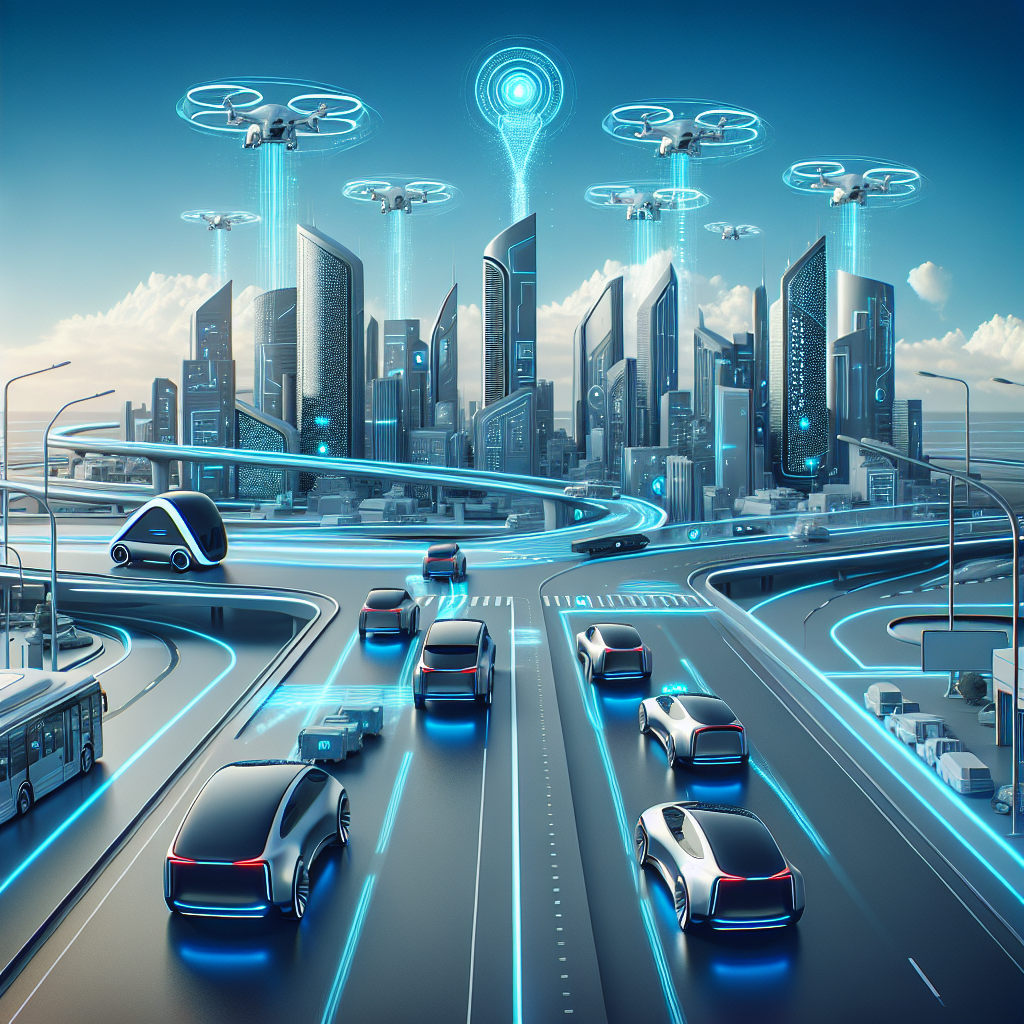
As technology continues to advance at a rapid pace, one of the most exciting developments in recent years has been the rise of autonomous vehicles. These self-driving cars have the potential to revolutionize the way we travel, making roads safer, reducing traffic congestion, and increasing mobility for people who are unable to drive themselves. At the heart of this technological revolution is artificial intelligence (AI), which powers the algorithms that allow autonomous vehicles to navigate roads, avoid obstacles, and make split-second decisions in real-time.
The Future of AI-driven Solutions in Autonomous Vehicles
AI-driven solutions are at the forefront of the development of autonomous vehicles. These solutions enable vehicles to perceive their environment, make decisions based on this perception, and navigate safely to their destination. The future of AI-driven solutions in autonomous vehicles is bright, with continued advancements in technology leading to even more sophisticated and reliable self-driving cars.
One of the key challenges facing the development of autonomous vehicles is the need for accurate and reliable perception systems. These systems use a combination of sensors, such as cameras, lidar, and radar, to detect and identify objects in the vehicle’s environment. AI algorithms then analyze this data to create a detailed map of the surroundings and make decisions about how to navigate safely through them.
Advancements in AI-driven perception systems are enabling autonomous vehicles to navigate complex and dynamic environments with increasing accuracy and reliability. For example, AI algorithms can now recognize and respond to a wide range of objects, including pedestrians, cyclists, and other vehicles, in real-time. This allows autonomous vehicles to anticipate and react to potential hazards more effectively, reducing the risk of accidents and improving overall safety on the roads.
AI-driven decision-making is another key area of development in autonomous vehicles. These systems use sophisticated algorithms to process data from the perception systems and make decisions about how to navigate through the environment. For example, AI algorithms can calculate the optimal route to a destination, adjust the vehicle’s speed and direction to avoid obstacles, and predict the behavior of other road users to avoid potential collisions.
Advancements in AI-driven decision-making are enabling autonomous vehicles to navigate complex and unpredictable environments with increasing efficiency and safety. For example, AI algorithms can now predict the behavior of other road users, such as predicting when a pedestrian might step out into the road or when a car might change lanes. This allows autonomous vehicles to anticipate these behaviors and adjust their own actions accordingly, reducing the risk of accidents and improving overall safety on the roads.
The future of AI-driven solutions in autonomous vehicles will see continued advancements in technology, leading to even more sophisticated and reliable self-driving cars. For example, researchers are working on developing AI algorithms that can learn from experience and adapt to new situations in real-time. This will enable autonomous vehicles to become even more capable of navigating complex and dynamic environments, making roads safer and more efficient for all users.
FAQs
Q: How do AI-driven solutions in autonomous vehicles work?
A: AI-driven solutions in autonomous vehicles work by using a combination of sensors, such as cameras, lidar, and radar, to detect and identify objects in the vehicle’s environment. AI algorithms then analyze this data to create a detailed map of the surroundings and make decisions about how to navigate safely through them.
Q: Are autonomous vehicles safe?
A: Autonomous vehicles are designed to be safer than human-driven vehicles, as they are not prone to human error, such as distracted driving or fatigue. However, there are still challenges to overcome, such as ensuring the reliability of perception and decision-making systems, before autonomous vehicles can be deployed on a large scale.
Q: How will AI-driven solutions in autonomous vehicles impact society?
A: AI-driven solutions in autonomous vehicles have the potential to revolutionize the way we travel, making roads safer, reducing traffic congestion, and increasing mobility for people who are unable to drive themselves. This will have a positive impact on society, improving safety, efficiency, and accessibility for all road users.
Q: What are the challenges facing the development of autonomous vehicles?
A: Some of the key challenges facing the development of autonomous vehicles include ensuring the reliability of perception and decision-making systems, navigating complex and dynamic environments, and addressing legal and regulatory issues surrounding their deployment.
In conclusion, the future of AI-driven solutions in autonomous vehicles is bright, with continued advancements in technology leading to even more sophisticated and reliable self-driving cars. These solutions have the potential to revolutionize the way we travel, making roads safer, reducing traffic congestion, and increasing mobility for people who are unable to drive themselves. As researchers continue to push the boundaries of AI technology, we can expect to see even more exciting developments in the field of autonomous vehicles in the years to come.