
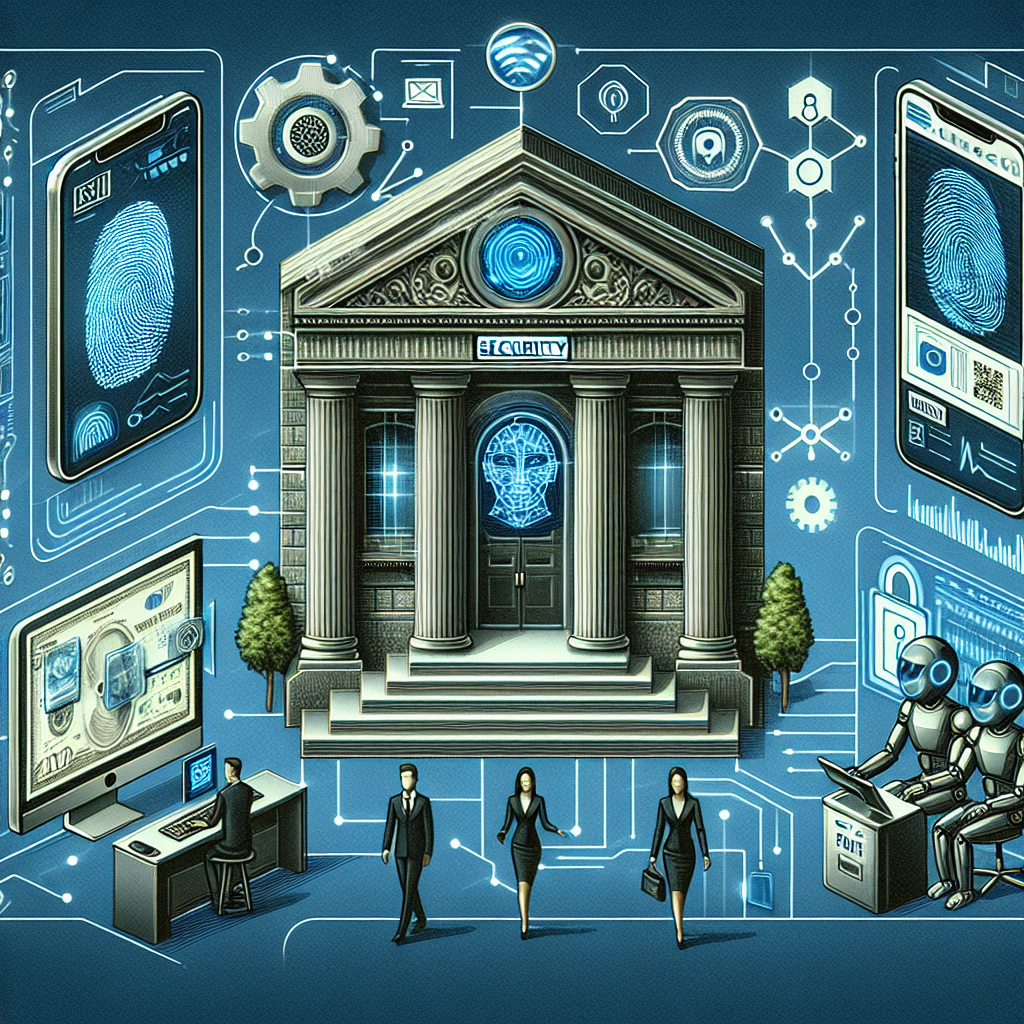
In today’s digital age, security is a top priority for businesses, especially in the banking sector. With the rise of cyber threats and fraud cases, banks are constantly looking for new and innovative ways to enhance security measures to protect their customers’ sensitive information. One of the technologies that is revolutionizing the way banks authenticate users is AI and biometric authentication.
AI, or artificial intelligence, refers to the simulation of human intelligence in machines that are programmed to think and learn like humans. Biometric authentication, on the other hand, uses unique physical characteristics such as fingerprints, facial recognition, and voice recognition to verify a person’s identity. When combined, AI and biometric authentication offer a powerful solution for enhancing security in banking.
How AI and Biometric Authentication Enhance Security in Banking
1. Improved User Experience: Traditional authentication methods such as passwords and PINs can be easily compromised through phishing attacks or brute force hacking. With biometric authentication, users can access their accounts quickly and securely without the need to remember complex passwords. AI algorithms can also analyze user behavior patterns to detect any anomalies that may indicate fraudulent activity.
2. Stronger Security Measures: Biometric authentication offers a higher level of security compared to traditional methods. Physical characteristics such as fingerprints or facial features are unique to each individual, making it extremely difficult for fraudsters to impersonate someone else. AI algorithms can also continuously monitor and adapt to new threats, making it harder for hackers to breach the system.
3. Fraud Detection: AI-powered biometric authentication systems can analyze vast amounts of data in real-time to detect any suspicious activity. For example, if a user’s biometric data does not match what is stored in the system, the AI algorithm can immediately flag it as a potential security breach. This proactive approach helps banks prevent fraudulent transactions before they occur.
4. Regulatory Compliance: With the increasing number of data privacy regulations such as GDPR and CCPA, banks are under immense pressure to protect their customers’ personal information. AI and biometric authentication help banks comply with these regulations by providing a secure and reliable way to verify users’ identities without compromising their privacy.
5. Cost-Effective Solution: Implementing AI and biometric authentication systems may require an initial investment, but in the long run, it can save banks money by reducing the number of fraud cases and improving operational efficiency. With fewer security breaches, banks can also avoid costly fines and maintain their reputation as a trusted financial institution.
Frequently Asked Questions
1. How secure is biometric authentication compared to traditional methods?
Biometric authentication is considered more secure than traditional methods such as passwords or PINs because physical characteristics are unique to each individual. It is extremely difficult for fraudsters to replicate someone’s fingerprint or facial features, making it a highly reliable form of authentication.
2. Can biometric data be stolen or hacked?
Biometric data is stored in a secure encrypted format and cannot be easily stolen or hacked. However, like any other form of data, there is always a risk of breaches. To mitigate this risk, banks should implement strict security measures such as multi-factor authentication and continuous monitoring of user activity.
3. What happens if my biometric data is compromised?
If your biometric data is compromised, banks can revoke access to your account and reset your biometric credentials. It is important to report any suspicious activity immediately to your bank to prevent further unauthorized access.
4. Are there any privacy concerns with biometric authentication?
Privacy concerns with biometric authentication mainly revolve around how banks store and use your biometric data. It is crucial for banks to comply with data privacy regulations and ensure that your biometric data is securely stored and not shared with third parties without your consent.
In conclusion, AI and biometric authentication are revolutionizing the way banks authenticate users and enhance security measures. By leveraging the power of AI algorithms and unique physical characteristics, banks can provide a secure and seamless user experience while protecting their customers’ sensitive information. With the increasing threat of cyber attacks and fraud cases, AI and biometric authentication offer a proactive solution to safeguard against potential security breaches. By investing in these technologies, banks can stay ahead of emerging threats and maintain trust with their customers in an increasingly digital world.