
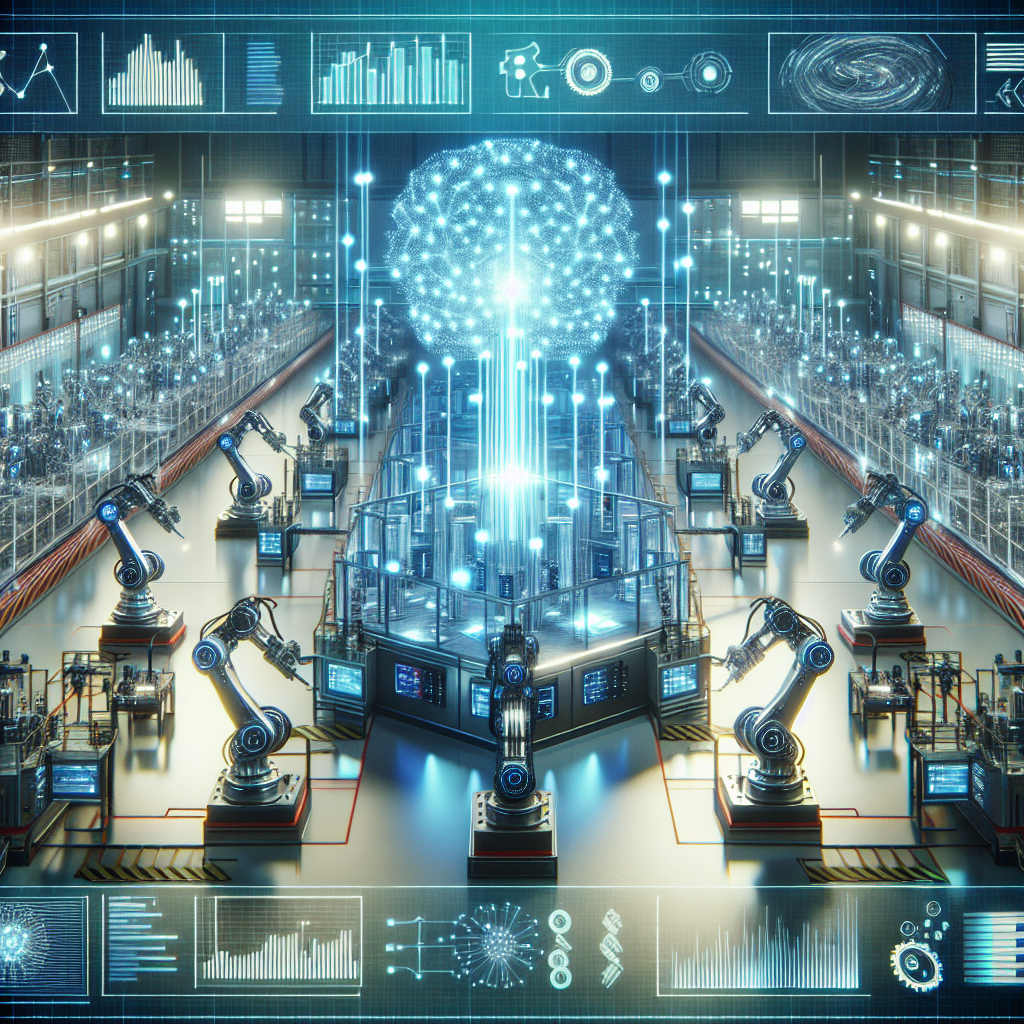
In today’s fast-paced manufacturing environment, companies are constantly looking for ways to improve productivity and efficiency. One of the most promising technologies that is revolutionizing the manufacturing industry is artificial intelligence (AI). AI has the potential to streamline processes, reduce waste, and increase overall productivity in manufacturing operations. In this article, we will explore how AI is being used to improve productivity in manufacturing and answer some frequently asked questions about this technology.
How AI is Improving Productivity in Manufacturing
1. Predictive Maintenance: One of the key ways AI is being used in manufacturing is through predictive maintenance. By using AI algorithms to analyze data from sensors and machines, manufacturers can predict when equipment is likely to fail and proactively schedule maintenance before a breakdown occurs. This not only reduces downtime but also saves money on costly repairs.
2. Demand Forecasting: AI can also be used to analyze historical data and market trends to predict future demand for products. By accurately forecasting demand, manufacturers can optimize production schedules, reduce inventory levels, and minimize waste. This ensures that production is aligned with customer needs, leading to higher productivity and profitability.
3. Quality Control: AI-powered image recognition systems can quickly and accurately identify defects in products as they move down the production line. By automating the quality control process, manufacturers can reduce the need for manual inspections and improve the overall quality of their products. This not only increases productivity but also reduces the risk of defective products reaching customers.
4. Supply Chain Optimization: AI can analyze vast amounts of data from the supply chain to identify inefficiencies and optimize logistics processes. By automating tasks such as route optimization, inventory management, and supplier selection, manufacturers can reduce costs, improve delivery times, and increase overall productivity.
5. Process Optimization: AI can analyze production data to identify bottlenecks, inefficiencies, and areas for improvement in manufacturing processes. By optimizing production workflows, manufacturers can increase output, reduce lead times, and improve overall efficiency. This leads to higher productivity and lower production costs.
FAQs about AI in Manufacturing
Q: Is AI only suitable for large manufacturing companies?
A: While large companies may have more resources to invest in AI technology, small and medium-sized manufacturers can also benefit from AI. There are many affordable AI solutions available that can be tailored to the specific needs of smaller businesses.
Q: How long does it take to implement AI in manufacturing?
A: The time it takes to implement AI in manufacturing can vary depending on the complexity of the project and the readiness of the company. Some AI solutions can be implemented relatively quickly, while others may require more time and resources. It is important to work with an experienced AI provider to ensure a smooth implementation process.
Q: Will AI replace human workers in manufacturing?
A: While AI has the potential to automate certain tasks in manufacturing, it is unlikely to completely replace human workers. Instead, AI is more likely to augment human capabilities and allow workers to focus on more complex and strategic tasks. By working alongside AI systems, human workers can increase productivity and efficiency in manufacturing operations.
Q: How secure is AI in manufacturing?
A: Security is a valid concern when implementing AI in manufacturing, as sensitive production data could be at risk. It is important to work with reputable AI providers who prioritize data security and compliance. Implementing strong encryption protocols, access controls, and monitoring systems can help protect manufacturing data from cyber threats.
Q: What are the costs associated with implementing AI in manufacturing?
A: The costs of implementing AI in manufacturing can vary depending on the type of AI solution, the size of the company, and the scope of the project. Some AI solutions may require a significant upfront investment, while others may offer a pay-as-you-go pricing model. It is important to carefully evaluate the costs and benefits of implementing AI to ensure a positive return on investment.
In conclusion, AI has the potential to revolutionize the manufacturing industry by improving productivity, efficiency, and profitability. By leveraging AI technology for predictive maintenance, demand forecasting, quality control, supply chain optimization, and process optimization, manufacturers can stay ahead of the competition and meet the demands of today’s fast-paced market. With the right strategy and implementation, AI can help manufacturers achieve higher productivity levels and drive business growth in the years to come.