
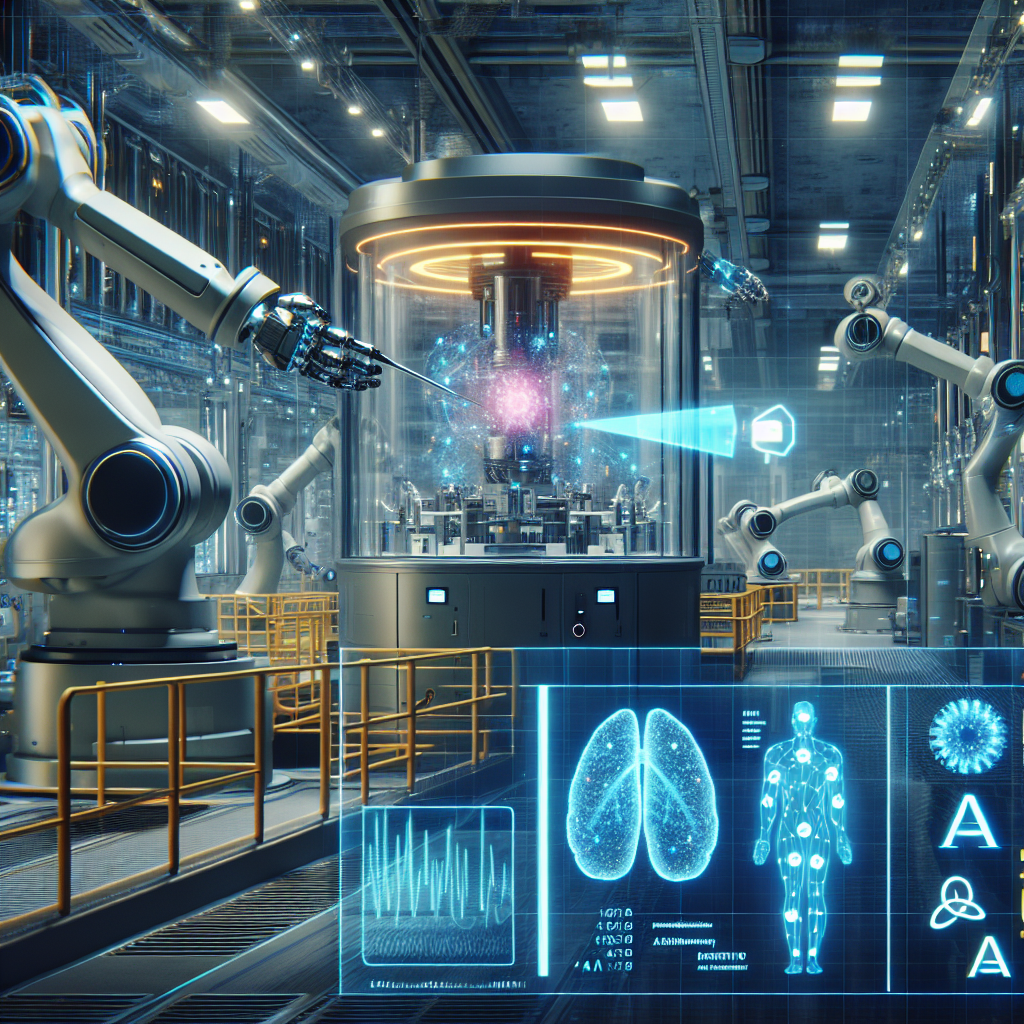
Healthcare facilities, like hospitals and clinics, rely on a wide range of equipment and systems to provide quality care to patients. From medical devices to HVAC systems, there are numerous components that need to be functioning properly in order to ensure the safety and well-being of patients and staff. Predictive maintenance, a proactive approach to maintenance that involves using data and analytics to predict when equipment is likely to fail, is becoming increasingly popular in healthcare facilities. By using artificial intelligence (AI) for predictive maintenance, healthcare facilities can improve the reliability of their equipment, reduce downtime, and ultimately provide better care to patients.
AI for predictive maintenance in healthcare facilities involves using advanced algorithms to analyze data from equipment sensors, historical maintenance records, and other sources to predict when maintenance is needed. This can help healthcare facilities identify potential issues before they become major problems, allowing them to schedule maintenance at convenient times and avoid unexpected downtime. AI can also help facilities prioritize maintenance tasks based on the likelihood of failure, ensuring that critical equipment is always in working order.
One of the key benefits of using AI for predictive maintenance in healthcare facilities is the ability to reduce costs. By identifying maintenance needs early and scheduling maintenance proactively, facilities can avoid costly emergency repairs and minimize downtime. This can also help extend the life of equipment, reducing the need for expensive replacements. In addition, AI can help healthcare facilities optimize their maintenance schedules, ensuring that maintenance is performed when it is most cost-effective.
Another benefit of using AI for predictive maintenance in healthcare facilities is the potential to improve patient safety. Equipment failures can have serious consequences for patient care, so it is essential that healthcare facilities have reliable systems in place to prevent these failures. By using AI to predict when maintenance is needed, facilities can reduce the risk of equipment failures and ensure that critical equipment is always operational. This can help prevent disruptions to patient care and ensure that patients receive the highest quality care possible.
In addition to cost savings and improved patient safety, using AI for predictive maintenance can also help healthcare facilities improve their overall efficiency. By streamlining maintenance processes and optimizing maintenance schedules, facilities can reduce the time and resources required for maintenance tasks. This can free up staff to focus on other important tasks, such as patient care, and help facilities operate more efficiently.
Despite the numerous benefits of using AI for predictive maintenance in healthcare facilities, there are also some challenges to consider. One of the key challenges is ensuring that facilities have access to the data and resources needed to implement AI effectively. This may require investing in new sensors, data collection systems, and other technologies to gather the necessary data for predictive maintenance. In addition, facilities may need to train staff on how to use AI tools and interpret the results of predictive maintenance analysis.
Another challenge is ensuring the accuracy of predictive maintenance predictions. AI algorithms rely on data to make predictions, so it is essential that facilities have accurate and reliable data sources. This may require regular maintenance of sensors and data collection systems to ensure that the data being used for predictions is up-to-date and accurate. In addition, facilities may need to continually refine and improve their AI algorithms to ensure that they are making accurate predictions.
Overall, using AI for predictive maintenance in healthcare facilities can offer numerous benefits, including cost savings, improved patient safety, and increased efficiency. By leveraging advanced algorithms and data analytics, facilities can predict maintenance needs more accurately and effectively, ultimately providing better care to patients. As AI technology continues to advance, the potential for predictive maintenance in healthcare facilities will only continue to grow.
FAQs:
Q: How does AI for predictive maintenance work in healthcare facilities?
A: AI for predictive maintenance in healthcare facilities involves using advanced algorithms to analyze data from equipment sensors, historical maintenance records, and other sources to predict when maintenance is needed. This can help facilities identify potential issues before they become major problems and schedule maintenance proactively.
Q: What are the benefits of using AI for predictive maintenance in healthcare facilities?
A: The benefits of using AI for predictive maintenance in healthcare facilities include cost savings, improved patient safety, and increased efficiency. By predicting maintenance needs accurately and effectively, facilities can reduce costs, prevent equipment failures, and optimize maintenance schedules.
Q: What are the challenges of using AI for predictive maintenance in healthcare facilities?
A: Some of the challenges of using AI for predictive maintenance in healthcare facilities include ensuring access to accurate data sources, training staff on how to use AI tools, and maintaining the accuracy of predictive maintenance predictions. Facilities may also need to invest in new technologies and continually refine their AI algorithms.
Q: How can healthcare facilities implement AI for predictive maintenance?
A: Healthcare facilities can implement AI for predictive maintenance by investing in sensors and data collection systems, training staff on how to use AI tools, and continually refining their AI algorithms. By leveraging advanced algorithms and data analytics, facilities can predict maintenance needs more accurately and effectively.