
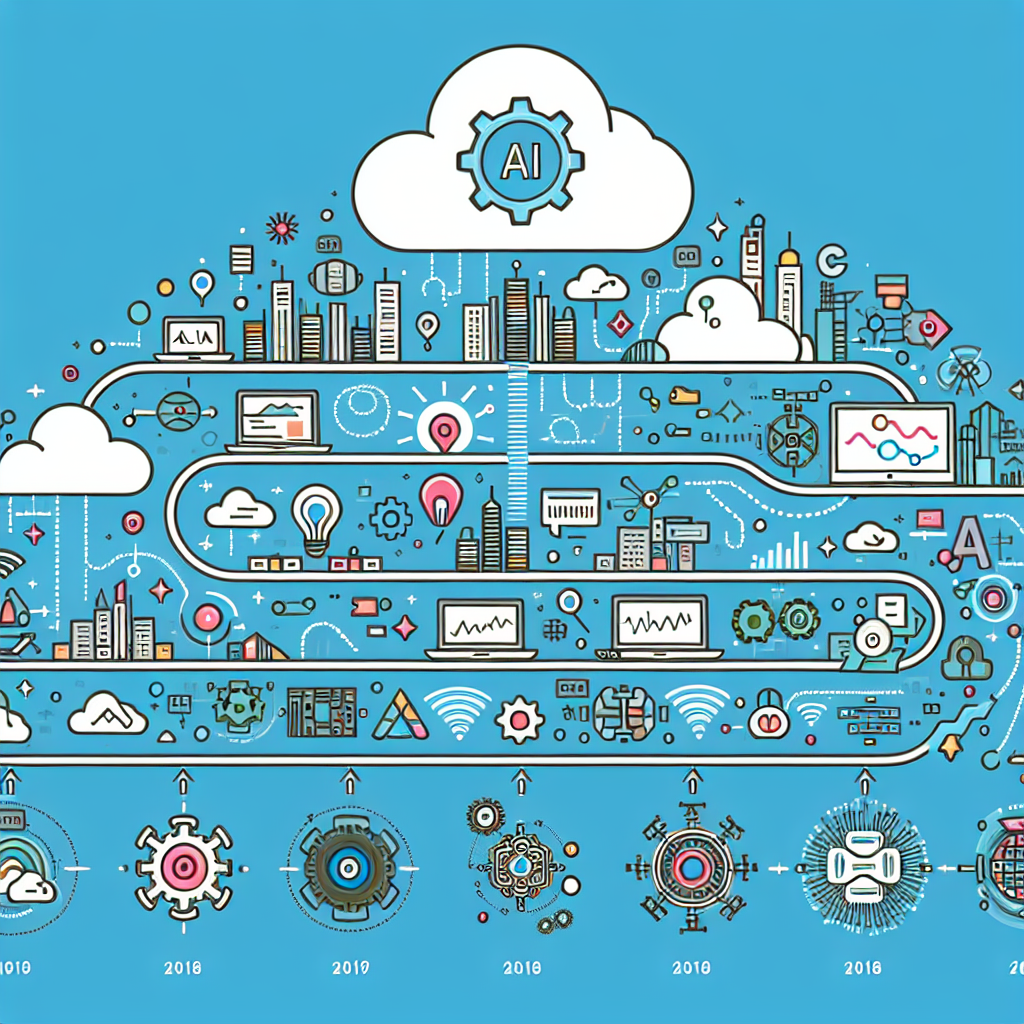
The Evolution of AI in Cloud Service Delivery
Artificial Intelligence (AI) has been making waves in the technology industry for quite some time now, revolutionizing the way businesses operate and enhancing the overall customer experience. One of the key areas where AI has made a significant impact is in cloud service delivery. In this article, we will explore the evolution of AI in cloud service delivery, its benefits, and how it is shaping the future of technology.
What is AI in Cloud Service Delivery?
AI in cloud service delivery refers to the use of artificial intelligence technologies to improve the performance, efficiency, and security of cloud services. By leveraging AI algorithms, cloud service providers can automate tasks, analyze large amounts of data, and enhance the overall user experience.
AI in cloud service delivery encompasses a wide range of applications, including:
1. Predictive analytics: AI algorithms can analyze historical data and predict future trends, helping businesses make informed decisions and optimize their operations.
2. Intelligent automation: AI-powered automation tools can streamline repetitive tasks, improve efficiency, and reduce human error.
3. Security: AI can enhance cloud security by detecting and responding to potential threats in real-time, protecting sensitive data and preventing cyber attacks.
4. Personalization: AI can analyze user behavior and preferences to deliver personalized experiences, such as tailored recommendations and content.
The Evolution of AI in Cloud Service Delivery
The evolution of AI in cloud service delivery can be traced back to the early days of cloud computing, when businesses began migrating their data and applications to the cloud to reduce costs and improve scalability. As cloud adoption grew, so did the demand for more advanced capabilities to manage and optimize cloud services.
In recent years, AI has played a crucial role in transforming cloud service delivery, enabling providers to offer more intelligent, efficient, and secure solutions. Here are some key milestones in the evolution of AI in cloud service delivery:
1. Automation: One of the earliest applications of AI in cloud service delivery was automation. By automating routine tasks such as provisioning resources, monitoring performance, and managing workloads, AI has helped businesses reduce manual workloads and improve operational efficiency.
2. Predictive analytics: AI-powered predictive analytics have become increasingly popular in cloud service delivery, enabling providers to anticipate issues before they occur, optimize resources, and improve service reliability.
3. Intelligent security: AI has revolutionized cloud security by enabling providers to detect and respond to threats in real-time, enhancing data protection and compliance.
4. Personalization: AI-driven personalization has become a key differentiator for cloud service providers, allowing them to deliver customized experiences based on user preferences and behavior.
5. Edge computing: AI has enabled the emergence of edge computing, a distributed architecture that brings data processing closer to the source, reducing latency and improving performance for cloud services.
Benefits of AI in Cloud Service Delivery
The adoption of AI in cloud service delivery offers a wide range of benefits for businesses and consumers alike. Some of the key benefits include:
1. Improved efficiency: AI automation tools can streamline processes, reduce manual workloads, and increase productivity.
2. Enhanced security: AI-powered security solutions can detect and respond to threats in real-time, protecting sensitive data and preventing cyber attacks.
3. Predictive analytics: AI-driven predictive analytics can help businesses make more informed decisions, optimize resources, and improve service reliability.
4. Personalized experiences: AI-powered personalization can enhance user engagement, loyalty, and satisfaction by delivering tailored recommendations and content.
5. Edge computing: AI-enabled edge computing can reduce latency, improve performance, and enable new use cases for cloud services.
Future Trends in AI and Cloud Service Delivery
As AI continues to evolve, so too will its impact on cloud service delivery. Some of the key trends to watch out for in the future include:
1. AI-driven automation: AI automation tools will become increasingly sophisticated, enabling businesses to automate complex tasks and workflows.
2. Enhanced security: AI-powered security solutions will continue to evolve, incorporating advanced threat detection and response capabilities.
3. Personalization: AI-driven personalization will become more prevalent, with businesses leveraging AI algorithms to deliver hyper-personalized experiences to users.
4. Edge computing: Edge computing will become more mainstream, with AI enabling faster, more efficient data processing at the edge of the network.
5. Quantum computing: Quantum computing, a new frontier in computing technology, will revolutionize cloud service delivery by enabling faster, more powerful computations.
FAQs
Q: How is AI transforming cloud service delivery?
A: AI is transforming cloud service delivery by enabling providers to automate tasks, analyze data, enhance security, and deliver personalized experiences to users.
Q: What are the benefits of AI in cloud service delivery?
A: The benefits of AI in cloud service delivery include improved efficiency, enhanced security, predictive analytics, personalized experiences, and edge computing.
Q: What are some future trends in AI and cloud service delivery?
A: Some future trends in AI and cloud service delivery include AI-driven automation, enhanced security, personalized experiences, edge computing, and quantum computing.
In conclusion, AI is revolutionizing cloud service delivery by enabling providers to automate tasks, analyze data, enhance security, and deliver personalized experiences to users. As AI continues to evolve, the future of cloud service delivery looks promising, with new innovations and capabilities on the horizon. Businesses that embrace AI in their cloud strategies will be well-positioned to thrive in the digital economy.