
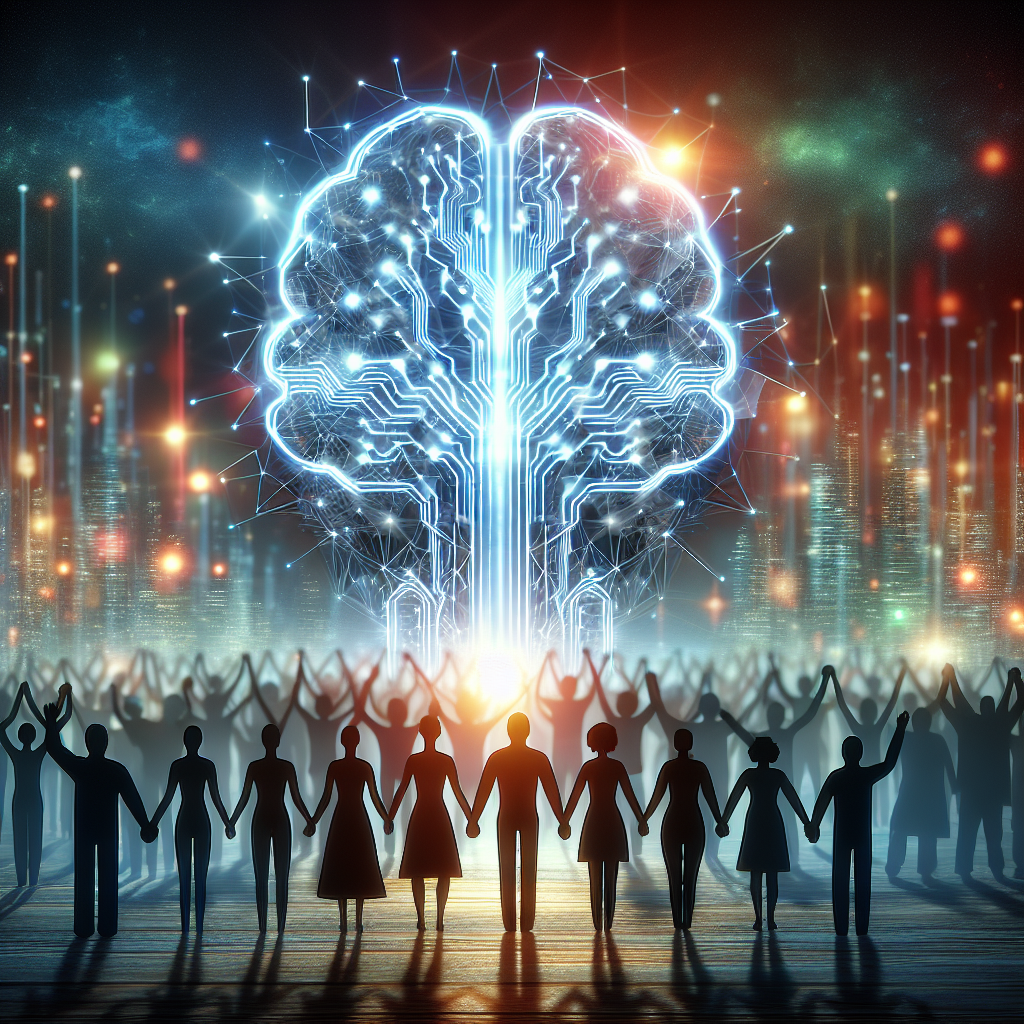
Artificial Intelligence (AI) has increasingly become a powerful tool in driving social change across various sectors. From healthcare to education to environmental conservation, AI has the potential to revolutionize the way we address social issues and create a more inclusive and equitable society. In this article, we will explore the power of AI in driving social change and how it is being used to address some of the world’s most pressing challenges.
AI in Healthcare:
One of the most promising applications of AI in driving social change is in the field of healthcare. AI has the potential to improve patient outcomes, reduce healthcare costs, and increase access to quality care for underserved populations. For example, AI-powered diagnostic tools can help healthcare providers quickly and accurately diagnose diseases, leading to faster treatment and better outcomes for patients. AI can also be used to analyze large sets of medical data to identify patterns and trends that can inform treatment decisions and improve patient care.
AI in Education:
AI is also being used to drive social change in the field of education. By personalizing learning experiences for students, AI can help improve educational outcomes and reduce achievement gaps. AI-powered tutoring systems can provide students with personalized support and feedback, helping them master difficult concepts and improve their academic performance. Additionally, AI can help educators identify struggling students early on and provide targeted interventions to help them succeed. By leveraging AI in education, we can create a more inclusive and equitable education system that ensures all students have access to high-quality learning experiences.
AI in Environmental Conservation:
AI is also playing a significant role in driving social change in the field of environmental conservation. By analyzing satellite imagery and other data sources, AI can help monitor and protect endangered species, track deforestation, and identify areas at risk of natural disasters. AI-powered tools can also help optimize resource management and reduce waste, leading to a more sustainable and environmentally friendly society. By harnessing the power of AI, we can better understand and address the complex challenges facing our planet and work towards a more sustainable future for all.
AI in Social Services:
AI is also being used to drive social change in the provision of social services. By leveraging AI-powered chatbots and virtual assistants, social service organizations can provide more efficient and personalized support to individuals in need. AI can help streamline the intake process, reduce wait times, and connect individuals with the resources and services they need to thrive. Additionally, AI can help identify patterns of need and allocate resources more effectively, ensuring that support is provided to those who need it most. By using AI in social services, we can create a more responsive and inclusive support system that meets the diverse needs of our communities.
FAQs:
1. How is AI being used to drive social change?
AI is being used in various sectors, including healthcare, education, environmental conservation, and social services, to address some of the world’s most pressing social issues. By leveraging AI-powered tools and technologies, organizations can improve outcomes, reduce costs, increase access to services, and create a more inclusive and equitable society.
2. What are some examples of AI applications in driving social change?
Some examples of AI applications in driving social change include AI-powered diagnostic tools in healthcare, personalized tutoring systems in education, satellite imagery analysis in environmental conservation, and chatbots in social services. These applications help organizations better understand and address complex social challenges, leading to positive social impact.
3. How can AI help address inequality and inequity in society?
AI can help address inequality and inequity in society by providing personalized support and services to underserved populations, identifying patterns of need, and allocating resources more effectively. By leveraging AI, organizations can create more responsive and inclusive systems that meet the diverse needs of our communities and ensure that support is provided to those who need it most.
In conclusion, the power of AI in driving social change is undeniable. By harnessing the capabilities of AI, we can address some of the world’s most pressing social challenges and create a more inclusive and equitable society for all. From healthcare to education to environmental conservation, AI is revolutionizing the way we approach social issues and paving the way for a brighter future. By continuing to invest in AI technologies and innovations, we can unlock the full potential of AI in driving social change and create a better world for future generations.