
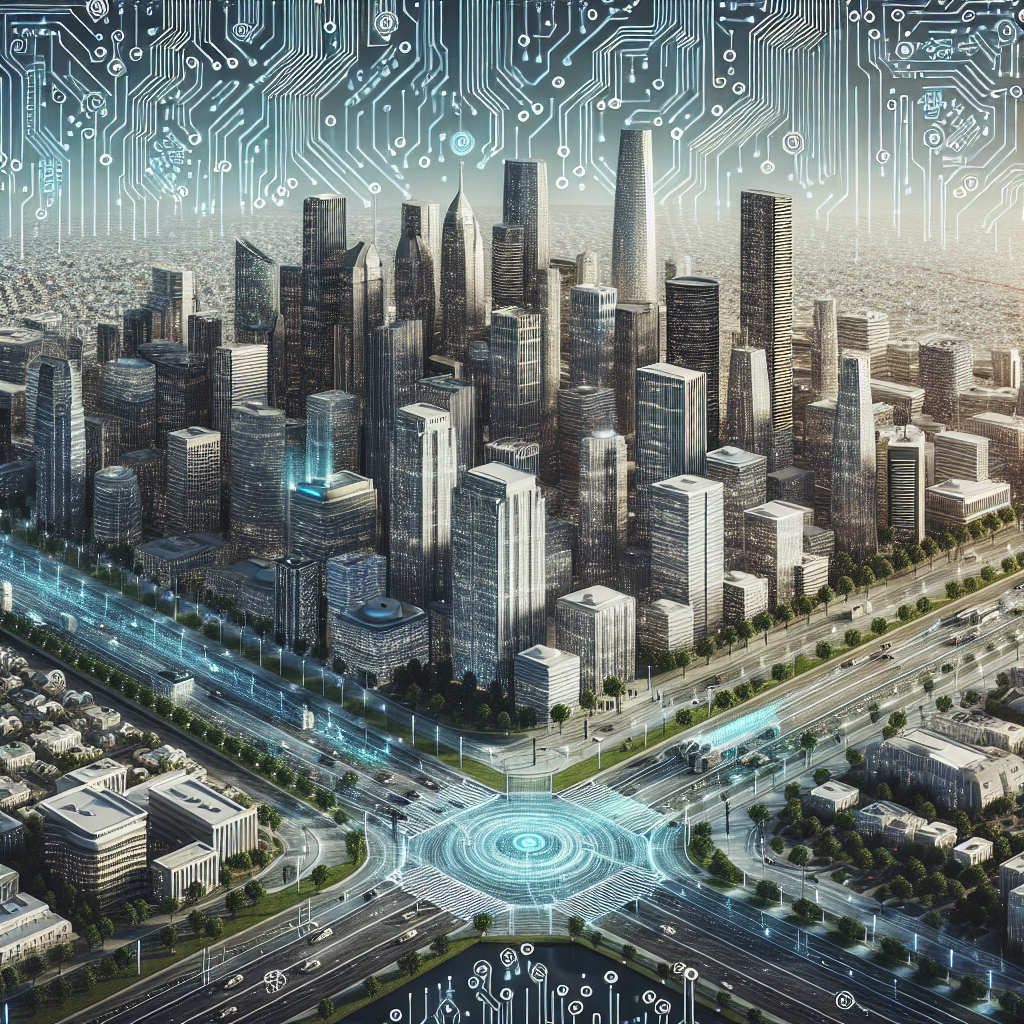
Urban planning is a complex and ever-evolving field that involves the design and organization of cities and towns to create sustainable and livable environments for their inhabitants. With the rapid advancement of technology, including artificial intelligence (AI), urban planners are now able to leverage AI-driven solutions to improve their decision-making processes and create more efficient and effective urban environments.
The Impact of AI-driven Solutions on Urban Planning
AI-driven solutions have the potential to revolutionize urban planning in a number of ways. One of the key benefits of using AI in urban planning is the ability to analyze vast amounts of data quickly and efficiently. This allows planners to make more informed decisions based on data-driven insights, rather than relying on intuition or past experience.
For example, AI can be used to analyze data from sensors and other sources to identify patterns and trends in traffic flow, air quality, and other key indicators of urban life. This information can then be used to optimize transportation systems, plan new developments, and improve overall quality of life for residents.
AI can also be used to model and simulate different scenarios, allowing planners to test out various strategies and predict the outcomes before implementing them in the real world. This can help minimize risks and uncertainties, and ensure that urban planning decisions are based on sound evidence and analysis.
In addition, AI can help planners to better understand the needs and preferences of residents, by analyzing social media data, surveys, and other sources of information. This can help ensure that urban planning decisions are more responsive to the needs of the community, and that new developments are designed with the needs of residents in mind.
Overall, AI-driven solutions have the potential to make urban planning more efficient, effective, and responsive to the needs of residents. By leveraging the power of AI, urban planners can create more sustainable and livable cities that are better able to adapt to the challenges of the 21st century.
FAQs
Q: What are some examples of AI-driven solutions in urban planning?
A: There are many examples of AI-driven solutions being used in urban planning. For example, AI can be used to analyze traffic flow data to optimize transportation systems, or to model and simulate different scenarios to predict the outcomes of various planning decisions.
Q: How can AI help improve the quality of life in cities?
A: AI can help improve the quality of life in cities by optimizing transportation systems, reducing pollution, and creating more efficient and sustainable urban environments. By analyzing data and modeling different scenarios, AI-driven solutions can help planners make more informed decisions that benefit residents.
Q: What are some of the challenges of using AI in urban planning?
A: There are a number of challenges associated with using AI in urban planning, including concerns about data privacy, bias in algorithms, and the potential for AI to replace human decision-making. It’s important for planners to be aware of these challenges and to address them proactively in order to ensure that AI-driven solutions are used responsibly and ethically.
In conclusion, the impact of AI-driven solutions on urban planning is significant and far-reaching. By leveraging the power of AI, urban planners can make more informed decisions, create more sustainable and livable cities, and better meet the needs of residents. While there are challenges associated with using AI in urban planning, the potential benefits are vast, and AI-driven solutions have the potential to revolutionize the field of urban planning in the years to come.