
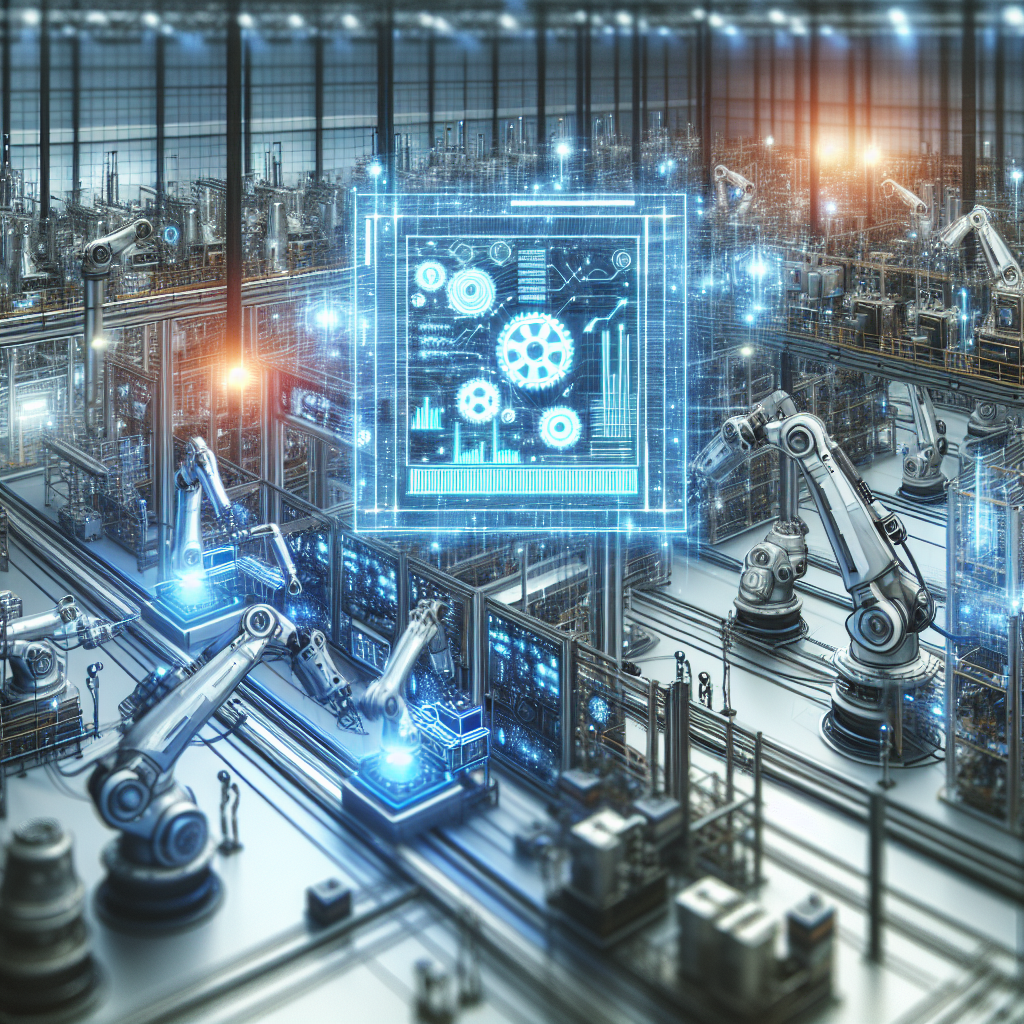
AI and Smart Factories: A Match Made in Manufacturing
In recent years, the manufacturing industry has seen a significant shift towards automation and the use of artificial intelligence (AI) in production processes. This trend has given rise to the concept of smart factories, which are equipped with advanced technologies that enable them to operate more efficiently, productively, and sustainably. The marriage of AI and smart factories has revolutionized the way manufacturing is done, leading to increased productivity, reduced costs, and improved quality.
AI in manufacturing refers to the use of machine learning algorithms and other AI technologies to optimize production processes, predict maintenance needs, and improve overall efficiency. Smart factories, on the other hand, are manufacturing facilities that are equipped with sensors, actuators, and other advanced technologies that enable them to operate autonomously and make real-time decisions based on data.
One of the key benefits of AI in smart factories is its ability to optimize production processes. By analyzing data from sensors and other sources, AI algorithms can identify inefficiencies in the production line and suggest ways to improve them. For example, AI can be used to predict equipment failures before they occur, enabling manufacturers to perform maintenance tasks proactively and avoid costly downtime.
Another benefit of AI in smart factories is its ability to improve quality control. By analyzing data from sensors and cameras, AI algorithms can detect defects in products more accurately and quickly than human inspectors. This not only improves the quality of the final product but also reduces waste and rework, leading to cost savings for manufacturers.
AI can also be used to optimize supply chain management in smart factories. By analyzing data from suppliers, inventory levels, and production schedules, AI algorithms can identify bottlenecks in the supply chain and suggest ways to overcome them. This can help manufacturers reduce lead times, improve on-time delivery rates, and minimize inventory costs.
In addition to these benefits, AI in smart factories can also help manufacturers reduce their environmental impact. By optimizing production processes and reducing waste, manufacturers can minimize their energy consumption, water usage, and carbon emissions. This not only benefits the environment but also helps manufacturers comply with increasingly stringent regulations on sustainability.
Despite the numerous benefits of AI in smart factories, there are also challenges that manufacturers need to overcome. One of the main challenges is the high upfront cost of implementing AI technologies in manufacturing facilities. This includes the cost of sensors, actuators, and other hardware, as well as the cost of training employees to use and maintain these technologies.
Another challenge is the lack of skilled workers who can develop and implement AI algorithms in smart factories. Manufacturers need to invest in training programs to upskill their workforce and attract new talent with expertise in AI and data science. This can be a significant barrier for smaller manufacturers who may not have the resources to compete for top talent in this field.
Furthermore, there are concerns about the security and privacy of data collected by AI systems in smart factories. Manufacturers need to ensure that sensitive data about their production processes, suppliers, and customers is protected from cyber threats and unauthorized access. This requires implementing robust cybersecurity measures and complying with data protection regulations.
Despite these challenges, the benefits of AI in smart factories far outweigh the risks. Manufacturers who embrace AI technologies in their production processes can gain a competitive edge by improving efficiency, quality, and sustainability. As AI continues to evolve and become more accessible, smart factories will become the norm rather than the exception in the manufacturing industry.
FAQs
Q: What is a smart factory?
A: A smart factory is a manufacturing facility that is equipped with advanced technologies such as sensors, actuators, and AI algorithms that enable it to operate autonomously and make real-time decisions based on data.
Q: What are the benefits of AI in smart factories?
A: AI in smart factories can optimize production processes, improve quality control, optimize supply chain management, and reduce environmental impact.
Q: What are the challenges of implementing AI in smart factories?
A: Challenges include high upfront costs, the lack of skilled workers, and concerns about data security and privacy.
Q: How can manufacturers overcome these challenges?
A: Manufacturers can invest in training programs to upskill their workforce, implement robust cybersecurity measures, and comply with data protection regulations.
Q: What is the future of AI in smart factories?
A: The future of AI in smart factories is bright, with continued advancements in AI technologies and increasing adoption by manufacturers looking to gain a competitive edge.