
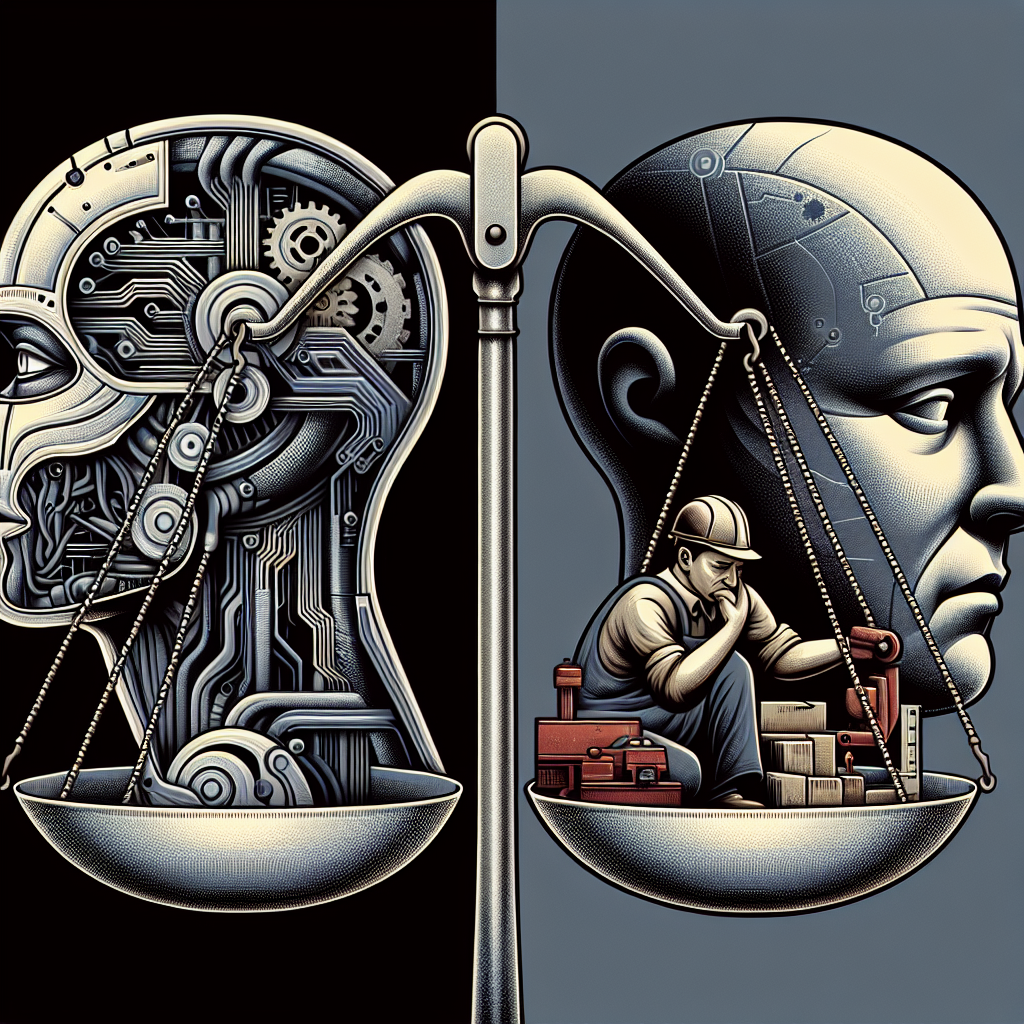
Artificial Intelligence (AI) has been a hot topic of discussion in recent years, with many experts predicting that it will revolutionize industries and change the way we live and work. However, there is a growing concern that AI could also lead to unemployment and economic instability as machines take over tasks that were previously performed by humans.
One of the main reasons why AI could lead to unemployment is its ability to automate tasks that were once done by humans. For example, AI-powered machines can now perform tasks such as data entry, customer service, and even medical diagnoses with a high level of accuracy and efficiency. This means that many jobs that were traditionally done by humans are now at risk of being replaced by machines.
Another reason why AI could lead to unemployment is the potential for AI to outperform humans in a wide range of tasks. As AI continues to improve and become more sophisticated, it is likely that machines will be able to perform tasks faster, more accurately, and at a lower cost than humans. This could lead to companies replacing human workers with AI-powered machines in order to increase efficiency and reduce costs.
In addition to unemployment, AI could also lead to economic instability. As more jobs are automated and replaced by machines, there will be a decrease in the demand for human labor. This could lead to a decrease in wages and an increase in income inequality as those with the skills needed to work with AI-powered machines will be able to command higher salaries, while those without these skills will be left behind.
Furthermore, the rise of AI could also lead to a shift in the way economies are structured. As more jobs become automated, there will be a decrease in the number of jobs available for humans, leading to a decrease in consumer spending and a decrease in economic growth. This could lead to a cycle of economic instability as businesses struggle to adapt to the changing landscape of the labor market.
Despite these potential risks, there are also opportunities for AI to create new jobs and industries. For example, as AI becomes more prevalent, there will be an increased demand for workers with the skills needed to design, develop, and maintain AI-powered systems. Additionally, AI has the potential to create new industries and markets, such as the development of autonomous vehicles, robotics, and personalized medicine.
However, in order to ensure that the benefits of AI are maximized and the risks are mitigated, it is important for policymakers, businesses, and individuals to take proactive steps to address the potential impact of AI on unemployment and economic instability. This could include investing in education and training programs to equip workers with the skills needed to work with AI, developing policies to ensure that the benefits of AI are shared equitably, and creating a social safety net to support workers who are displaced by automation.
In conclusion, while AI has the potential to revolutionize industries and create new opportunities for growth, there are also risks that it could lead to unemployment and economic instability. It is important for stakeholders to work together to address these risks and ensure that the benefits of AI are shared equitably across society.
FAQs:
1. Will AI really lead to widespread unemployment?
While AI has the potential to automate many tasks that were previously done by humans, it is unlikely that it will lead to widespread unemployment. Instead, AI is likely to lead to a shift in the types of jobs available, with a greater emphasis on roles that require human creativity, critical thinking, and emotional intelligence.
2. What can individuals do to prepare for the impact of AI on the job market?
Individuals can prepare for the impact of AI on the job market by investing in education and training programs that equip them with the skills needed to work with AI. This could include learning how to code, developing expertise in data analysis, or pursuing a career in a field that is less likely to be automated, such as healthcare or education.
3. How can policymakers address the potential impact of AI on unemployment and economic instability?
Policymakers can address the potential impact of AI on unemployment and economic instability by investing in education and training programs, developing policies to ensure that the benefits of AI are shared equitably, and creating a social safety net to support workers who are displaced by automation. Additionally, policymakers can work with businesses to encourage responsible AI deployment and ensure that workers are not left behind in the transition to a more automated economy.