
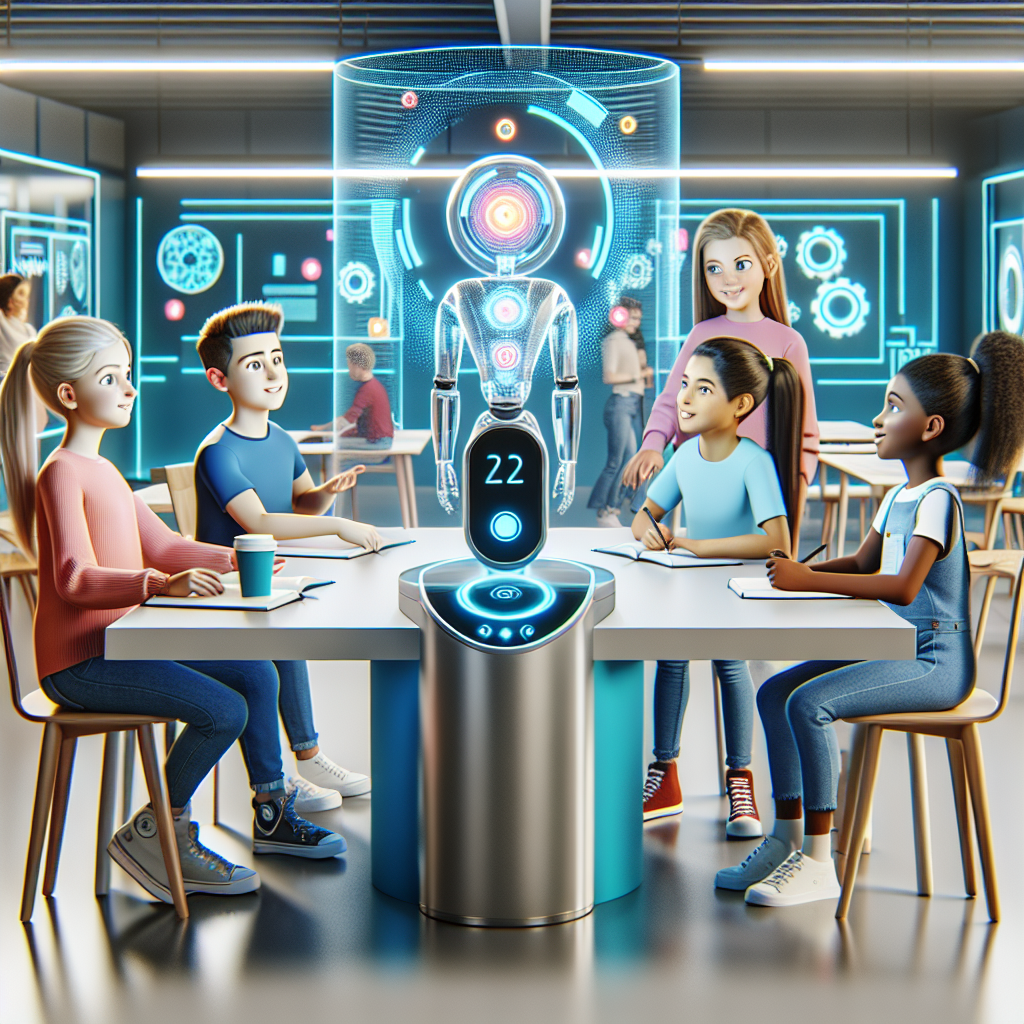
In recent years, the use of artificial intelligence (AI) in education has been gaining momentum. From personalized learning platforms to predictive analytics tools, AI is revolutionizing the way students learn and succeed in the classroom. Leveraging AI for student success has the potential to improve academic outcomes, increase retention rates, and enhance the overall educational experience for students.
One of the key benefits of using AI in education is its ability to provide personalized learning experiences for students. Traditional one-size-fits-all teaching methods can be ineffective for many students, as each student has unique learning styles and preferences. AI-powered platforms can analyze each student’s learning data and tailor the educational content to meet their individual needs. This can help students learn at their own pace, focus on areas where they need improvement, and ultimately achieve better academic results.
Another advantage of leveraging AI for student success is its ability to provide real-time feedback and support. AI-powered chatbots can assist students with their homework, answer questions, and provide guidance on challenging topics. This can help students stay engaged and motivated, as they receive immediate feedback and support whenever they need it. Additionally, AI can track student progress and alert teachers or advisors if a student is struggling, enabling early intervention and support to prevent academic failure.
Predictive analytics is another powerful tool that AI can offer in education. By analyzing large amounts of data, AI can predict which students are at risk of dropping out or failing a course. This allows educators to identify these students early on and provide targeted interventions to help them succeed. Predictive analytics can also help schools allocate resources more effectively, by identifying areas where additional support is needed and where resources can be reallocated for maximum impact.
AI can also be used to enhance the overall learning experience for students. Virtual reality (VR) and augmented reality (AR) technologies powered by AI can create immersive and interactive learning environments, where students can engage with the material in a hands-on way. This can make learning more engaging and memorable, leading to better retention of information and improved academic performance.
In addition to these benefits, leveraging AI for student success can also help schools and educators save time and resources. AI-powered grading systems can automate the grading process, freeing up teachers to focus on more personalized interactions with students. AI can also help schools streamline administrative tasks, such as scheduling classes and managing student records, allowing educators to spend more time on teaching and mentoring students.
Despite the numerous advantages of using AI in education, there are also some challenges and concerns that need to be addressed. One common concern is the potential for bias in AI algorithms, which could lead to unfair treatment of certain groups of students. It is important for educators and developers to be mindful of this issue and ensure that AI systems are designed and implemented in a way that is fair and equitable for all students.
Another challenge is the need for proper training and support for educators to effectively use AI in the classroom. Many teachers may be unfamiliar with AI technologies and may require training to integrate them into their teaching practices. Schools should invest in professional development opportunities for educators to ensure they have the skills and knowledge needed to leverage AI for student success.
Overall, leveraging AI for student success has the potential to revolutionize education and improve outcomes for students. By providing personalized learning experiences, real-time feedback and support, predictive analytics, and immersive learning environments, AI can help students achieve their full potential and succeed academically.
FAQs:
Q: How can AI be used to personalize learning for students?
A: AI can analyze each student’s learning data and tailor educational content to meet their individual needs. This can help students learn at their own pace, focus on areas where they need improvement, and ultimately achieve better academic results.
Q: What are some examples of AI-powered tools that can assist students with their learning?
A: AI-powered chatbots can help students with their homework, answer questions, and provide guidance on challenging topics. Virtual reality and augmented reality technologies powered by AI can create immersive learning experiences for students.
Q: How can predictive analytics help schools and educators support student success?
A: Predictive analytics can analyze large amounts of data to predict which students are at risk of dropping out or failing a course. This allows educators to identify these students early on and provide targeted interventions to help them succeed.
Q: What are some challenges and concerns associated with using AI in education?
A: One common concern is the potential for bias in AI algorithms, which could lead to unfair treatment of certain groups of students. Another challenge is the need for proper training and support for educators to effectively use AI in the classroom.