
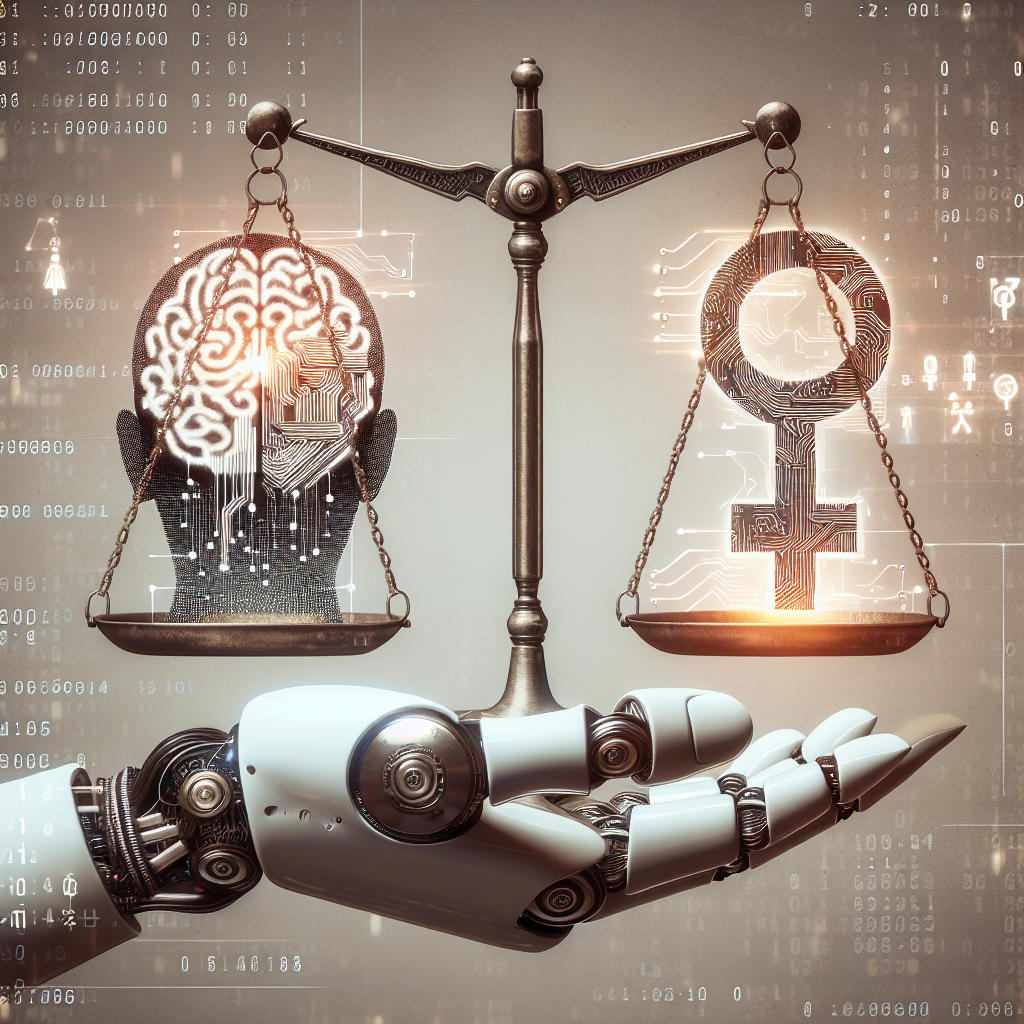
Artificial Intelligence (AI) has become an integral part of our daily lives, with algorithms powering everything from social media feeds to healthcare diagnostics. While AI has the potential to revolutionize industries and improve efficiency, there are significant risks associated with bias and discrimination in AI algorithms. As AI systems are built and trained by humans, they can inherit the biases of their creators, leading to discriminatory outcomes that disproportionately impact marginalized communities.
Bias in AI algorithms can manifest in several ways, including:
1. Data Bias: AI algorithms rely on vast amounts of data to make decisions, and if this data is biased, the algorithms will also be biased. For example, if a facial recognition algorithm is trained on a dataset that is predominantly made up of white faces, it may struggle to accurately identify faces of people of color.
2. Algorithmic Bias: Even if the data used to train an AI algorithm is unbiased, the algorithm itself may still exhibit biases. This can happen if the algorithm is designed in a way that favors certain groups over others, leading to discriminatory outcomes.
3. Feedback Loop Bias: AI algorithms are often designed to learn and improve over time based on user feedback. However, if the feedback is biased, the algorithm may perpetuate and amplify existing biases.
The risks of bias and discrimination in AI algorithms are not just theoretical – there have been numerous real-world examples of AI systems producing biased outcomes. For example, in 2018, it was revealed that Amazon had to scrap an AI recruiting tool because it was biased against women. The algorithm was trained on historical hiring data, which was predominantly made up of male candidates, leading the AI to favor male applicants over female ones.
In addition to the ethical implications of biased AI algorithms, there are also legal and financial risks. Discriminatory AI systems can lead to lawsuits, damage to brand reputation, and financial losses. For example, in 2019, a study found that African American patients were less likely to be referred for healthcare programs by an algorithm used by hospitals, leading to potential health disparities and legal challenges.
So, what can be done to mitigate the risks of bias and discrimination in AI algorithms? Here are some key strategies:
1. Diverse and Inclusive Data: To reduce data bias, it is essential to ensure that the training data used for AI algorithms is diverse and representative of the population. This may require collecting additional data from underrepresented groups or using techniques such as data augmentation to create more balanced datasets.
2. Transparency and Accountability: AI developers should be transparent about the data sources and methods used to train their algorithms. They should also be accountable for any biased outcomes and be prepared to take corrective action if necessary.
3. Fairness and Equity: AI algorithms should be designed with fairness and equity in mind, taking into account the potential impact on different groups and ensuring that decisions are made without discrimination.
4. Regular Audits and Monitoring: AI systems should be regularly audited and monitored for bias and discrimination. This can involve testing the algorithm on different datasets and scenarios to ensure that it is producing fair and unbiased results.
While efforts are being made to address bias and discrimination in AI algorithms, there is still much work to be done. As AI continues to play an increasingly important role in our lives, it is essential that we prioritize ethical considerations and strive to create algorithms that are fair, inclusive, and unbiased.
FAQs:
Q: How can bias be removed from AI algorithms?
A: Bias can be reduced in AI algorithms by using diverse and inclusive data, ensuring transparency and accountability, designing for fairness and equity, and regularly auditing and monitoring the algorithms for bias.
Q: Are there regulations in place to address bias in AI algorithms?
A: While there are no specific regulations governing bias in AI algorithms, existing laws such as the General Data Protection Regulation (GDPR) and the Fair Credit Reporting Act (FCRA) may apply to discriminatory AI systems. Additionally, organizations like the Algorithmic Justice League are advocating for greater oversight and regulation of AI algorithms.
Q: What are the consequences of biased AI algorithms?
A: Biased AI algorithms can lead to discriminatory outcomes, perpetuate existing inequalities, and harm marginalized communities. They can also result in legal challenges, damage to brand reputation, and financial losses for organizations.
Q: How can individuals protect themselves from biased AI algorithms?
A: Individuals can protect themselves from biased AI algorithms by being aware of the potential for bias, questioning the decisions made by AI systems, and advocating for greater transparency and accountability in AI development.
In conclusion, the risks of bias and discrimination in AI algorithms are significant and must be addressed to ensure that AI systems are fair, inclusive, and ethical. By taking proactive steps to mitigate bias, such as using diverse data, promoting transparency, and designing for fairness, we can help create a more equitable future for AI technology.