
Agriculture has been a fundamental aspect of human civilization for thousands of years, providing food, fiber, and other resources necessary for survival. However, the challenges facing the agricultural industry today are greater than ever before. With a rapidly growing global population, increasing pressure on natural resources, and the impacts of climate change, the need for sustainable agricultural practices has never been more critical.
Artificial intelligence (AI) is revolutionizing many industries, and agriculture is no exception. By leveraging the power of AI, farmers and agricultural businesses can improve efficiency, increase productivity, and reduce environmental impacts. In this article, we will explore the role of AI in enhancing agricultural sustainability and its potential to address the challenges facing the industry.
One of the key ways that AI is enhancing agricultural sustainability is through precision agriculture. Precision agriculture involves using data and technology to optimize farming practices, such as planting, irrigation, and fertilization, on a more precise and targeted basis. AI plays a crucial role in precision agriculture by analyzing large amounts of data from sources such as satellite imagery, sensors, and weather forecasts to provide farmers with real-time insights and recommendations.
For example, AI-powered tools can help farmers monitor crop health and detect diseases or pests early on, allowing for targeted interventions and reducing the need for chemical pesticides. AI can also optimize irrigation schedules based on soil moisture levels and weather conditions, reducing water waste and increasing crop yields. By enabling farmers to make data-driven decisions, AI helps to maximize resource use efficiency and minimize environmental impacts.
Another way that AI is enhancing agricultural sustainability is through predictive analytics. By analyzing historical data and trends, AI algorithms can predict future outcomes and help farmers anticipate and mitigate risks. For example, AI can forecast crop yields, market prices, and weather patterns, allowing farmers to make informed decisions about planting, harvesting, and marketing their crops. This not only improves productivity and profitability but also helps farmers adapt to changing environmental conditions and market dynamics.
AI is also being used to develop innovative solutions for sustainable agriculture, such as crop breeding and genetic engineering. By analyzing genetic data and environmental factors, AI algorithms can identify traits that contribute to crop resilience, yield, and quality. This information can be used to develop new crop varieties that are more resilient to drought, pests, and diseases, reducing the need for chemical inputs and increasing crop yields in a sustainable manner.
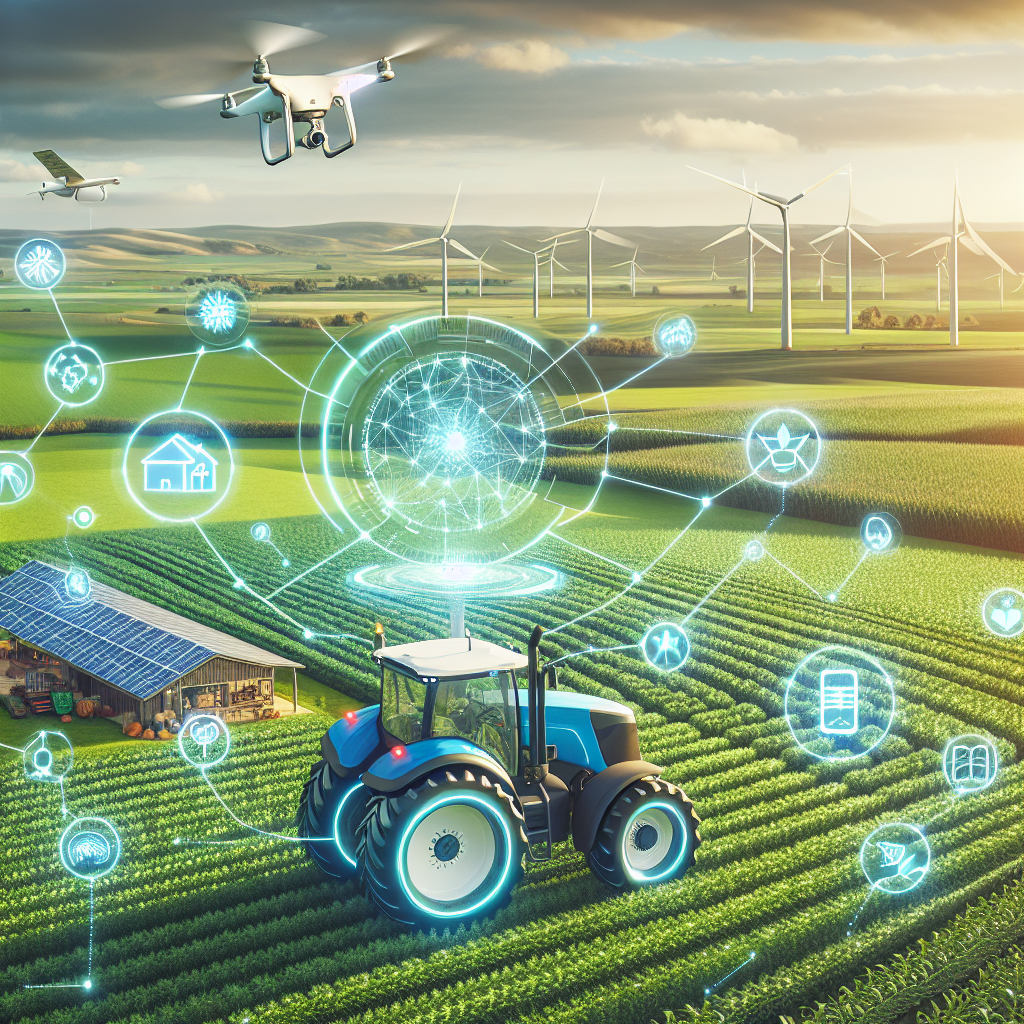
In addition to enhancing agricultural sustainability, AI is also contributing to the development of smart farming systems. These systems integrate AI, Internet of Things (IoT) devices, and robotics to automate and optimize farm operations. For example, AI-powered drones can monitor crop health and growth, while autonomous tractors can perform precision tasks such as planting, spraying, and harvesting. By reducing the reliance on manual labor and increasing efficiency, smart farming systems can help farmers reduce costs, increase productivity, and minimize environmental impacts.
Despite the many benefits of AI in enhancing agricultural sustainability, there are also challenges and concerns that need to be addressed. One of the main challenges is the digital divide, as not all farmers have access to the necessary technology and resources to implement AI solutions. To ensure that the benefits of AI are accessible to all farmers, governments, and organizations need to invest in infrastructure, training, and support to promote digital inclusion in agriculture.
Another concern is the potential impact of AI on employment in the agricultural sector. As AI-powered technologies automate more tasks and operations, there is a risk of displacing traditional farm workers and rural communities. To mitigate this risk, it is essential to invest in retraining programs and create new opportunities for skilled workers in the emerging field of agricultural AI.
In conclusion, AI has the potential to revolutionize agriculture and enhance sustainability by enabling data-driven decision-making, optimizing resource use, and developing innovative solutions for the challenges facing the industry. By leveraging the power of AI, farmers and agricultural businesses can improve efficiency, increase productivity, and reduce environmental impacts. However, it is essential to address the challenges and concerns associated with AI in agriculture to ensure that the benefits are accessible to all farmers and that the industry remains sustainable and inclusive.
FAQs:
Q: How can AI help farmers reduce environmental impacts?
A: AI can help farmers reduce environmental impacts by optimizing resource use, such as water, fertilizers, and pesticides, based on real-time data and insights. By enabling precision agriculture and data-driven decision-making, AI can minimize waste and pollution, leading to more sustainable farming practices.
Q: What are the benefits of AI in crop breeding and genetic engineering?
A: AI can analyze genetic data and environmental factors to identify traits that contribute to crop resilience, yield, and quality. This information can be used to develop new crop varieties that are more resilient to drought, pests, and diseases, reducing the need for chemical inputs and increasing crop yields in a sustainable manner.
Q: What are the challenges of implementing AI in agriculture?
A: One of the main challenges of implementing AI in agriculture is the digital divide, as not all farmers have access to the necessary technology and resources. Another challenge is the potential impact on employment, as AI-powered technologies automate more tasks and operations, leading to concerns about displacing traditional farm workers and rural communities. It is essential to address these challenges to ensure that the benefits of AI are accessible to all farmers and that the industry remains sustainable and inclusive.