
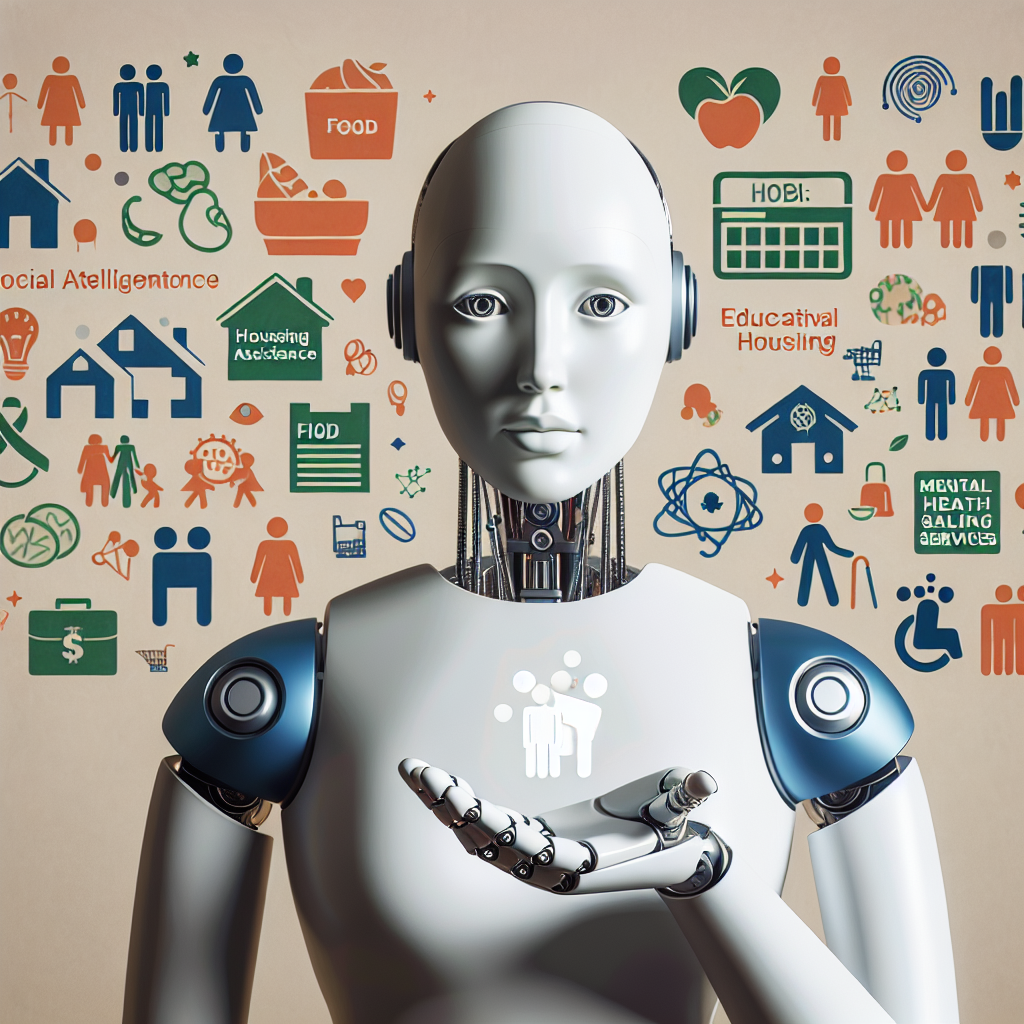
Artificial intelligence (AI) has the potential to revolutionize the way social services are delivered, enhancing access to support programs for individuals in need. From streamlining administrative tasks to improving decision-making processes, AI can help social service agencies better serve their clients and allocate resources more efficiently. In this article, we will explore the various ways in which AI is being used in the field of social services and the benefits it can bring to both service providers and recipients.
AI in Social Services: Enhancing Access to Support Programs
1. Streamlining Administrative Tasks
One of the main challenges faced by social service agencies is the sheer volume of administrative tasks that need to be completed on a daily basis. From processing paperwork to scheduling appointments, these tasks can be time-consuming and resource-intensive. AI can help streamline these processes by automating repetitive tasks and freeing up staff to focus on more complex and meaningful work.
For example, AI-powered chatbots can be used to answer common questions and provide information to clients, reducing the need for staff to respond to inquiries manually. AI can also be used to analyze data and identify patterns, helping agencies make more informed decisions about resource allocation and program effectiveness.
2. Improving Decision-Making Processes
AI can also help social service agencies improve their decision-making processes by providing insights and recommendations based on data analysis. For example, AI algorithms can analyze a client’s history and behavior to predict their future needs and recommend appropriate interventions. This can help agencies identify individuals who are at risk of falling through the cracks and proactively provide support before a crisis occurs.
In addition, AI can also be used to personalize services for clients based on their individual needs and preferences. For example, AI-powered recommendation systems can suggest relevant programs and resources based on a client’s demographic information and past interactions with the agency. This can help agencies tailor their services to meet the unique needs of each individual and improve outcomes.
3. Enhancing Access to Support Programs
One of the key benefits of AI in social services is its ability to enhance access to support programs for individuals in need. AI-powered tools can help agencies reach underserved populations, such as those living in remote areas or facing language barriers, by providing information and services in a more accessible and user-friendly way.
For example, AI-powered language translation tools can help agencies communicate with clients who speak different languages, ensuring that language barriers do not prevent individuals from accessing the support they need. AI can also be used to develop mobile applications and online platforms that make it easier for clients to access information and services from anywhere, at any time.
FAQs
Q: How is AI being used in social services?
A: AI is being used in social services to streamline administrative tasks, improve decision-making processes, and enhance access to support programs. AI-powered tools such as chatbots, data analysis algorithms, and recommendation systems are being used to automate repetitive tasks, provide insights and recommendations based on data analysis, and personalize services for clients.
Q: What are the benefits of using AI in social services?
A: The benefits of using AI in social services include increased efficiency, improved decision-making, and enhanced access to support programs. AI can help agencies save time and resources by automating repetitive tasks, provide insights and recommendations to improve outcomes, and reach underserved populations through more accessible and user-friendly tools.
Q: Are there any concerns about using AI in social services?
A: While AI has the potential to bring significant benefits to social services, there are also concerns about privacy, bias, and job displacement. Agencies must ensure that AI tools are used ethically and responsibly, with proper safeguards in place to protect client data and prevent bias in decision-making. Additionally, agencies should consider the impact of AI on staff roles and responsibilities, ensuring that employees are trained and supported in adapting to new technologies.