
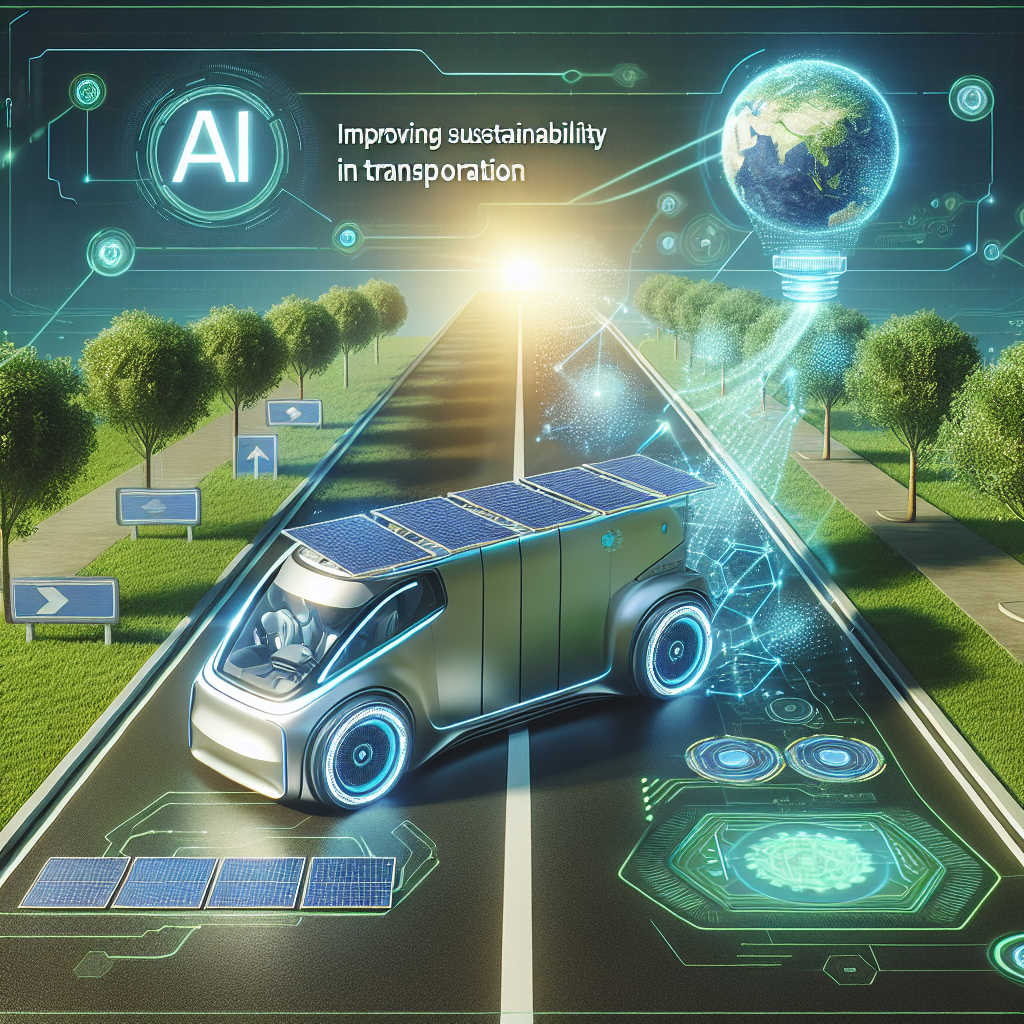
Improving Sustainability in Transportation with AI
Transportation is a vital aspect of modern society, enabling people and goods to move from one place to another quickly and efficiently. However, the environmental impact of transportation, particularly in terms of greenhouse gas emissions and air pollution, has become a growing concern in recent years. In response to this, there has been a push towards more sustainable and environmentally-friendly transportation solutions.
One of the key technologies that is helping to improve sustainability in transportation is artificial intelligence (AI). AI has the potential to revolutionize the way we move people and goods, making transportation more efficient, safer, and environmentally-friendly. In this article, we will explore how AI is being used to improve sustainability in transportation, as well as some of the challenges and opportunities that lie ahead.
AI in Transportation
AI is a powerful technology that has the ability to process and analyze large amounts of data, identify patterns and trends, and make decisions in real-time. In transportation, AI can be used to optimize routes, manage traffic flow, enhance safety, and reduce emissions. AI-powered systems can also improve the overall efficiency of transportation networks, leading to cost savings and improved service for passengers and shippers.
One of the main ways AI is being used in transportation is through the development of autonomous vehicles. These vehicles use AI algorithms to navigate roads, detect obstacles, and make decisions about how to drive. By removing the need for human drivers, autonomous vehicles have the potential to reduce accidents, improve traffic flow, and lower emissions. Companies like Tesla, Waymo, and Uber are investing heavily in autonomous vehicle technology, with the goal of making transportation safer and more sustainable.
AI is also being used to optimize traffic flow and reduce congestion in cities. By analyzing data from sensors, cameras, and other sources, AI systems can identify bottlenecks, predict traffic patterns, and recommend the best routes for vehicles. This can help to reduce emissions, save fuel, and improve the overall efficiency of transportation networks. In Singapore, for example, the government has implemented an AI-powered traffic management system that has reduced congestion and improved air quality in the city.
Another area where AI is making a big impact is in logistics and supply chain management. By using AI algorithms to optimize delivery routes, predict demand, and manage inventory, companies can reduce fuel consumption, lower emissions, and improve the overall sustainability of their operations. Companies like Amazon and UPS are using AI to optimize their delivery networks, leading to faster and more efficient service for customers.
Challenges and Opportunities
While AI has the potential to revolutionize transportation and improve sustainability, there are also challenges that need to be addressed. One of the main challenges is the need for more data to train AI algorithms. In order to be effective, AI systems require large amounts of data to learn from, which can be a barrier for some transportation companies. Additionally, there are concerns about the ethical implications of using AI in transportation, particularly in terms of privacy and security.
Another challenge is the need for regulations and standards to govern the use of AI in transportation. As autonomous vehicles become more common on the roads, there is a need for clear guidelines on how these vehicles should operate and interact with other road users. Governments and industry groups are working to develop these standards, but there is still a long way to go before they are widely adopted.
Despite these challenges, there are also many opportunities for AI to improve sustainability in transportation. By leveraging AI technology, transportation companies can reduce emissions, improve safety, and enhance the overall efficiency of their operations. With the right investments and partnerships, AI has the potential to transform the way we move people and goods, leading to a more sustainable and environmentally-friendly transportation system.
FAQs
Q: How is AI being used in autonomous vehicles?
A: AI is being used in autonomous vehicles to navigate roads, detect obstacles, and make decisions about how to drive. By using AI algorithms, autonomous vehicles can operate safely and efficiently without the need for human drivers.
Q: What are some of the benefits of using AI in transportation?
A: Some of the benefits of using AI in transportation include improved safety, reduced emissions, and lower costs. AI can help to optimize routes, manage traffic flow, and enhance the overall efficiency of transportation networks.
Q: Are there any concerns about using AI in transportation?
A: Yes, there are concerns about the ethical implications of using AI in transportation, particularly in terms of privacy and security. There are also challenges related to data availability and the need for regulations and standards to govern the use of AI in transportation.