
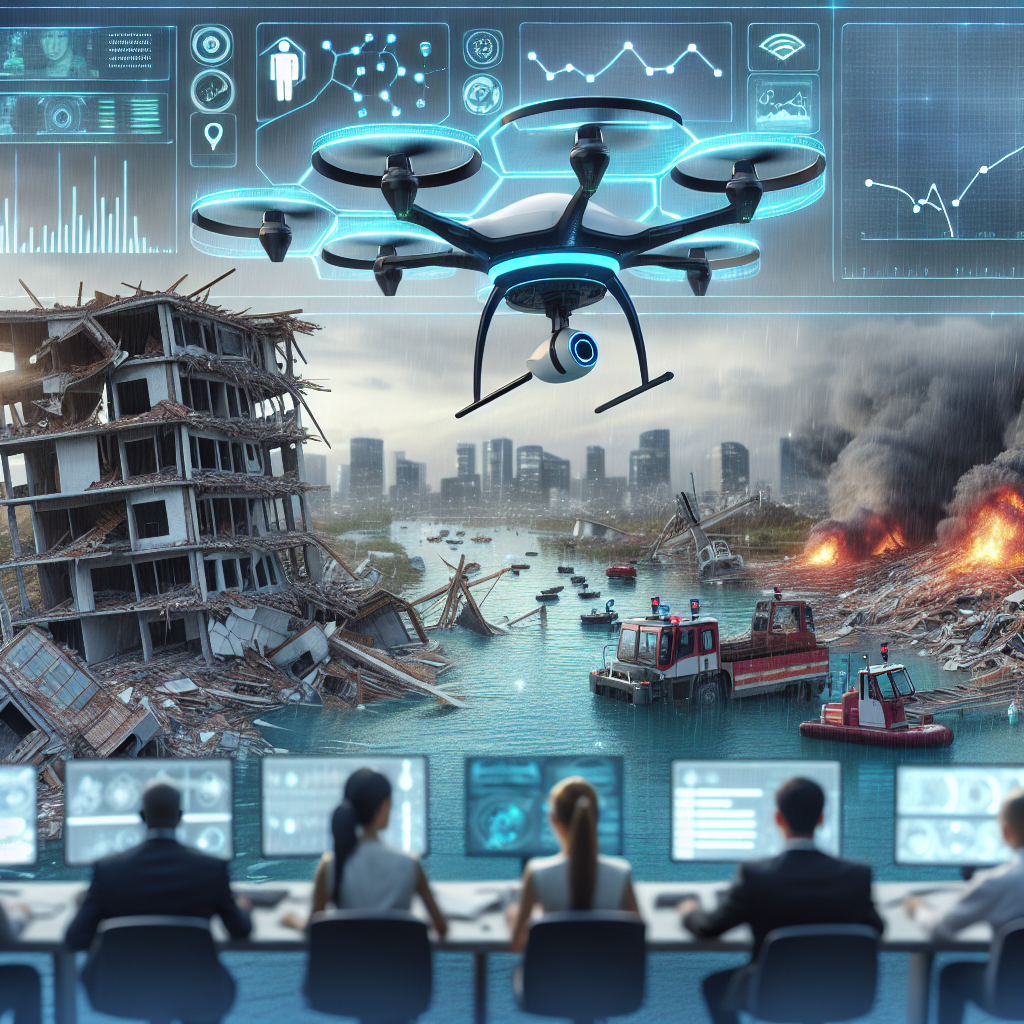
Artificial intelligence (AI) has the potential to revolutionize disaster response and emergency management by providing real-time data analysis, predictive modeling, and decision-making support. However, as with any technology, there are ethical considerations that must be taken into account to ensure that AI is used responsibly and in the best interest of those affected by disasters.
Ethical considerations for AI in disaster response and emergency management can be categorized into several key areas, including privacy and data protection, bias and discrimination, transparency and accountability, and the impact on human decision-making. In this article, we will explore each of these areas and discuss how they can be addressed to ensure that AI is used ethically in disaster response and emergency management.
Privacy and Data Protection
One of the most important ethical considerations for AI in disaster response and emergency management is ensuring the privacy and protection of individuals’ data. When AI systems are used to collect and analyze data in the aftermath of a disaster, there is a risk that sensitive information about individuals, such as their location, health status, or financial situation, could be exposed or misused.
To address this concern, organizations using AI in disaster response must implement robust data protection measures, such as encryption, anonymization, and access control, to ensure that sensitive information is kept secure. Additionally, organizations should be transparent about the data they collect and how it will be used, and obtain informed consent from individuals before collecting their data.
Bias and Discrimination
Another ethical consideration for AI in disaster response is the potential for bias and discrimination in the algorithms used to analyze data and make decisions. AI systems are only as good as the data they are trained on, and if that data is biased or incomplete, the AI system may produce biased or discriminatory results.
To mitigate this risk, organizations must carefully consider the sources of data used to train AI systems, and ensure that the data is representative of the population it is intended to serve. Organizations should also regularly audit their AI systems for bias and discrimination, and take steps to correct any issues that are identified.
Transparency and Accountability
Transparency and accountability are essential ethical considerations for AI in disaster response and emergency management. Organizations using AI systems must be transparent about how their systems work, how decisions are made, and who is responsible for those decisions. This transparency is essential to building trust with the public and ensuring that AI systems are used responsibly.
Additionally, organizations must have mechanisms in place to hold AI systems accountable for their decisions. This may include establishing clear lines of responsibility, creating oversight mechanisms, and providing avenues for recourse if individuals are adversely affected by AI-generated decisions.
Impact on Human Decision-Making
Finally, organizations must consider the impact that AI systems may have on human decision-making in disaster response and emergency management. While AI can provide valuable insights and support decision-making processes, it is important that human decision-makers retain ultimate control and responsibility for the decisions that are made.
Organizations should carefully consider how AI systems will be integrated into existing decision-making processes, and provide training and support to human decision-makers to ensure that they understand how to interpret and use the information provided by AI systems.
FAQs:
Q: Can AI be used to predict natural disasters?
A: Yes, AI can be used to analyze data and predict natural disasters, such as earthquakes, hurricanes, and floods. By analyzing historical data and real-time information, AI systems can generate predictive models that help organizations prepare for and respond to natural disasters.
Q: How can organizations ensure that AI systems are used ethically in disaster response?
A: Organizations can ensure that AI systems are used ethically in disaster response by implementing robust data protection measures, auditing for bias and discrimination, being transparent about how their systems work, and ensuring that human decision-makers retain ultimate control and responsibility.
Q: What are some examples of AI being used in disaster response and emergency management?
A: Some examples of AI being used in disaster response and emergency management include using AI-powered drones to assess damage after a natural disaster, using predictive modeling to anticipate the spread of wildfires, and using AI chatbots to provide real-time information to individuals affected by a disaster.
In conclusion, ethical considerations are essential when using AI in disaster response and emergency management. By addressing privacy and data protection, bias and discrimination, transparency and accountability, and the impact on human decision-making, organizations can ensure that AI is used responsibly and ethically to support disaster response efforts. By following these guidelines, organizations can harness the power of AI to improve the effectiveness and efficiency of disaster response and emergency management while upholding the highest ethical standards.