
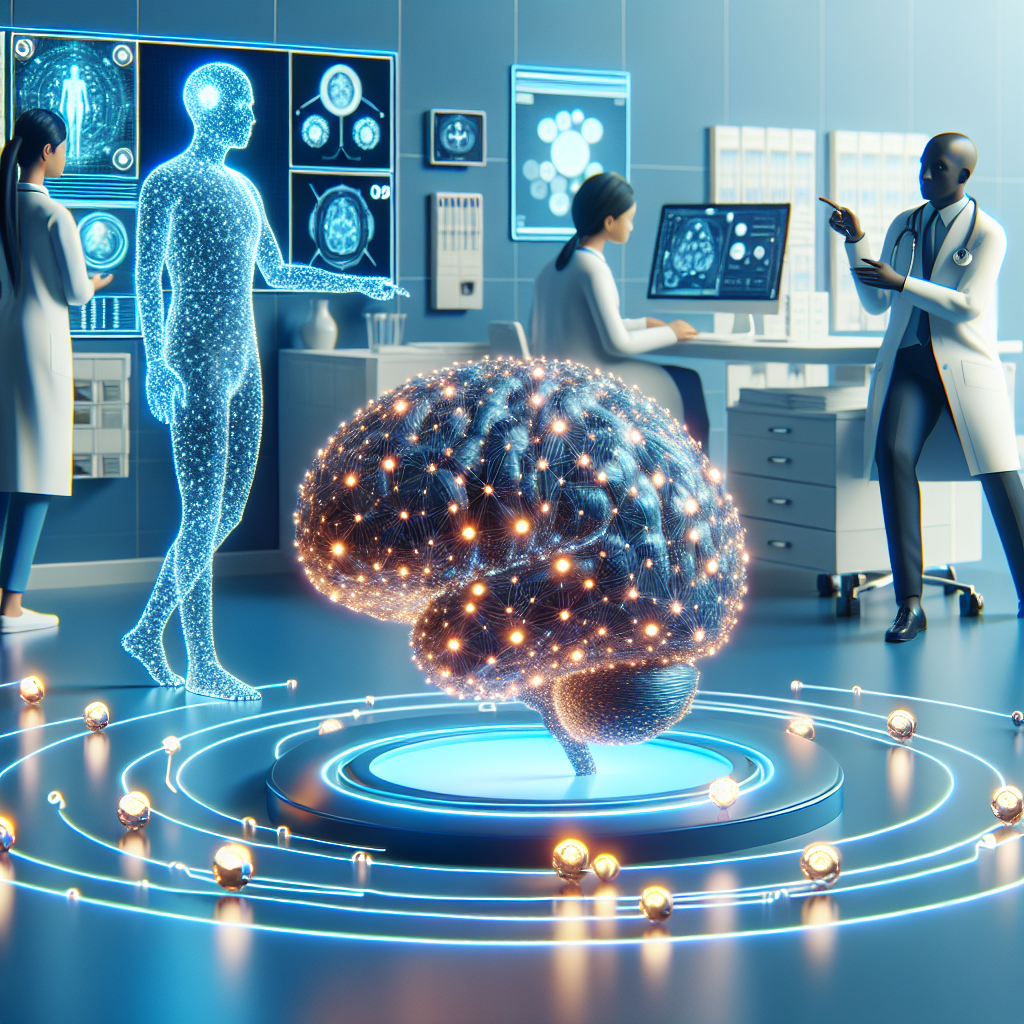
Artificial intelligence (AI) has been making significant strides in various industries, and healthcare is no exception. With the ability to process vast amounts of data and identify patterns that may not be apparent to human clinicians, AI has the potential to revolutionize clinical decision-making and improve patient outcomes. In this article, we will explore how AI is being used in healthcare to improve clinical decision-making and address some common questions and concerns about its use in this field.
AI in Healthcare: Improving Clinical Decision Making
One of the key ways in which AI is improving clinical decision-making in healthcare is through its ability to analyze and interpret medical imaging. Radiology, in particular, has been an area where AI has shown great promise. AI algorithms can analyze medical images such as X-rays, MRIs, and CT scans with incredible accuracy and speed, helping radiologists to detect abnormalities and make diagnoses more quickly and accurately.
For example, a study published in Nature Medicine found that an AI system was able to outperform human radiologists in detecting breast cancer from mammograms. The AI system was able to reduce false positives by 5.7% and false negatives by 9.4%, demonstrating the potential for AI to improve the accuracy of medical imaging interpretation.
In addition to medical imaging, AI is also being used to analyze other types of healthcare data, such as electronic health records (EHRs), to identify patterns and trends that may be missed by human clinicians. By analyzing this data, AI can help to predict patient outcomes, identify at-risk patients, and recommend personalized treatment plans.
For example, researchers at Stanford University developed an AI algorithm that was able to predict patient mortality using EHR data. The algorithm was able to accurately predict patient mortality within 3-12 months with a high degree of accuracy, outperforming traditional methods of predicting patient outcomes.
AI is also being used to improve clinical decision-making in other areas of healthcare, such as drug discovery and development. By analyzing large datasets of chemical and biological data, AI algorithms can identify potential drug candidates more quickly and accurately than traditional methods. This can help to accelerate the drug development process and bring new treatments to market faster.
In addition to improving clinical decision-making, AI is also being used to enhance patient care and improve the overall healthcare experience. For example, AI-powered chatbots can provide patients with personalized health information, answer their questions, and even schedule appointments with healthcare providers. This can help to improve patient satisfaction and access to care, while also reducing the burden on healthcare providers.
Common Questions and Concerns about AI in Healthcare
While AI has the potential to revolutionize healthcare, there are also some common questions and concerns about its use in this field. Here are some of the most frequently asked questions about AI in healthcare:
1. Is AI replacing human clinicians?
While AI has the potential to automate certain tasks and improve clinical decision-making, it is not replacing human clinicians. AI is meant to augment the work of human clinicians, helping them to make more accurate diagnoses, develop personalized treatment plans, and improve patient outcomes. Human clinicians will always play a vital role in healthcare, providing the compassion, empathy, and critical thinking skills that AI cannot replicate.
2. Is AI secure and private?
One of the key concerns about using AI in healthcare is data security and patient privacy. Healthcare data is highly sensitive and must be protected from unauthorized access and misuse. To address these concerns, healthcare organizations must implement robust data security measures, such as encryption, access controls, and regular audits. Additionally, AI algorithms should be designed to comply with data privacy regulations, such as HIPAA in the United States, to ensure patient data is protected.
3. How accurate is AI in healthcare?
The accuracy of AI algorithms in healthcare can vary depending on the task and the quality of the data used to train the algorithms. In general, AI algorithms can be highly accurate in tasks such as medical imaging interpretation and predicting patient outcomes. However, like any technology, AI is not infallible and may make mistakes. It is important for healthcare providers to validate the results of AI algorithms and use them as a tool to support clinical decision-making, rather than as a replacement for human judgment.
4. How is AI being regulated in healthcare?
Regulation of AI in healthcare varies by country and region. In the United States, the Food and Drug Administration (FDA) regulates medical devices that incorporate AI algorithms, such as AI-powered diagnostic tools. The FDA has issued guidance on how AI algorithms should be validated and tested before they can be used in clinical practice. Healthcare organizations must also comply with data privacy regulations, such as HIPAA, when using AI in healthcare.
5. What are the ethical implications of AI in healthcare?
There are several ethical implications of using AI in healthcare, such as bias in algorithms, patient consent, and the impact on healthcare workforce. AI algorithms can inherit biases from the data used to train them, leading to disparities in healthcare outcomes for certain patient populations. Healthcare organizations must be transparent about how AI algorithms are developed and tested to ensure they are fair and unbiased. Additionally, patients must be informed about the use of AI in their care and have the option to opt-out if they choose.
In conclusion, AI has the potential to revolutionize healthcare by improving clinical decision-making, enhancing patient care, and accelerating medical discoveries. While there are some common questions and concerns about AI in healthcare, with proper regulation, data security measures, and ethical guidelines, AI can be used responsibly to benefit patients and healthcare providers alike. As AI continues to evolve and become more integrated into healthcare systems, it is important for healthcare organizations to stay informed about the latest developments and best practices in AI implementation. By leveraging the power of AI, healthcare providers can improve patient outcomes, reduce costs, and ultimately save lives.