
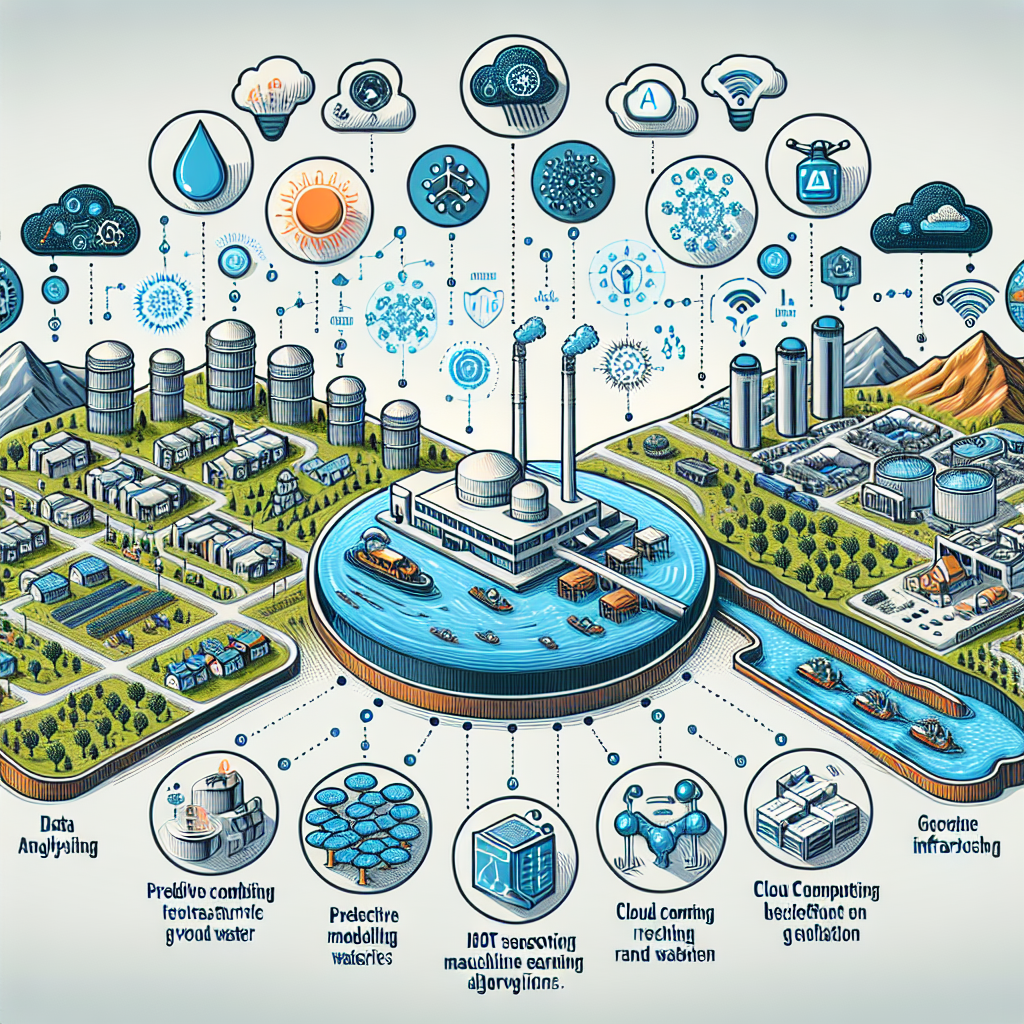
Water is a precious resource that is essential for all forms of life. With the increasing global population and the impacts of climate change, it has become more important than ever to manage water resources effectively. Artificial intelligence (AI) solutions have the potential to revolutionize water management by providing real-time data, predictive analytics, and automation to improve efficiency and sustainability.
AI technology can help address various challenges in water management, such as water scarcity, water quality monitoring, infrastructure maintenance, and flood control. By leveraging AI algorithms, data analytics, and machine learning, water managers can make more informed decisions and optimize resource allocation to ensure the availability of clean water for all.
One of the key benefits of AI solutions for water management is the ability to collect and analyze vast amounts of data in real-time. Sensors, drones, satellites, and other IoT devices can be deployed to monitor water levels, quality, and usage patterns, providing insights that were previously unattainable. AI algorithms can then process this data to identify trends, detect anomalies, and predict future water supply and demand scenarios.
AI can also be used to optimize water distribution systems by automatically adjusting flow rates, pressure levels, and valve settings based on real-time data and predictive analytics. This can help minimize water losses, reduce energy consumption, and improve the overall efficiency of water networks. By deploying AI-powered control systems, water utilities can achieve significant cost savings and environmental benefits.
Another application of AI in water management is the detection of water leaks and pipe failures. By analyzing acoustic signals, pressure fluctuations, and other sensor data, AI algorithms can identify potential leaks in underground pipelines before they become major issues. This proactive approach to leak detection can help prevent water wastage, infrastructure damage, and service disruptions, saving both water utilities and consumers time and money.
AI solutions can also improve water quality monitoring by analyzing data from sensors and remote monitoring devices to detect contaminants, pollutants, and other water quality indicators. By integrating AI with water treatment systems, operators can optimize chemical dosing, filtration processes, and disinfection methods to ensure that water meets regulatory standards and is safe for consumption. This can help prevent waterborne diseases, protect public health, and enhance the overall quality of life for communities around the world.
In addition to monitoring and optimization, AI can also be used for predictive modeling and scenario analysis in water management. By simulating different scenarios, such as droughts, floods, or infrastructure failures, water managers can better prepare for and respond to potential crises. This proactive approach can help mitigate risks, improve resilience, and enhance the long-term sustainability of water resources.
Overall, AI solutions have the potential to transform the way water is managed, distributed, and used in our increasingly water-stressed world. By harnessing the power of AI technology, water managers can make more informed decisions, optimize resource allocation, and enhance the efficiency and sustainability of water systems. With the global population expected to reach 9.7 billion by 2050, the need for innovative water management solutions has never been greater, and AI offers a promising path forward.
FAQs:
Q: What are some examples of AI applications in water management?
A: Some examples of AI applications in water management include real-time data analysis, predictive modeling, leak detection, water quality monitoring, and infrastructure optimization.
Q: How can AI help improve water distribution systems?
A: AI can help improve water distribution systems by automatically adjusting flow rates, pressure levels, and valve settings based on real-time data and predictive analytics to minimize water losses, reduce energy consumption, and improve overall efficiency.
Q: Can AI be used for water quality monitoring?
A: Yes, AI can be used for water quality monitoring by analyzing data from sensors and remote monitoring devices to detect contaminants, pollutants, and other water quality indicators, and optimizing water treatment processes to ensure safe drinking water.
Q: What are the benefits of using AI in water management?
A: The benefits of using AI in water management include real-time data analysis, predictive modeling, leak detection, water quality monitoring, infrastructure optimization, and improved efficiency and sustainability of water systems.
Q: How can AI help address water scarcity?
A: AI can help address water scarcity by analyzing data on water supply and demand, predicting future scenarios, optimizing resource allocation, and enhancing the efficiency and sustainability of water resources to ensure the availability of clean water for all.