
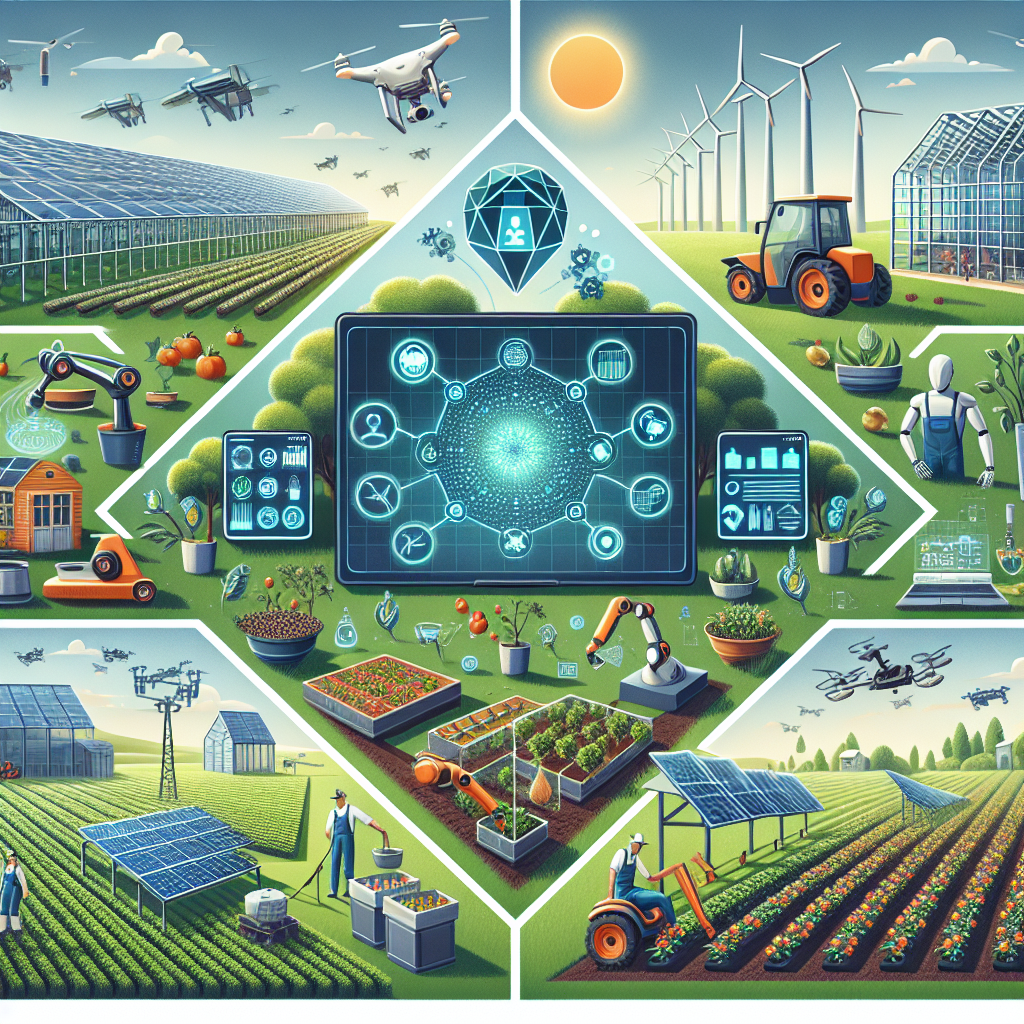
Artificial intelligence (AI) is revolutionizing the way we approach sustainable agriculture and food production. With the world population expected to reach 9.7 billion by 2050, there is a growing need for innovative solutions to ensure food security and sustainability. AI technologies have the potential to transform every aspect of agriculture, from crop monitoring and management to supply chain optimization and food waste reduction. In this article, we will explore the various applications of AI in sustainable agriculture and food production and discuss how these technologies are shaping the future of farming.
AI Applications in Sustainable Agriculture
1. Precision Agriculture: Precision agriculture is a farming approach that uses technology to optimize crop production while minimizing inputs such as water, fertilizer, and pesticides. AI-powered tools such as drones, sensors, and satellite imagery can provide farmers with real-time data on soil conditions, weather patterns, crop health, and pest infestations. This data allows farmers to make more informed decisions about when and where to apply inputs, leading to higher yields, lower costs, and reduced environmental impact.
2. Crop Monitoring and Management: AI algorithms can analyze large amounts of data collected from sensors and imaging devices to monitor crop growth, detect diseases and pests, and predict yield potential. By using machine learning models, farmers can identify patterns and trends in the data to make proactive decisions about irrigation, fertilization, and pest control. This can help optimize crop production, reduce losses, and increase overall efficiency.
3. Autonomous Farming: AI-powered robots and drones are increasingly being used in agriculture to perform tasks such as planting, weeding, and harvesting. These autonomous systems can work around the clock, in any weather conditions, and with precision and accuracy that humans cannot match. By automating labor-intensive tasks, farmers can reduce costs, improve productivity, and ensure a consistent quality of produce.
4. Supply Chain Optimization: AI technologies can help streamline the food supply chain by predicting demand, optimizing logistics, and reducing waste. By analyzing historical data and market trends, AI algorithms can forecast consumer preferences, anticipate fluctuations in supply and demand, and optimize transportation routes to reduce food miles and emissions. This can lead to more efficient distribution, lower costs, and fresher produce for consumers.
5. Food Safety and Quality Control: AI systems can be used to monitor food production processes, detect contaminants, and ensure compliance with food safety regulations. By analyzing data from sensors, cameras, and other monitoring devices, AI algorithms can identify potential risks, such as pathogens or spoilage, and alert operators in real-time. This can help prevent foodborne illnesses, reduce recalls, and improve consumer confidence in the food supply.
AI Applications in Food Production
1. Smart Farming: AI technologies are being used to optimize every stage of food production, from seed selection and breeding to processing and packaging. By analyzing genetic data, climate conditions, and market trends, AI algorithms can help farmers develop new crop varieties that are more resilient to climate change, pests, and diseases. This can lead to higher yields, better quality produce, and a more sustainable food supply.
2. Predictive Maintenance: AI-powered predictive maintenance systems can help food manufacturers reduce downtime, improve efficiency, and extend the lifespan of equipment. By monitoring machinery and analyzing performance data, AI algorithms can detect potential issues before they occur, schedule maintenance tasks proactively, and optimize production schedules to minimize disruptions. This can lead to cost savings, increased productivity, and better overall equipment reliability.
3. Quality Control and Inspection: AI technologies are being used to automate quality control and inspection processes in food production facilities. By using computer vision and machine learning algorithms, manufacturers can detect defects, contaminants, and inconsistencies in food products, packaging, and labeling. This can help ensure compliance with regulatory standards, reduce waste, and improve product quality and safety.
4. Inventory Management: AI-powered inventory management systems can help food producers optimize their supply chain, reduce waste, and improve efficiency. By analyzing sales data, forecasting demand, and monitoring stock levels, AI algorithms can help manufacturers plan production schedules, optimize storage space, and prevent overstocking or stockouts. This can lead to lower costs, better inventory control, and improved customer satisfaction.
5. Sustainable Packaging: AI technologies are being used to develop sustainable packaging solutions that are environmentally friendly, cost-effective, and consumer-friendly. By analyzing materials, designs, and production processes, AI algorithms can help manufacturers create packaging that is biodegradable, recyclable, and lightweight. This can help reduce waste, lower carbon emissions, and meet consumer demand for eco-friendly products.
FAQs
Q: How can AI help farmers reduce pesticide use and improve crop health?
A: AI-powered tools such as drones and sensors can provide farmers with real-time data on pest infestations, crop diseases, and soil conditions. By analyzing this data, farmers can make more informed decisions about when and where to apply pesticides, reducing the need for broad-spectrum chemicals and minimizing environmental impact.
Q: Can AI help farmers reduce water usage and improve irrigation efficiency?
A: Yes, AI technologies can help farmers optimize irrigation practices by analyzing soil moisture levels, weather forecasts, and crop water requirements. By using machine learning models, farmers can develop precise irrigation schedules that minimize water waste, reduce runoff, and improve crop yields.
Q: How can AI technologies improve food safety and quality control in food production?
A: AI systems can be used to monitor food production processes, detect contaminants, and ensure compliance with food safety regulations. By analyzing data from sensors, cameras, and other monitoring devices, AI algorithms can identify potential risks, such as pathogens or spoilage, and alert operators in real-time. This can help prevent foodborne illnesses, reduce recalls, and improve consumer confidence in the food supply.
In conclusion, AI technologies have the potential to transform sustainable agriculture and food production by improving efficiency, reducing waste, and enhancing food security. By leveraging the power of machine learning, computer vision, and data analytics, farmers and food producers can optimize every stage of the food supply chain, from planting and harvesting to processing and distribution. As the world faces increasing challenges from climate change, population growth, and resource scarcity, AI offers innovative solutions to help ensure a sustainable and resilient food system for future generations.