
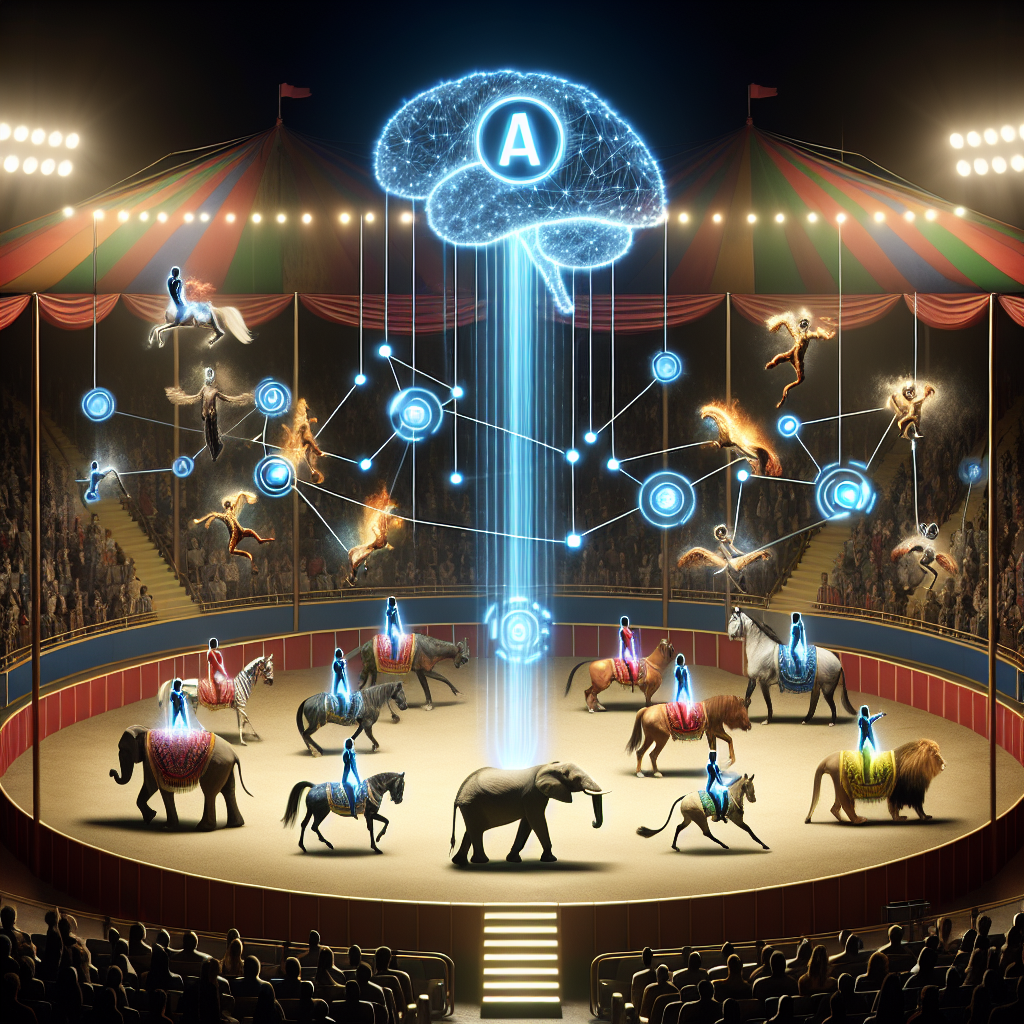
The use of artificial intelligence (AI) in the training of circus animals is a relatively new innovation that is revolutionizing the way animals are taught to perform in circuses. Traditionally, circus animal training has involved a combination of positive reinforcement, punishment, and repetition to teach animals various tricks and routines. However, with the advancements in AI technology, trainers are now able to create lifelike and impressive performances that were previously thought to be impossible.
One of the key ways in which AI is impacting circus animal training is through the use of computer vision technology. Computer vision allows trainers to analyze and interpret visual data in real-time, enabling them to better understand the movements and behaviors of the animals they are training. This information can then be used to tailor training sessions to the specific needs of each individual animal, resulting in a more efficient and effective training process.
Another way in which AI is revolutionizing circus animal training is through the use of machine learning algorithms. These algorithms are able to analyze large amounts of data collected from training sessions and performances, allowing trainers to identify patterns and trends that can be used to improve training techniques. By using machine learning, trainers are able to quickly adapt their training methods to suit the needs of each individual animal, resulting in faster and more successful learning outcomes.
One of the most exciting applications of AI in circus animal training is the use of virtual reality (VR) technology. VR allows trainers to create immersive training environments that simulate real-life scenarios, allowing animals to practice their routines in a safe and controlled environment. This technology not only helps to improve the performance of the animals, but also reduces the risk of injury during training sessions.
Overall, the impact of AI on circus animal training is undeniable. By harnessing the power of computer vision, machine learning, and virtual reality technology, trainers are able to create lifelike and impressive performances that captivate audiences around the world. This not only benefits the animals themselves, who are able to learn and perform in a more natural and stress-free environment, but also enhances the overall entertainment value of circus performances.
FAQs:
Q: Is the use of AI in circus animal training ethical?
A: The use of AI in circus animal training is a controversial topic, with some arguing that it is unethical to use technology to train animals for human entertainment. However, proponents of AI argue that it can actually improve the welfare of circus animals by providing them with a more natural and stress-free training environment.
Q: How does AI benefit circus animals?
A: AI benefits circus animals by providing trainers with valuable insights into their behavior and movements, allowing for more personalized and effective training sessions. Additionally, AI can help to reduce the risk of injury during training sessions by providing animals with a safe and controlled environment in which to practice their routines.
Q: Will AI replace traditional training methods in circuses?
A: While AI is certainly changing the way animals are trained in circuses, it is unlikely to completely replace traditional training methods. Instead, AI is being used as a tool to enhance and improve existing training techniques, resulting in more impressive and lifelike performances.
Q: What are the potential drawbacks of using AI in circus animal training?
A: One potential drawback of using AI in circus animal training is the risk of over-reliance on technology, which could lead to a disconnect between trainers and animals. Additionally, there are concerns about the ethical implications of using AI to train animals for human entertainment, as well as the potential for technology to be misused or abused in training sessions.
In conclusion, the impact of AI on circus animal training is undeniable. By harnessing the power of computer vision, machine learning, and virtual reality technology, trainers are able to create lifelike and impressive performances that captivate audiences around the world. While there are certainly ethical considerations to take into account, the benefits of using AI in circus animal training are clear, leading to a more natural, effective, and entertaining experience for both the animals and the audience.