
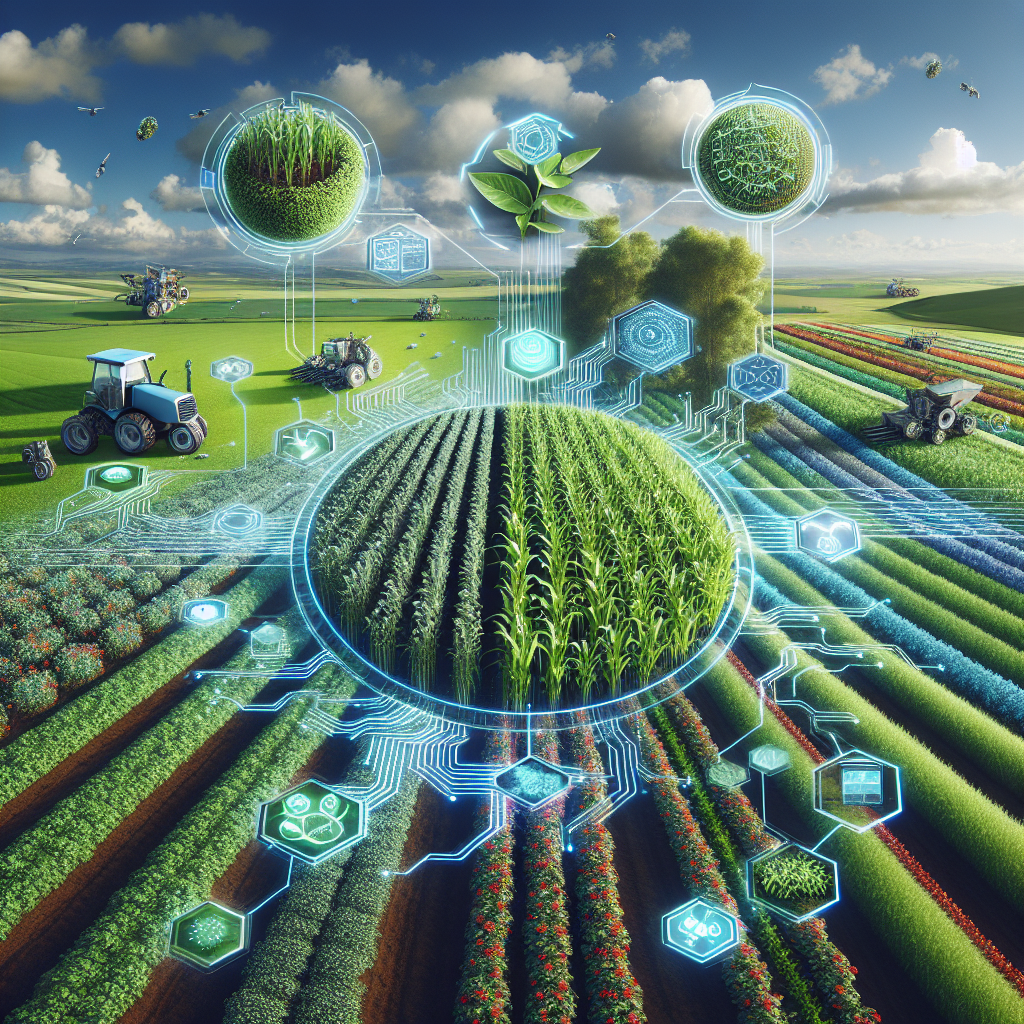
The Benefits of AI in Organic Farming Practices
Artificial intelligence (AI) is revolutionizing many industries, and organic farming is no exception. AI technologies are being used to streamline and optimize various aspects of organic farming practices, leading to increased efficiency, productivity, and sustainability. In this article, we will explore the benefits of AI in organic farming and how it is driving the future of agriculture.
1. Precision Agriculture
One of the key benefits of AI in organic farming is precision agriculture. AI technologies, such as machine learning algorithms and sensors, can collect and analyze data from various sources, such as soil samples, weather patterns, and crop health. This data can then be used to create precise recommendations for farmers on how to optimize their farming practices, such as when to plant seeds, how much water and fertilizer to use, and when to harvest crops. By using AI for precision agriculture, organic farmers can minimize waste, reduce costs, and increase yields.
2. Crop Monitoring and Management
AI technologies can also be used for crop monitoring and management. Drones equipped with cameras and sensors can fly over fields and collect data on crop health, growth rates, and pest infestations. This data can be analyzed in real-time using AI algorithms to identify issues early on and make timely decisions on how to address them. For example, AI can help farmers detect signs of disease or pest infestations before they spread and recommend targeted interventions, such as organic pesticides or biocontrol methods. By using AI for crop monitoring and management, organic farmers can improve crop quality and reduce the need for chemical inputs.
3. Soil Health and Nutrient Management
AI technologies can also be used to improve soil health and nutrient management in organic farming. By analyzing soil samples and environmental data, AI algorithms can provide insights into the health of the soil, such as its pH levels, nutrient content, and microbial diversity. This information can be used to create customized nutrient management plans for farmers, such as which organic fertilizers to use and how to improve soil structure. By using AI for soil health and nutrient management, organic farmers can enhance soil fertility, reduce erosion, and promote sustainable farming practices.
4. Climate Resilience
AI technologies can help organic farmers build climate resilience by predicting and mitigating the impact of climate change on their crops. By analyzing historical weather data and climate models, AI algorithms can forecast extreme weather events, such as droughts, floods, and heatwaves, and recommend adaptation strategies. For example, AI can help farmers optimize irrigation schedules, plant drought-resistant crops, or implement agroforestry practices to reduce the risk of crop failure. By using AI for climate resilience, organic farmers can adapt to changing environmental conditions and ensure the long-term sustainability of their farms.
5. Resource Efficiency
AI technologies can also improve resource efficiency in organic farming by optimizing the use of water, energy, and other inputs. By analyzing data on resource usage and crop growth, AI algorithms can recommend strategies to reduce waste and improve efficiency. For example, AI can help farmers schedule irrigation based on soil moisture levels, implement energy-saving practices in greenhouse operations, or use precision agriculture techniques to minimize fertilizer runoff. By using AI for resource efficiency, organic farmers can reduce their environmental footprint, lower costs, and improve the overall sustainability of their farms.
FAQs
Q: How does AI benefit organic farmers compared to conventional farmers?
A: AI can benefit organic farmers by helping them optimize their farming practices without relying on synthetic inputs, such as pesticides and fertilizers. By using AI for precision agriculture, crop monitoring, soil health, and climate resilience, organic farmers can improve their yields, reduce their environmental impact, and promote sustainable farming practices.
Q: Is AI technology expensive for organic farmers to implement?
A: While AI technology can be costly to implement initially, the long-term benefits of using AI in organic farming, such as increased efficiency, productivity, and sustainability, can outweigh the upfront costs. Additionally, there are now more affordable AI solutions available for small and medium-sized organic farms.
Q: Can AI replace human labor in organic farming?
A: AI technologies are not meant to replace human labor in organic farming but to augment and enhance human decision-making. While AI can automate certain tasks, such as crop monitoring and data analysis, human farmers are still needed to make strategic decisions, implement interventions, and manage day-to-day operations on the farm.
In conclusion, AI technologies are transforming organic farming practices by enabling precision agriculture, crop monitoring, soil health, climate resilience, and resource efficiency. By harnessing the power of AI, organic farmers can optimize their farming practices, increase their yields, and promote sustainable agriculture for future generations. As AI continues to evolve, the benefits for organic farming are only expected to grow, leading to a more resilient and sustainable food system for all.