
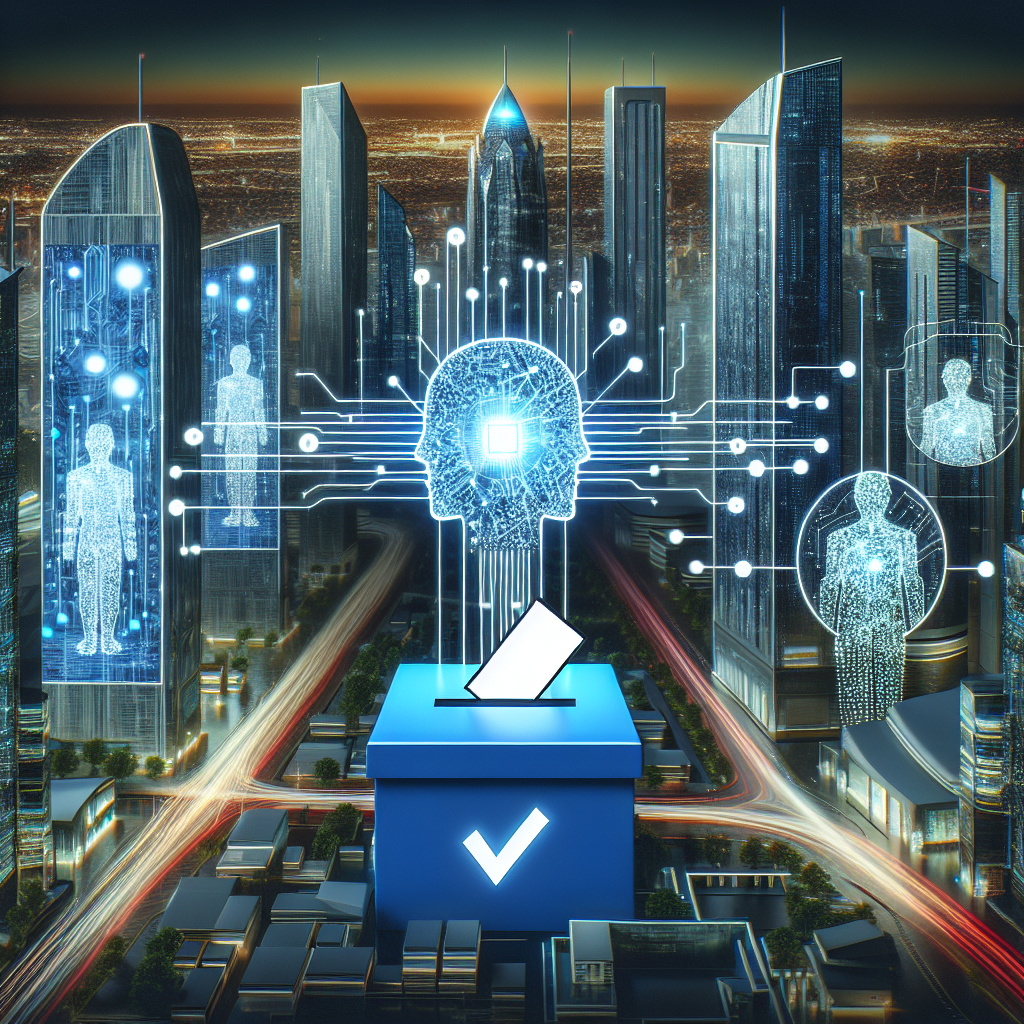
Artificial Intelligence (AI) has become an integral part of our daily lives, from virtual assistants like Siri and Alexa to recommendation algorithms on streaming platforms like Netflix. As AI continues to advance at a rapid pace, it is important to consider its implications for the future of democracy. Will AI democratize society by making decision-making more efficient and inclusive, or will it disrupt democratic processes by concentrating power in the hands of a few?
Democratization through AI
One of the key ways in which AI can contribute to the democratization of society is by making decision-making processes more efficient and inclusive. AI has the potential to analyze vast amounts of data in real-time, providing policymakers with valuable insights and helping them make more informed decisions. This can lead to more effective governance and policy-making, ultimately benefiting all members of society.
Furthermore, AI can help make democracy more inclusive by enabling greater citizen participation. For example, AI-powered chatbots can facilitate communication between citizens and their elected representatives, making it easier for individuals to voice their opinions and concerns. Additionally, AI can be used to analyze social media data to identify emerging issues and trends, allowing policymakers to respond more quickly to the needs of the public.
Disruption through AI
Despite the potential benefits of AI for democratization, there are also concerns that AI could disrupt democratic processes by concentrating power in the hands of a few. For example, AI algorithms are already being used to manipulate public opinion and spread misinformation, leading to the erosion of trust in democratic institutions. Additionally, AI-powered surveillance systems have the potential to infringe on individual privacy rights and undermine civil liberties.
Furthermore, there is a risk that AI could exacerbate existing inequalities in society. For example, AI algorithms are trained on historical data, which may contain biases that perpetuate discrimination against certain groups. If left unchecked, these biases could lead to the exclusion of marginalized communities from decision-making processes, further entrenching existing power imbalances.
FAQs
1. How can AI be used to enhance democracy?
AI can be used to enhance democracy in a number of ways, such as by improving decision-making processes, increasing citizen participation, and promoting transparency and accountability in government. For example, AI-powered chatbots can facilitate communication between citizens and their elected representatives, making it easier for individuals to voice their opinions and concerns.
2. What are the risks of using AI in democratic processes?
There are several risks associated with using AI in democratic processes, including the potential for AI algorithms to be manipulated to spread misinformation and manipulate public opinion. Additionally, AI-powered surveillance systems have the potential to infringe on individual privacy rights and undermine civil liberties. Furthermore, there is a risk that AI could exacerbate existing inequalities in society by perpetuating biases in decision-making processes.
3. How can we ensure that AI is used responsibly in democratic processes?
To ensure that AI is used responsibly in democratic processes, it is important to establish clear guidelines and regulations governing the use of AI in government and politics. This includes ensuring that AI algorithms are transparent and accountable, and that they are used in a way that promotes fairness and inclusivity. Additionally, it is important to actively monitor and evaluate the impact of AI on democratic processes to identify and address any potential risks or biases.
In conclusion, the future of democracy in the age of AI is a complex and multifaceted issue. While AI has the potential to democratize society by making decision-making processes more efficient and inclusive, there are also risks that AI could disrupt democratic processes by concentrating power in the hands of a few. To ensure that AI is used responsibly in democratic processes, it is essential to establish clear guidelines and regulations governing its use, and to actively monitor and evaluate its impact on society. Ultimately, the future of democracy will depend on how we harness the power of AI to promote fairness, inclusivity, and accountability in governance.