
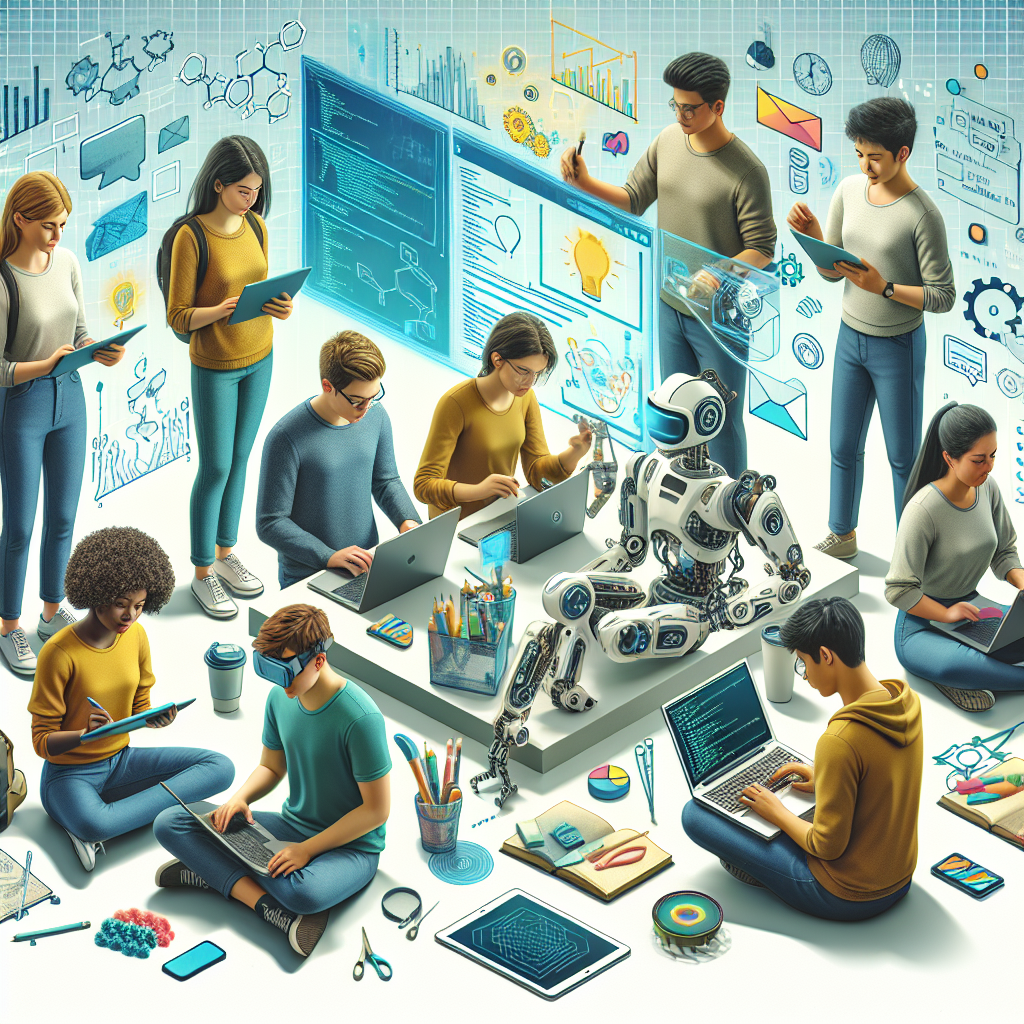
In recent years, artificial intelligence (AI) has become increasingly integrated into various aspects of our lives, including education. AI-powered tools are revolutionizing the way students learn, create, and innovate in the classroom. These tools are designed to enhance students’ creativity and critical thinking skills, ultimately preparing them for success in the 21st-century workforce.
One of the key benefits of AI-powered tools for student creativity and innovation is their ability to personalize learning. By analyzing individual student data, AI can tailor learning experiences to meet the unique needs and learning styles of each student. This personalized approach allows students to explore their interests and strengths, fostering a sense of creativity and innovation in the classroom.
AI-powered tools can also provide real-time feedback to students, helping them to improve their work and develop their skills. For example, AI-powered writing tools can analyze students’ writing and provide suggestions for improvement, such as grammar and style corrections. This immediate feedback can help students to refine their work and think more critically about their writing.
Additionally, AI-powered tools can facilitate collaboration among students, both in the classroom and online. For example, AI-powered platforms can connect students with peers who share similar interests or skills, enabling them to work together on projects and exchange ideas. This collaborative approach to learning can inspire students to think creatively and innovate in their work.
Furthermore, AI-powered tools can help students to explore new ideas and concepts beyond the traditional curriculum. For example, AI-powered virtual reality tools can transport students to different time periods or locations, allowing them to experience history or science in a hands-on way. This immersive learning experience can spark students’ creativity and curiosity, motivating them to explore new ideas and innovate in their work.
Overall, AI-powered tools for student creativity and innovation have the potential to revolutionize the way students learn and engage with the world around them. By personalizing learning, providing real-time feedback, facilitating collaboration, and enabling exploration, these tools can empower students to think critically, create innovative solutions, and prepare for success in the future.
FAQs:
1. How can AI-powered tools enhance student creativity?
AI-powered tools can enhance student creativity by personalizing learning experiences, providing real-time feedback, facilitating collaboration, and enabling exploration of new ideas and concepts. By tailoring learning experiences to meet the unique needs of each student, AI-powered tools can inspire creativity and innovation in the classroom.
2. What are some examples of AI-powered tools for student creativity and innovation?
Some examples of AI-powered tools for student creativity and innovation include writing tools that provide feedback on grammar and style, virtual reality platforms that allow students to explore new concepts, and collaborative platforms that connect students with peers who share similar interests.
3. How can AI-powered tools help students develop critical thinking skills?
AI-powered tools can help students develop critical thinking skills by providing them with real-time feedback on their work, encouraging them to think more deeply about their writing and projects. Additionally, AI-powered tools can challenge students to explore new ideas and concepts beyond the traditional curriculum, sparking their curiosity and creativity.
4. How can teachers integrate AI-powered tools into the classroom?
Teachers can integrate AI-powered tools into the classroom by incorporating them into lesson plans, assigning projects that require students to use AI-powered tools, and providing training and support for students to use these tools effectively. By incorporating AI-powered tools into the classroom, teachers can enhance student creativity and innovation.
5. What are some potential challenges of using AI-powered tools for student creativity and innovation?
Some potential challenges of using AI-powered tools for student creativity and innovation include concerns about data privacy and security, the need for teacher training and support, and the potential for AI bias in the tools themselves. It is important for educators to address these challenges and ensure that AI-powered tools are used ethically and effectively in the classroom.