
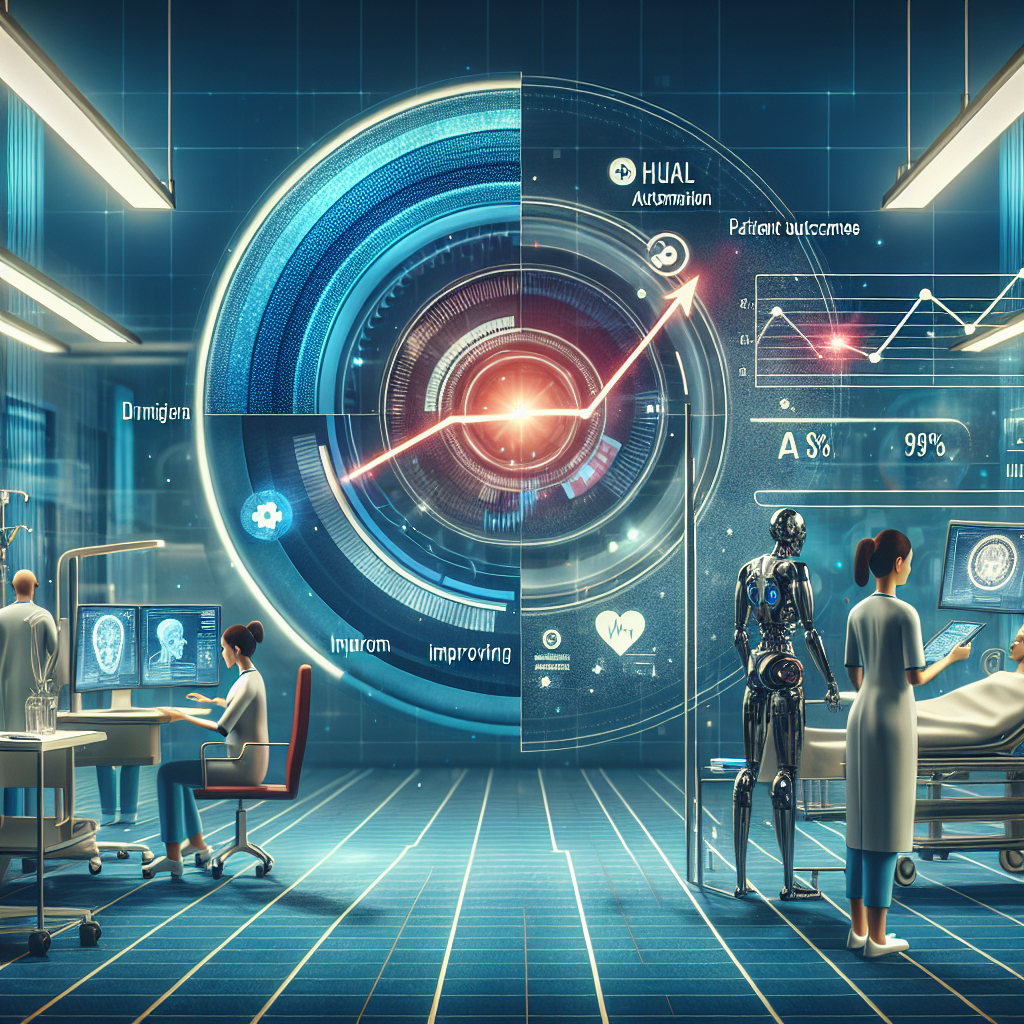
AI Automation in Healthcare: Improving Patient Outcomes
In recent years, there has been a significant rise in the use of artificial intelligence (AI) and automation in the healthcare industry. From streamlining administrative tasks to assisting in medical diagnosis and treatment, AI technology has the potential to revolutionize the way healthcare is delivered. One of the key benefits of AI automation in healthcare is its ability to improve patient outcomes by enhancing the quality of care, increasing efficiency, and reducing costs.
AI technology can be used in a variety of ways to improve patient outcomes. One of the most common applications of AI in healthcare is in medical imaging. AI algorithms can analyze medical images such as X-rays, MRIs, and CT scans to help radiologists detect abnormalities and make more accurate diagnoses. This can lead to earlier detection of diseases and more effective treatment plans, ultimately improving patient outcomes.
Another area where AI automation is making a significant impact is in personalized medicine. By analyzing a patient’s genetic and medical data, AI algorithms can help healthcare providers tailor treatment plans to individual patients, taking into account their unique genetic makeup and medical history. This personalized approach to medicine can lead to better outcomes and reduced side effects for patients.
AI technology can also be used to improve the efficiency of healthcare delivery. By automating routine administrative tasks such as appointment scheduling, billing, and claims processing, AI can free up healthcare providers to focus more on patient care. This can lead to shorter wait times, faster diagnoses, and better overall patient experiences.
In addition to improving patient outcomes, AI automation in healthcare can also help reduce costs. By streamlining processes and increasing efficiency, healthcare providers can save time and resources, ultimately leading to cost savings that can be passed on to patients. This can make healthcare more affordable and accessible to a larger population, ultimately improving overall public health.
Despite the many benefits of AI automation in healthcare, there are also some challenges and concerns to consider. One of the main concerns is the potential for bias in AI algorithms. If not properly trained and monitored, AI algorithms can perpetuate biases in healthcare, leading to disparities in treatment and outcomes for certain populations. It is important for healthcare providers to carefully evaluate and monitor AI algorithms to ensure they are fair and unbiased.
Another challenge is the potential for job displacement as a result of automation. As AI technology becomes more prevalent in healthcare, there is a risk that some jobs may be automated, leading to layoffs and job insecurity for healthcare workers. It is important for healthcare providers to consider the impact of AI automation on their workforce and to provide training and support for employees who may be affected by automation.
Despite these challenges, the benefits of AI automation in healthcare far outweigh the risks. By improving patient outcomes, increasing efficiency, and reducing costs, AI technology has the potential to transform the way healthcare is delivered and ultimately improve public health. As AI technology continues to evolve and improve, we can expect to see even greater advancements in healthcare that will benefit patients and providers alike.
FAQs
Q: How is AI automation currently being used in healthcare?
A: AI automation is being used in a variety of ways in healthcare, such as in medical imaging, personalized medicine, administrative tasks, and predictive analytics. AI algorithms can analyze medical images to help detect abnormalities, tailor treatment plans to individual patients, automate routine administrative tasks, and predict patient outcomes.
Q: What are some of the benefits of AI automation in healthcare?
A: Some of the benefits of AI automation in healthcare include improved patient outcomes, increased efficiency, reduced costs, personalized medicine, and improved public health. AI technology has the potential to revolutionize the way healthcare is delivered, leading to better care and outcomes for patients.
Q: What are some of the challenges of AI automation in healthcare?
A: Some of the challenges of AI automation in healthcare include the potential for bias in AI algorithms, job displacement, data privacy concerns, and regulatory issues. It is important for healthcare providers to carefully evaluate and monitor AI algorithms to ensure they are fair and unbiased and to address any concerns related to job displacement and data privacy.
Q: How can healthcare providers ensure the ethical use of AI automation in healthcare?
A: Healthcare providers can ensure the ethical use of AI automation in healthcare by carefully evaluating and monitoring AI algorithms, ensuring they are fair and unbiased, providing training and support for employees affected by automation, and addressing any concerns related to data privacy and security. It is important for healthcare providers to prioritize ethics and transparency in the use of AI technology in healthcare.