
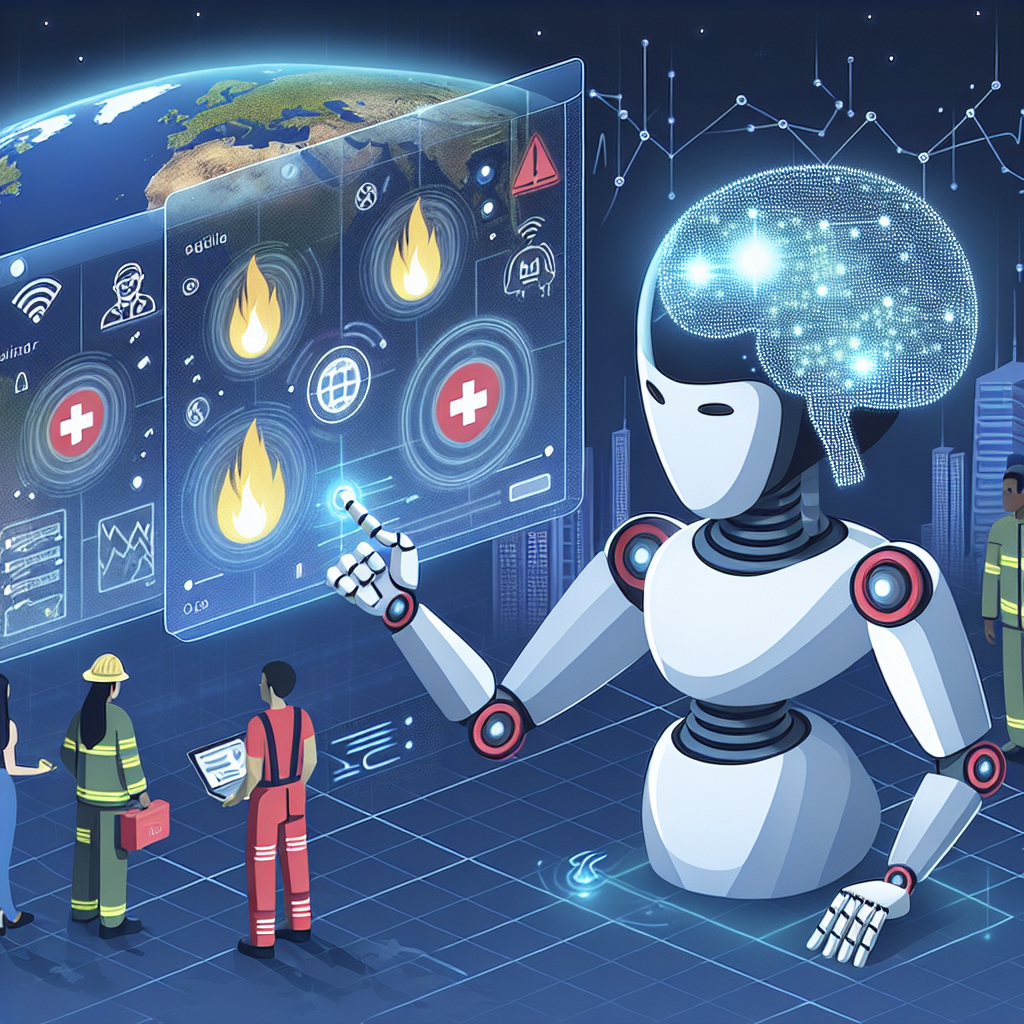
In recent years, the use of artificial intelligence (AI) in crisis reporting and disaster management has become increasingly prevalent. AI technologies have the potential to revolutionize the way we respond to emergencies, making processes faster, more efficient, and more effective. From predicting natural disasters to analyzing social media data for real-time updates, AI is playing a crucial role in helping organizations and governments respond to crises more effectively.
One of the key ways in which AI is being used in crisis reporting and disaster management is through predictive analytics. By analyzing large amounts of data, AI algorithms can identify patterns and trends that may indicate an impending disaster. For example, AI can analyze data such as weather patterns, seismic activity, and historical data to predict when and where a natural disaster may occur. This information can then be used to issue early warnings and prepare for the potential impact of the disaster.
AI is also being used to analyze social media data during crises to gather real-time information and updates. During a disaster, people often turn to social media to share their experiences and seek help. AI algorithms can analyze this data to identify key information such as the location of people in need, the availability of resources, and the spread of misinformation. This real-time data can help organizations and governments make more informed decisions and allocate resources more effectively.
Another important role of AI in crisis reporting and disaster management is in the field of image recognition. AI algorithms can analyze satellite imagery and photographs to assess the extent of damage caused by a disaster. This information can help organizations prioritize response efforts and allocate resources where they are most needed. For example, after a hurricane or earthquake, AI can analyze aerial images to identify areas that have been most severely affected, allowing rescue teams to focus their efforts on those areas.
In addition to predictive analytics, social media analysis, and image recognition, AI is also being used in other innovative ways in crisis reporting and disaster management. For example, chatbots powered by AI can provide information and support to people affected by a disaster, helping to alleviate the strain on emergency services. AI can also be used to optimize supply chain management during a crisis, ensuring that essential supplies reach those in need as quickly as possible.
While the use of AI in crisis reporting and disaster management has many benefits, there are also challenges and concerns that need to be addressed. One of the main challenges is ensuring the accuracy and reliability of AI algorithms. AI systems are only as good as the data they are trained on, so it is crucial to ensure that the data used is accurate and up-to-date. There is also a risk of bias in AI algorithms, which can lead to incorrect predictions and decisions. It is important for organizations to carefully monitor and evaluate the performance of AI systems to ensure that they are providing accurate and unbiased information.
Another concern is the ethical implications of using AI in crisis reporting and disaster management. For example, there are concerns about privacy and data security when analyzing social media data during a crisis. Organizations need to be transparent about how they are using AI and ensure that they are following ethical guidelines and regulations. It is also important to consider the potential impact of AI on jobs in the crisis response and disaster management sectors. While AI can automate certain tasks and make processes more efficient, there is a risk that it could lead to job losses for human workers.
Despite these challenges and concerns, the use of AI in crisis reporting and disaster management has the potential to greatly improve emergency response efforts. By harnessing the power of AI technologies, organizations and governments can better predict, prepare for, and respond to disasters, ultimately saving lives and reducing the impact of crises on communities.
FAQs
Q: How is AI used in predicting natural disasters?
A: AI is used in predicting natural disasters by analyzing large amounts of data such as weather patterns, seismic activity, and historical data to identify patterns and trends that may indicate an impending disaster. This information can then be used to issue early warnings and prepare for the potential impact of the disaster.
Q: How is AI used in analyzing social media data during crises?
A: AI is used in analyzing social media data during crises to gather real-time information and updates. AI algorithms can analyze this data to identify key information such as the location of people in need, the availability of resources, and the spread of misinformation. This real-time data can help organizations and governments make more informed decisions and allocate resources more effectively.
Q: What is the role of AI in image recognition during disasters?
A: AI is used in image recognition during disasters to analyze satellite imagery and photographs to assess the extent of damage caused by a disaster. This information can help organizations prioritize response efforts and allocate resources where they are most needed.
Q: What are the challenges of using AI in crisis reporting and disaster management?
A: Some of the challenges of using AI in crisis reporting and disaster management include ensuring the accuracy and reliability of AI algorithms, addressing bias in AI systems, and considering the ethical implications of using AI. Organizations also need to be transparent about how they are using AI and ensure that they are following ethical guidelines and regulations.
Q: How can organizations ensure the accuracy and reliability of AI algorithms in crisis reporting and disaster management?
A: Organizations can ensure the accuracy and reliability of AI algorithms by carefully monitoring and evaluating the performance of AI systems, ensuring that the data used is accurate and up-to-date, and addressing bias in AI algorithms. It is also important to regularly update and improve AI systems to ensure that they are providing accurate and unbiased information.