
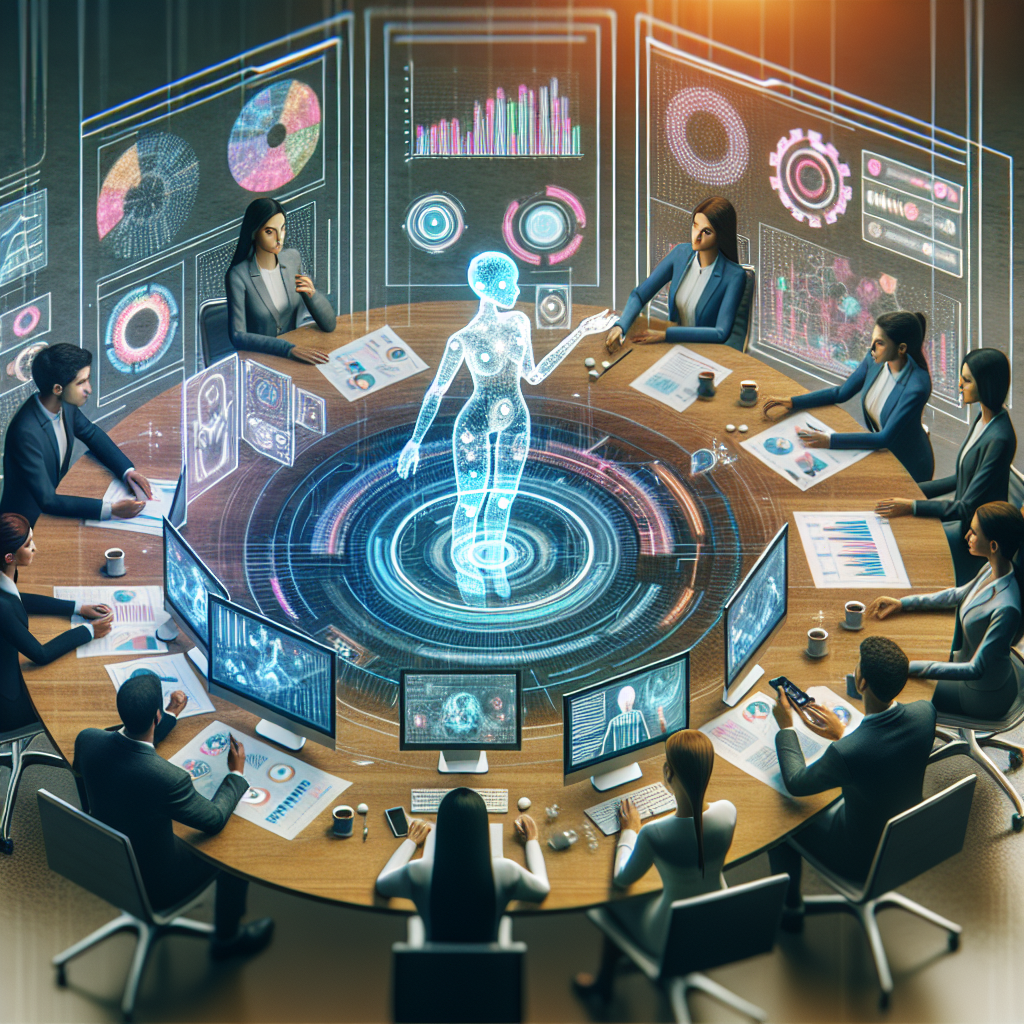
In today’s fast-paced world, collaboration is key to the success of any project. With teams working remotely and across different time zones, it can be challenging to keep everyone on the same page and ensure that tasks are completed on time. This is where artificial intelligence (AI) comes in. AI has the potential to revolutionize project collaboration by automating tasks, predicting potential roadblocks, and improving communication among team members.
AI can enhance project collaboration in a number of ways. One of the most significant benefits of AI is its ability to automate repetitive tasks, such as scheduling meetings, sending reminders, and updating project timelines. This frees up team members to focus on more strategic and creative aspects of the project, leading to increased productivity and efficiency.
AI can also help to predict potential roadblocks before they occur. By analyzing past project data and identifying patterns, AI can alert team members to potential risks and suggest ways to mitigate them. This proactive approach can help teams stay on track and avoid costly delays.
Another way that AI can enhance project collaboration is by improving communication among team members. AI-powered chatbots can facilitate real-time communication, providing instant answers to common questions and helping team members stay connected, even when working remotely. This can lead to faster decision-making and more effective collaboration.
Overall, the integration of AI into project collaboration can lead to increased productivity, improved decision-making, and better outcomes for projects of all sizes. However, there are some common questions and concerns that arise when considering the use of AI in project collaboration. Here are some frequently asked questions about enhancing project collaboration with AI:
1. How can AI help with project management tasks?
AI can help with project management tasks by automating repetitive tasks, such as scheduling meetings, updating project timelines, and sending reminders. This frees up team members to focus on more strategic aspects of the project, leading to increased productivity and efficiency.
2. Will AI replace human project managers?
While AI can automate certain project management tasks, it is unlikely to replace human project managers entirely. AI is best used as a tool to augment human capabilities, rather than as a replacement for human decision-making and creativity.
3. How can AI predict potential roadblocks in a project?
AI can predict potential roadblocks in a project by analyzing past project data and identifying patterns. By identifying trends and potential risks, AI can alert team members to potential issues before they occur, allowing them to take proactive measures to mitigate risks and stay on track.
4. How can AI improve communication among team members?
AI can improve communication among team members by facilitating real-time communication through chatbots. Chatbots can provide instant answers to common questions and help team members stay connected, even when working remotely. This can lead to faster decision-making and more effective collaboration.
5. What are the potential drawbacks of using AI in project collaboration?
Some potential drawbacks of using AI in project collaboration include the cost of implementing AI technology, concerns about data privacy and security, and the need for training and upskilling team members to use AI effectively. Additionally, there may be resistance to AI from team members who are hesitant to embrace new technologies.
In conclusion, AI has the potential to revolutionize project collaboration by automating tasks, predicting potential roadblocks, and improving communication among team members. By leveraging the power of AI, project teams can increase productivity, improve decision-making, and achieve better outcomes for their projects. While there may be some challenges and concerns associated with integrating AI into project collaboration, the benefits far outweigh the drawbacks. As AI technology continues to evolve, project teams can expect to see even greater improvements in collaboration and project success.