
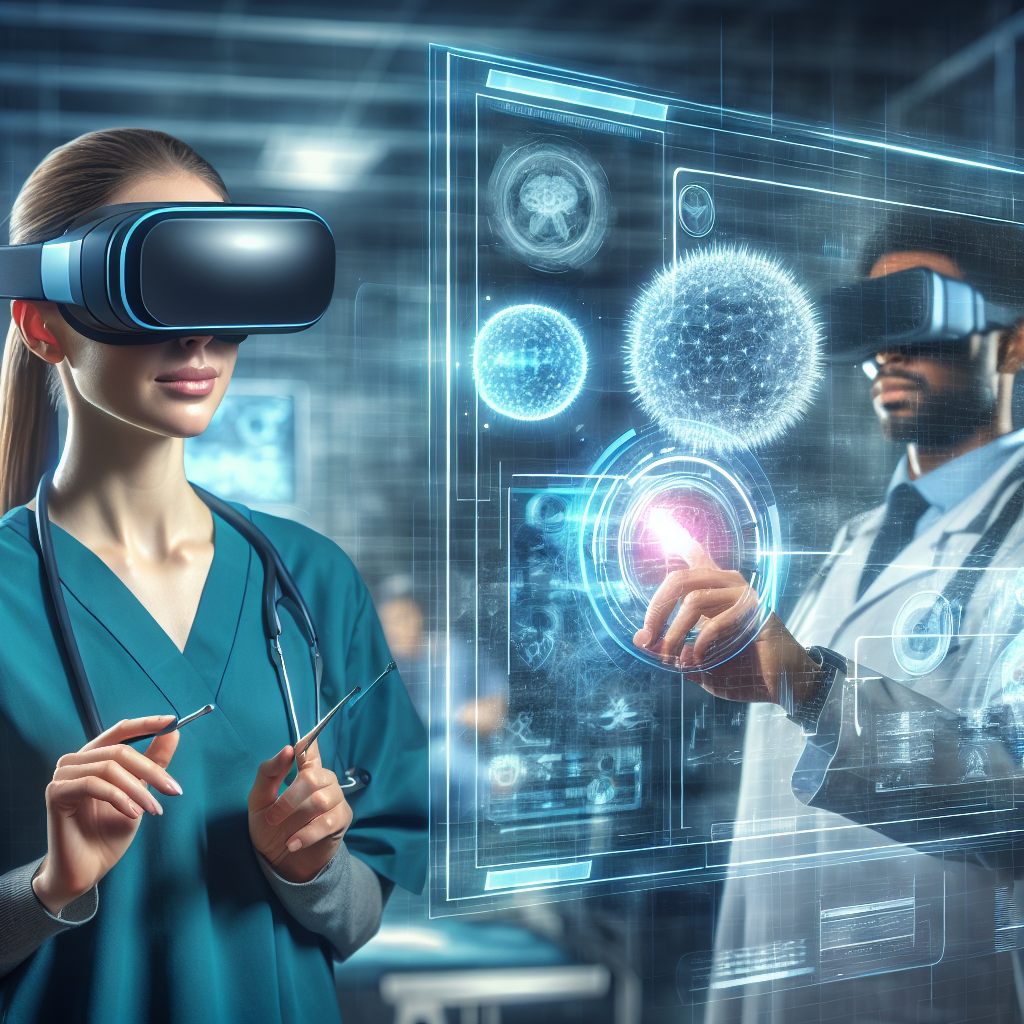
AI-powered Virtual Reality (VR) technology has emerged as a game-changer in the field of healthcare, revolutionizing the way medical professionals diagnose, treat, and care for patients. By combining the power of artificial intelligence (AI) with immersive VR experiences, healthcare providers are able to deliver more personalized and effective care to patients, while also improving medical training and research.
One of the key benefits of AI-powered VR in healthcare is the ability to create realistic simulations of medical conditions and procedures. This allows medical professionals to practice complex surgeries, diagnose rare diseases, and train for emergency situations in a safe and controlled environment. By using AI algorithms to analyze patient data and customize VR simulations, healthcare providers can tailor treatment plans to individual patients, leading to better outcomes and reduced costs.
AI-powered VR technology is also being used to improve patient care and outcomes. For example, virtual reality therapy is being used to treat a variety of mental health conditions, such as post-traumatic stress disorder (PTSD), phobias, and anxiety disorders. By immersing patients in virtual environments that simulate real-life situations, therapists can help patients confront their fears and learn coping mechanisms in a controlled setting.
In addition, AI-powered VR is being used to improve rehabilitation and physical therapy for patients recovering from injuries or surgeries. By using VR simulations to guide patients through exercises and activities, therapists can track progress, adjust treatment plans, and motivate patients to achieve their rehabilitation goals. This personalized approach to therapy has been shown to accelerate recovery times and improve overall patient satisfaction.
Another important application of AI-powered VR in healthcare is telemedicine. By using VR headsets and AI algorithms, healthcare providers can conduct virtual consultations with patients from remote locations, reducing the need for in-person appointments and allowing for more efficient and convenient care. This technology is particularly beneficial for patients in rural areas or those with limited mobility, who may have difficulty accessing traditional healthcare services.
Despite the many benefits of AI-powered VR in healthcare, there are still some challenges and limitations to consider. One of the main concerns is the cost of implementing and maintaining VR technology, as well as the need for training medical professionals to use and interpret AI algorithms. Additionally, there are ethical considerations around patient privacy and data security, as well as potential biases in AI algorithms that could impact treatment decisions.
Overall, AI-powered Virtual Reality has the potential to transform the healthcare industry by improving patient care, enhancing medical training, and advancing research and innovation. As this technology continues to evolve, it will be important for healthcare providers to stay informed about the latest developments and explore how AI-powered VR can be integrated into their practices to improve outcomes for patients.
FAQs
1. How does AI-powered Virtual Reality work in healthcare?
AI-powered Virtual Reality technology uses artificial intelligence algorithms to analyze patient data and create personalized VR simulations for medical training, diagnosis, treatment, and care. By combining the immersive experience of VR with the analytical power of AI, healthcare providers can deliver more effective and efficient care to patients.
2. What are some of the key benefits of AI-powered Virtual Reality in healthcare?
Some of the key benefits of AI-powered Virtual Reality in healthcare include improved medical training, personalized treatment plans, enhanced patient care and outcomes, virtual therapy for mental health conditions, rehabilitation and physical therapy support, and telemedicine services for remote consultations.
3. What are some of the challenges and limitations of AI-powered Virtual Reality in healthcare?
Some of the challenges and limitations of AI-powered Virtual Reality in healthcare include the cost of implementing and maintaining VR technology, the need for training medical professionals to use AI algorithms, ethical considerations around patient privacy and data security, and potential biases in AI algorithms that could impact treatment decisions.
4. How can healthcare providers integrate AI-powered Virtual Reality into their practices?
Healthcare providers can integrate AI-powered Virtual Reality into their practices by investing in VR technology, training staff to use AI algorithms, developing personalized treatment plans for patients, offering virtual therapy and rehabilitation services, and implementing telemedicine for remote consultations.
5. What are some of the future trends and developments in AI-powered Virtual Reality in healthcare?
Some of the future trends and developments in AI-powered Virtual Reality in healthcare include the use of AI algorithms for real-time patient monitoring, the integration of VR technology into medical devices and wearables, the expansion of virtual reality therapy for a wider range of mental health conditions, and the adoption of AI-powered VR for medical research and innovation.