
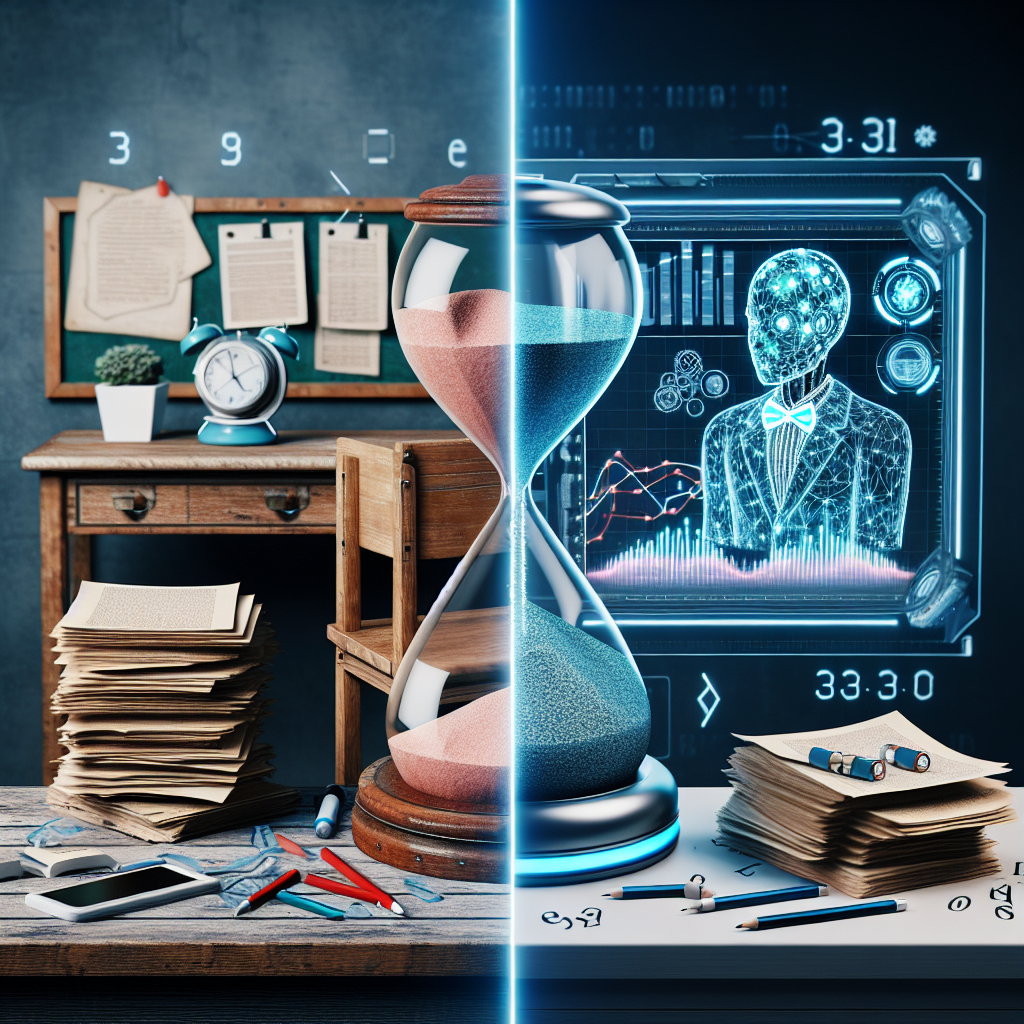
The Future of Educational Testing: AI vs. Traditional Methods
In recent years, the landscape of educational testing has been rapidly evolving with the introduction of artificial intelligence (AI) technology. AI has the potential to revolutionize the way students are assessed and evaluated, offering a more personalized and efficient approach to testing. However, traditional methods of testing still play a crucial role in the educational system and continue to be relied upon by educators and institutions. In this article, we will explore the future of educational testing, comparing AI with traditional methods and examining the benefits and challenges of each.
AI in Educational Testing
AI has the potential to transform educational testing by offering a more efficient and accurate way to assess student learning. AI algorithms can analyze large amounts of data to identify patterns and trends in student performance, allowing for more personalized and adaptive testing strategies. This can help educators tailor assessments to individual students’ needs, providing a more accurate measure of their knowledge and skills.
One of the key benefits of AI in educational testing is its ability to provide real-time feedback to students. AI-powered testing platforms can instantly analyze student responses and provide immediate feedback on their performance, allowing students to track their progress and identify areas for improvement. This can help students stay motivated and engaged in their learning, leading to better outcomes in the long run.
AI also has the potential to reduce bias in educational testing. Traditional methods of testing can be influenced by factors such as the race, gender, or socioeconomic status of the student, leading to unfair outcomes. AI algorithms, on the other hand, can be designed to eliminate bias and provide a more accurate and objective assessment of student performance.
Despite these benefits, AI technology in educational testing also presents some challenges. One of the main concerns is the potential for AI to replace human educators in the assessment process. While AI can provide valuable insights and feedback, it cannot replace the human touch and expertise that educators bring to the table. It is important for educators to work alongside AI technology to ensure that assessments are fair, accurate, and meaningful.
Another challenge of AI in educational testing is the issue of data privacy and security. AI algorithms rely on large amounts of student data to make accurate assessments, raising concerns about how this data is collected, stored, and used. It is important for educators and institutions to prioritize data privacy and security when implementing AI technology in educational testing.
Traditional Methods of Educational Testing
Traditional methods of educational testing, such as standardized tests and written exams, continue to play a crucial role in the educational system. These methods have been used for decades to assess student learning and measure academic achievement. While traditional testing methods may not be as personalized or adaptive as AI technology, they still offer valuable insights into student performance and provide a standardized measure of knowledge and skills.
One of the key benefits of traditional testing methods is their reliability and validity. Standardized tests and exams are carefully designed to measure specific learning outcomes and provide a consistent measure of student performance. This allows educators to compare students’ performance across different schools and regions, providing valuable insights into the effectiveness of the educational system.
Traditional testing methods also have the advantage of being familiar to students and educators. Students are accustomed to taking exams and standardized tests, making it easier for them to prepare and perform well on these assessments. Educators are also familiar with traditional testing methods and have the expertise to design and administer tests that accurately measure student learning.
However, traditional testing methods also have their limitations. One of the main criticisms of standardized tests is their focus on rote memorization and test-taking skills, rather than critical thinking and problem-solving abilities. This can lead to a narrow and one-dimensional assessment of student performance, overlooking other important aspects of learning.
Another challenge of traditional testing methods is their lack of flexibility and adaptability. Standardized tests are often designed to assess a specific set of learning outcomes, leaving little room for students to demonstrate their knowledge and skills in a more creative and innovative way. This can limit the ability of educators to assess student learning in a holistic and comprehensive manner.
FAQs
Q: Will AI replace traditional methods of educational testing?
A: While AI technology has the potential to revolutionize educational testing, it is unlikely to completely replace traditional methods. Both AI and traditional testing methods have their own strengths and limitations, and it is important for educators to use a combination of both approaches to assess student learning effectively.
Q: How can educators ensure that AI technology is used ethically in educational testing?
A: Educators can ensure that AI technology is used ethically in educational testing by prioritizing data privacy and security, eliminating bias in assessments, and working alongside AI technology to provide a more personalized and adaptive testing experience for students.
Q: What are the benefits of personalized testing using AI technology?
A: Personalized testing using AI technology can help educators tailor assessments to individual students’ needs, provide real-time feedback on student performance, and reduce bias in testing. This can lead to a more accurate and meaningful assessment of student learning.
Q: How can educators prepare students for AI-powered testing?
A: Educators can prepare students for AI-powered testing by familiarizing them with the technology, teaching them how to use it effectively, and emphasizing the importance of critical thinking and problem-solving skills in assessments. It is important for students to understand how AI technology works and how it can be used to enhance their learning experience.
In conclusion, the future of educational testing is likely to be a combination of AI technology and traditional methods. While AI has the potential to revolutionize the way students are assessed and evaluated, traditional testing methods continue to play a crucial role in the educational system. Educators and institutions must carefully consider the benefits and challenges of both approaches and work towards a balanced and effective assessment strategy that meets the needs of all students. By leveraging the strengths of AI technology and traditional methods, educators can provide a more personalized, adaptive, and meaningful testing experience for students, leading to better outcomes in the long run.